
Casey heritage tiling area directory
Use this Casey area directory to find locality-specific heritage tiling guidance. Casey brings together established town centres, post-war neighbourhoods, rural and agricultural remnants, newer growth areas and individually recognised heritage places. Authentic Heritage Tiling Co provides design consultation, tessellated tile supply, installation and restoration guidance across the Casey service area, with each property assessed on its own character, existing fabric and practical requirements.
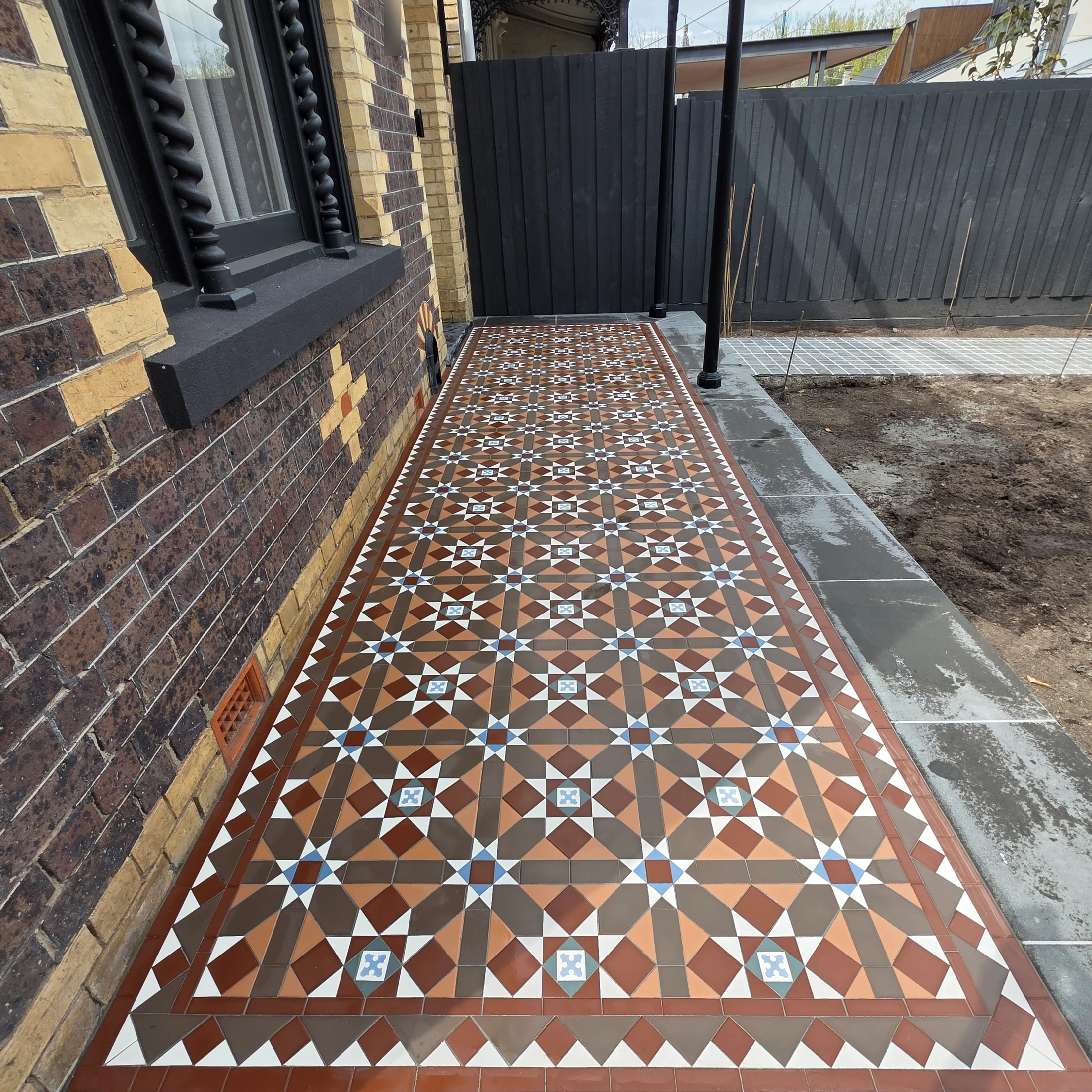
A varied local setting for heritage-aware tile work
The City of Casey describes heritage across historic buildings, natural and geoheritage places and archaeological artefacts. Its heritage handbook also records the municipality's pastoral and agricultural history, the growth of Berwick and Cranbourne as town centres, post-war residential expansion and continuing development pressure. That range matters when choosing a tiled entry, verandah, pathway or interior floor: a period-sensitive pattern may suit an older house, while a restrained contemporary layout may sit more comfortably with a newer addition.
The Casey Heritage Handbook identifies original or early features as more likely to be significant, while also noting that each place needs its own assessment. A design consultation can therefore begin with what remains: thresholds, verandah proportions, existing floor levels, adjoining joinery, garden connections and any surviving tile fragments that may help guide a new scheme or restoration decision.
Heritage at Casey — City of CaseyHeritage Handbook: Practical Guidelines for Owners of Historic Buildings — City of Casey
Design inspiration for entries, verandahs and pathways
Casey's handbook describes late-Victorian properties with verandahs that can include decorative tiles on a concrete base, as well as earlier and later homes with different proportions, roof forms, joinery and garden settings. Those details can inform the balance of a tessellated layout without turning a general period description into a claim about every home in Casey.
For an entry or pathway, consider how the border meets steps, gates, garden edges and door thresholds. For a verandah, review the width, fall, exposed edges and relationship with existing posts and doors before selecting a pattern. Stone bullnose or edging coordination can help resolve transitions where a tiled surface meets a step or landscape edge.
Heritage Handbook: Practical Guidelines for Owners of Historic Buildings — City of Casey
Restoration, matching and new installation
Where original or early tiles survive, the first question is usually whether they can be retained and repaired rather than removed. A condition review can look at loose or missing pieces, cracking, staining, dampness, movement and the relationship between the tiled surface and its substrate. If a new area is being added, the design can be developed to complement the property's established details while remaining clearly identifiable as new work where that is the appropriate approach.
The City of Casey advises owners to understand the applicable Heritage Overlay, planning scheme and other controls before making changes. Heritage status is property-specific, so tile selection and installation planning should sit alongside the owner's own planning or heritage checks rather than assuming that every Casey property needs the same approval or treatment.
Heritage at Casey — City of CaseyHeritage Handbook: Practical Guidelines for Owners of Historic Buildings — City of CaseyCasey Planning Scheme — Victorian Planning SchemesLocal heritage protection — Planning Victoria
Casey area directory
Your Heritage Tiling Questions
Does every property in Casey need heritage approval for tessellated tile work?
No single answer applies to every property. The City of Casey says heritage controls apply to listed places and that other planning and building controls may also affect a site. Check the individual property in the Casey Planning Scheme and relevant Victorian heritage records, then confirm requirements with the appropriate authority before work begins.
Can original Casey verandah or floor tiles be restored?
Often the right starting point is an assessment of what survives. The Casey Heritage Handbook notes that original or early features may be significant and that some historic properties include floor tiles or decorative verandah tiles. The condition, substrate, missing pieces and significance of the particular property need to be reviewed before deciding between repair, careful matching or replacement.
What should I consider before choosing a tessellated pattern for a Casey home?
Consider the property's existing period cues, verandah or entry proportions, thresholds, steps, garden edges, joinery and any surviving tile fragments. Casey's heritage guidance describes different characteristics across Victorian, Federation/Edwardian, inter-war and post-war buildings, so a pattern should respond to the individual setting rather than being chosen from a period label alone.
Can tessellated tiles be used on a pathway or step in Casey?
They can be considered as part of a site-specific design. Review falls, drainage, access, edge conditions, thresholds and the connection to existing paving before installation. Where a tiled surface meets a step or landscape edge, stone bullnose or edging coordination may be useful. Any applicable property or planning controls should be checked separately.
Which Casey locations can you help with?
The Casey service group includes existing locality routes for Berwick, Cranbourne, Narre Warren, Narre Warren South, Hallam, Doveton, Endeavour Hills, Hampton Park, Clyde, Clyde North, Officer and Pakenham. Use the locality route that best matches the property, or begin with this Casey page for broader design, supply, installation and restoration guidance.
Discuss Your Heritage Tiling Project
Share your location, project details and photographs using our enquiry form, or call 0433 932 711.