
Tessellated tiles in Cranbourne
Cranbourne combines an established township setting with continuing centre growth and redevelopment. For a verandah, entry, pathway or interior floor, the tile choice works best when it responds to the property's proportions, existing surfaces and the way the space will be used. AHTC can help with tessellated tile design, supply, installation and restoration, including stone bullnose or edging coordination where it suits the brief.
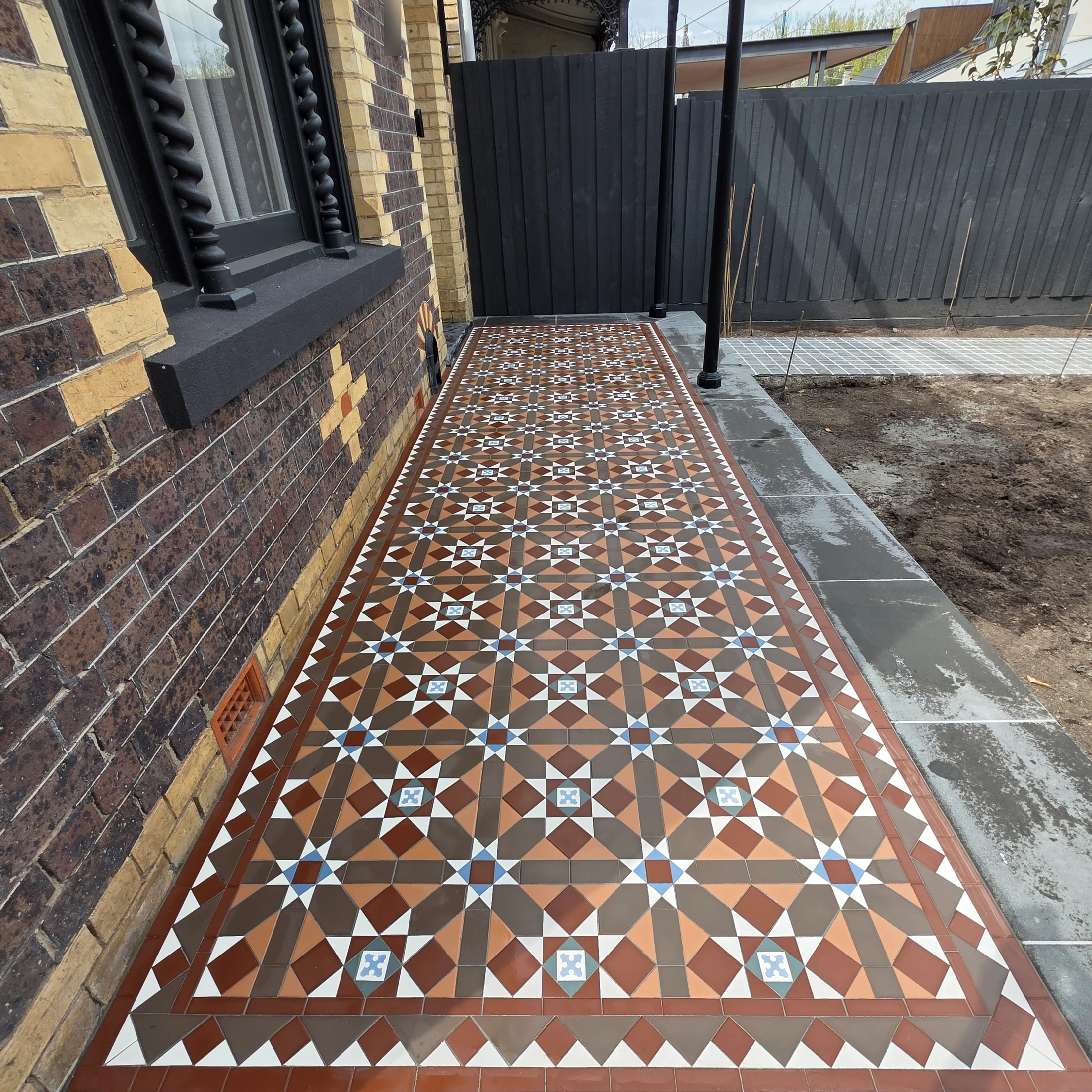
A property-led approach for Cranbourne homes
The City of Casey's Cranbourne Major Activity Centre Structure Plan anticipates substantial change and redevelopment in and around the centre. That broader growth context does not give every property the same architectural character. A new tessellated floor should therefore be considered against the actual home or building, its entry sequence, adjoining brick, render or stone, and the visibility of the work from the street.
Where a property has an older verandah, pathway or surviving patterned floor, photograph and measure the existing details before selecting a layout. Pattern scale, border width, thresholds, stair edges and junctions with other materials can be more important than choosing a design by name alone.
Design, restoration and installation decisions
For restoration, begin by separating what can be retained from what is loose, missing or too damaged to repair. Matching involves more than colour: the geometry, tile scale, border turns, wear and edge details all affect how a repaired floor reads. For a new verandah or pathway, the layout should be planned around doors, steps, falls, exposure, cleaning access and the transition to adjacent surfaces.
Design consultation, tessellated tile supply, installation, restoration and stone bullnose or edging coordination can be considered as one joined brief. Installation planning should follow an assessment of the actual site; there is no universal substrate or preparation recipe for every Cranbourne property.
Check heritage and planning requirements for the property
Casey explains that its heritage places include historic buildings, precincts, landscapes and archaeological material, and directs owners to check the relevant Victorian register, inventory or Casey Heritage Overlay for the individual property. That guidance matters when a visible entry, verandah or floor forms part of a protected place or precinct.
A tile design consultation can help document existing fabric and develop a sympathetic material and layout brief, but it is not heritage or planning approval. Check the current property information and seek the relevant authority's advice before external building, demolition or construction work.
Your Heritage Tiling Questions
Does every Cranbourne property have heritage protection?
No. Casey's heritage guidance covers specific places, precincts and heritage controls rather than every property in the locality. Check the individual address through the relevant Victorian heritage resources and the Casey Planning Scheme before planning work that may affect a protected place.
Can existing tessellated tiles in a Cranbourne home be restored?
The first step is an assessment of the surviving floor, including loose or missing tiles, the setting, borders, thresholds and adjacent finishes. The brief can then distinguish retention and repair from carefully matched replacement. The suitable approach depends on the actual condition and use of the floor.
Do I need planning or heritage advice before changing tiles in Cranbourne?
If the work forms part of building, demolition or construction changes, check the property and current requirements first. Casey directs owners to the relevant heritage registers and overlays, and property-specific advice should come from the current planning or heritage authority. Tile design guidance does not replace that advice.
Discuss Your Heritage Tiling Project
Share your location, project details and photographs using our enquiry form, or call 0433 932 711.