
Tessellated Tiles in Officer
For Officer homes and townhouses, a tessellated tile scheme can give a verandah, entry, path or entertaining area a clear architectural structure. The right approach depends on the building, the intended use, the available levels and the way the new work meets gardens, open space or existing paving. We can help with design consultation, tessellated tile supply, installation, restoration and stone bullnose or edging coordination.
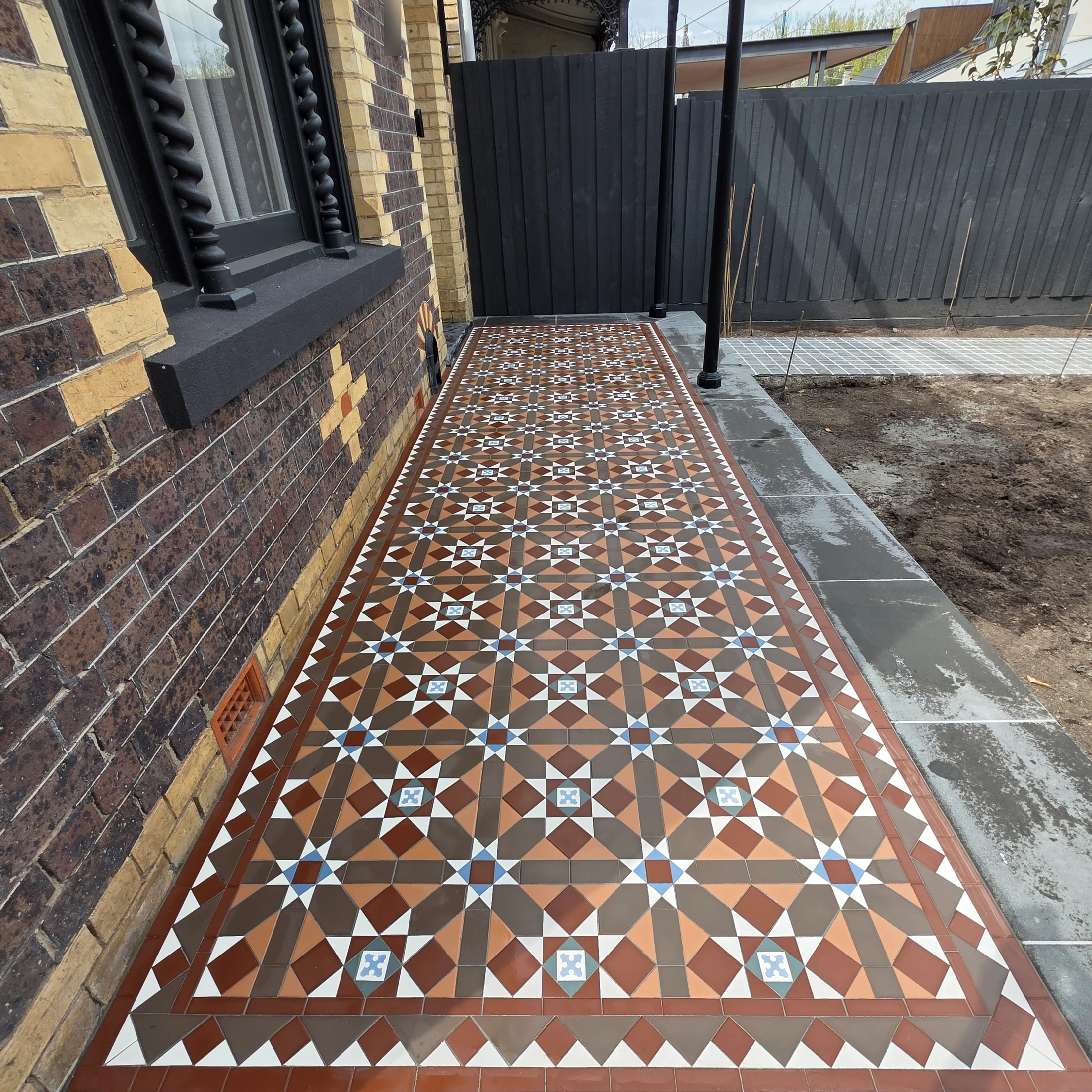
Tile design for Officer’s changing built context
Officer’s precinct planning provides for new neighbourhoods, a major activity centre and a mix of housing forms. That makes proportion and transition especially important: a pattern should suit the scale of the entry or terrace, while borders, thresholds and step details should be resolved against the actual building rather than chosen as a generic suburb style.
For a new or recently built home, design consultation can test colour, repeat, border width and edge treatment against the façade, roofline and landscape. For an older property, the starting point is different: inspect what remains, identify sound material and decide whether the work is repair, a carefully matched extension or new tiling in a separate area.
Verandahs, paths and outdoor transitions
Officer planning material gives weight to streetscape quality, open-space connections and landscape interfaces. On a verandah or front path, that translates into checking falls, drainage, door thresholds, step nosings and the relationship between the tiled surface and adjoining paving or planting. A border can frame a route, but it should not make a narrow approach feel tighter or create an awkward cut at a gate or landing.
For terraces, porches and garden paths, we can coordinate tessellated tile selection with stone bullnose or edging where an exposed edge needs a considered finish. The final layout should be set out from the key visual lines and site measurements, with installation planning based on the actual substrate and conditions.
Check the property before changing existing fabric
An Officer address may sit within a new neighbourhood, an established part of the locality or a site affected by a planning overlay or environmental interface. A local name alone does not establish heritage protection or a permit requirement. Before altering older tiles, confirm the property’s current planning information and obtain property-specific advice where an overlay, listed place or other control may apply.
Where an existing tessellated floor is repairable, retaining sound original material can preserve its variation and scale. Where a new surface is proposed, the design can still acknowledge the building’s proportions without presenting new work as historic fabric.
Your Heritage Tiling Questions
Can tessellated tiles suit a new Officer townhouse or home?
Yes. The pattern, border and edge detail should be scaled to the entry, verandah or terrace and coordinated with the façade, levels, drainage and adjoining landscape. A new installation should be presented as new work rather than assumed to be original heritage fabric.
Are all Officer properties heritage properties?
No. Officer is a developing locality with established areas, new neighbourhoods and planned activity-centre development. Heritage status is property-specific, so check the current planning information for the address before changing an older floor, verandah or pathway.
What should be checked before tiling an outdoor path or verandah?
Check the existing levels, drainage, thresholds, steps, edge conditions and the relationship to gardens or adjoining paving. The layout should be measured on site so borders and cuts work around doors, corners, gates and changes in level.
Can existing tessellated tiles be restored in Officer?
An inspection can help distinguish sound original tiles, loose areas, damaged sections and later additions. The suitable response may be selective restoration, careful matching or a new design in a separate area, depending on condition and the owner’s goals.
Discuss Your Heritage Tiling Project
Share your location, project details and photographs using our enquiry form, or call 0433 932 711.