
Tessellated Tiles in Hampton Park
For a Hampton Park verandah, entry, path or interior floor, a good tessellated-tile result starts with the property rather than a preset pattern. We can help you consider proportion, colour, edge details and practical use, then coordinate design consultation, tile supply, installation, restoration and stone bullnose or edging where appropriate.
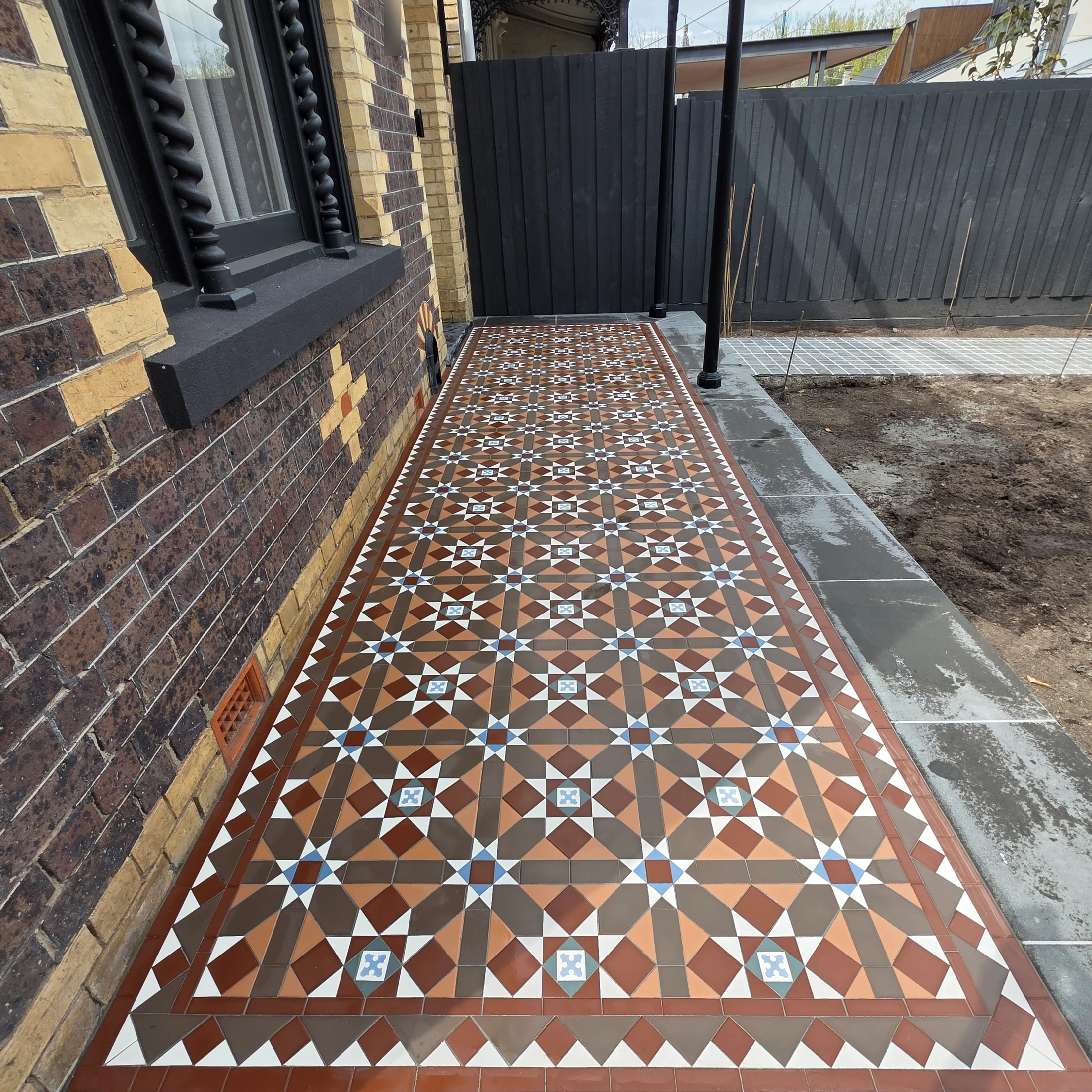
A property-led approach for Hampton Park
Hampton Park is a City of Casey locality within south-eastern Melbourne. Its current local planning context includes Hampton Park Central, a major activity centre where Casey's adopted development plan addresses building design, layout, movement and infrastructure. That context is useful when a project meets a more public-facing or changing part of the suburb, but it does not prescribe one tile style for every home.
For a residential project, begin by reading the immediate setting: the entry sequence, verandah or porch, roof and facade proportions, neighbouring buildings, footpath relationship and existing garden edges. Victorian planning guidance treats these nearby features as relevant to a design response. Tessellation can then be scaled and framed to belong to the property, whether the brief is a new pathway, a refreshed verandah or careful work around an existing floor.
Plan the pattern around how the space is used
A Hampton Park pathway needs a clear line of travel and durable transitions at gates, steps and thresholds. A verandah or porch may call for a calmer border and a pattern that sits comfortably beneath the existing roofline. Indoors, the floor plan, sightlines and adjoining finishes matter as much as the motif. We can work through layout, tessellated tile selection and the relationship between field tiles, borders and stone bullnose or edging.
Where an existing floor remains, the first question is condition and retention. A site review can distinguish sound original or older fabric from later additions and identify where selective restoration, replacement or a new adjoining section is the more appropriate response. Any heritage or planning checks remain property-specific and should be confirmed with the relevant authority before work begins.
Design, supply, installation and restoration
A project can begin with design consultation for a new pattern or a sympathetic response to an existing home. From there, AHTC can coordinate tessellated tile supply and installation, or assess an established floor for restoration. The right sequence depends on the room or exterior setting, access, existing surfaces and the finish required at edges and thresholds rather than on a universal method.
Share photographs and the suburb with your enquiry so the initial discussion can focus on the actual space. A site-specific review can then clarify whether the brief is new work, repair, restoration or a combination of these.
Your Heritage Tiling Questions
Can you design tessellated tiles for a Hampton Park verandah or pathway?
Yes. We can discuss the home's entry sequence, verandah or pathway proportions, existing edges and how the pattern will meet gates, steps and thresholds before coordinating supply and installation.
Does Hampton Park have one local heritage tile style?
There is not enough evidence to describe every Hampton Park property as having one shared heritage style. A more reliable approach is to assess the individual home's facade, roof, porch or verandah, neighbouring context and any surviving floor fabric before selecting a pattern.
Can an existing tessellated floor in Hampton Park be restored rather than replaced?
Often the decision depends on the condition of the existing tiles, substrate, edges and any later alterations. An assessment can identify whether cleaning, selective repair, matching or a new adjoining section is the most suitable path.
Do Hampton Park planning requirements automatically require heritage approval for tile work?
No automatic conclusion should be made from the suburb name alone. Planning or heritage requirements depend on the particular property, proposal and applicable controls, so confirm them with the relevant authority before starting work.
Discuss Your Heritage Tiling Project
Share your location, project details and photographs using our enquiry form, or call 0433 932 711.