
Tessellated Tiles in Hallam
For Hallam homes and other properties, a tessellated tile project works best when the design responds to the building and the way the space is used. We can help with design consultation, tessellated tile supply, installation, restoration and stone bullnose or edging coordination. Hallam is part of the City of Casey in Melbourne's south east, where post-war residential expansion added a range of estate layouts and home types. That context can inform a considered approach, but it does not make every property heritage-listed.
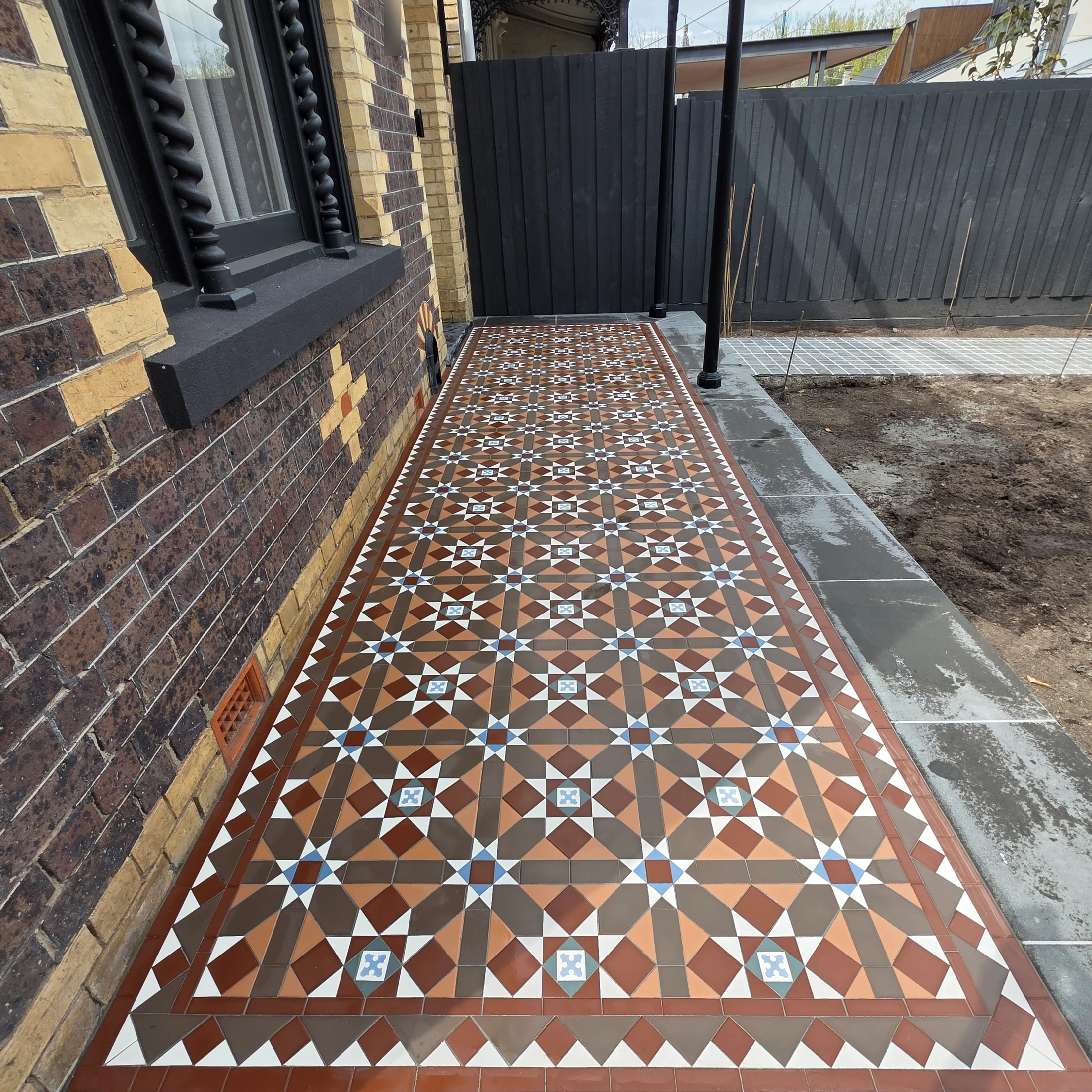
A property-led approach for Hallam homes
Casey's heritage handbook describes Hallam among the residential suburbs that expanded after World War II as employment increased around Dandenong and Hallam. It refers to estate layout and design as part of that expansion. In practice, that means the right tile treatment depends on the individual property rather than a single assumed Hallam style.
Before selecting a pattern or border, consider the entry, verandah, pathway or interior floor as a whole. Existing thresholds, step levels, adjoining masonry and the amount of original tile that remains can all affect the design and installation plan. Where older fabric survives, documenting it before changes are made can help guide proportion, colour relationships and repair decisions.
Heritage Handbook: Practical Guidelines for Owners of Historic Buildings — City of Casey
Planning tessellated tile design and installation
A Hallam verandah or front path may call for a restrained border, a defined transition or a layout that follows the geometry of the approach. Supply and installation can be coordinated around the measured area, selected pattern and the existing conditions found on site. The aim is a durable result that feels connected to the building rather than a pattern applied without regard to its setting.
For a replacement or new installation, the surface, falls, edges, thresholds and drainage should be assessed as part of the project. For restoration, the first question is what can reasonably be retained and matched. These are property-specific decisions, not a universal recipe for every Hallam address.
Heritage Handbook: Practical Guidelines for Owners of Historic Buildings — City of Casey
Heritage checks for a Hallam property
The City of Casey explains that heritage places may have historical, aesthetic or architectural value and that its handbook is introductory guidance. If a property appears to have heritage significance or is affected by a planning control, check the relevant property records and council requirements before removing original tiles or changing a significant exterior area.
A heritage-sensitive tiling discussion is still useful where no formal listing has been established: it can help separate repairable original fabric from later work, record what is present and choose new materials that sit comfortably with the building. Any permit or approval question belongs with the relevant authority for the specific property.
Heritage Handbook: Practical Guidelines for Owners of Historic Buildings — City of Casey
Tessellated tile services for Hallam projects
The Hallam service page can support design consultation, tessellated tile supply, installation and restoration planning for entries, verandahs, pathways and suitable interior areas. Stone bullnose and edging coordination can be considered where the detail needs to meet steps, garden edges or other adjoining surfaces.
A useful first conversation starts with the property's location, the area involved, whether tiles are already present and what you want the finished space to do. Photographs and measurements can help frame the design discussion, while the final recommendation should follow inspection and the particular condition of the site.
Heritage Handbook: Practical Guidelines for Owners of Historic Buildings — City of Casey
Your Heritage Tiling Questions
Does every Hallam home need a heritage approval for tessellated tiling?
No. Hallam's location in Casey does not by itself mean that every home is heritage-listed or that every tiling job needs approval. Heritage status and planning controls are property-specific, so check the relevant Casey and Victorian records before altering original fabric or a significant exterior area.
Can existing tessellated tiles in a Hallam property be restored?
Often the starting point is an assessment of what remains, including loose, damaged, stained or missing tiles and the condition of adjoining surfaces. A restoration approach should distinguish repairable original fabric from later additions and should be based on the actual site rather than a standard replacement assumption.
What should I consider for a Hallam verandah or pathway tile layout?
Consider the approach to the building, the width and geometry of the space, thresholds and steps, drainage and how the tile pattern relates to nearby masonry or garden edges. A border or transition can be designed around those conditions rather than selected in isolation.
Is Hallam part of Melbourne for a local tiling enquiry?
Yes. Hallam is listed as a City of Casey locality, and Casey is described by the Victorian Government as being in Melbourne's south east. The existing Casey/Hallam service route is therefore retained for metropolitan Melbourne enquiries.
Discuss Your Heritage Tiling Project
Share your location, project details and photographs using our enquiry form, or call 0433 932 711.