
Randwick heritage tiling area directory
Use this Randwick area directory to find locality-specific heritage tiling guidance. Randwick City's architectural character is varied rather than uniform. The area includes historic village streets, coastal neighbourhoods, interwar housing and later urban change. For a verandah, entrance, pathway or floor, a considered tile scheme should respond to the property's existing fabric, the way it meets the street and the character of its immediate setting.
A varied south-eastern Sydney setting
Randwick City extends across a group of distinct localities, from Randwick and Kensington to Coogee, Maroubra, La Perouse, Little Bay and the surrounding coastal suburbs. Council's local history collection records 13 suburbs, while the Dictionary of Sydney describes a changing mix of nineteenth-century buildings, interwar housing and later development.
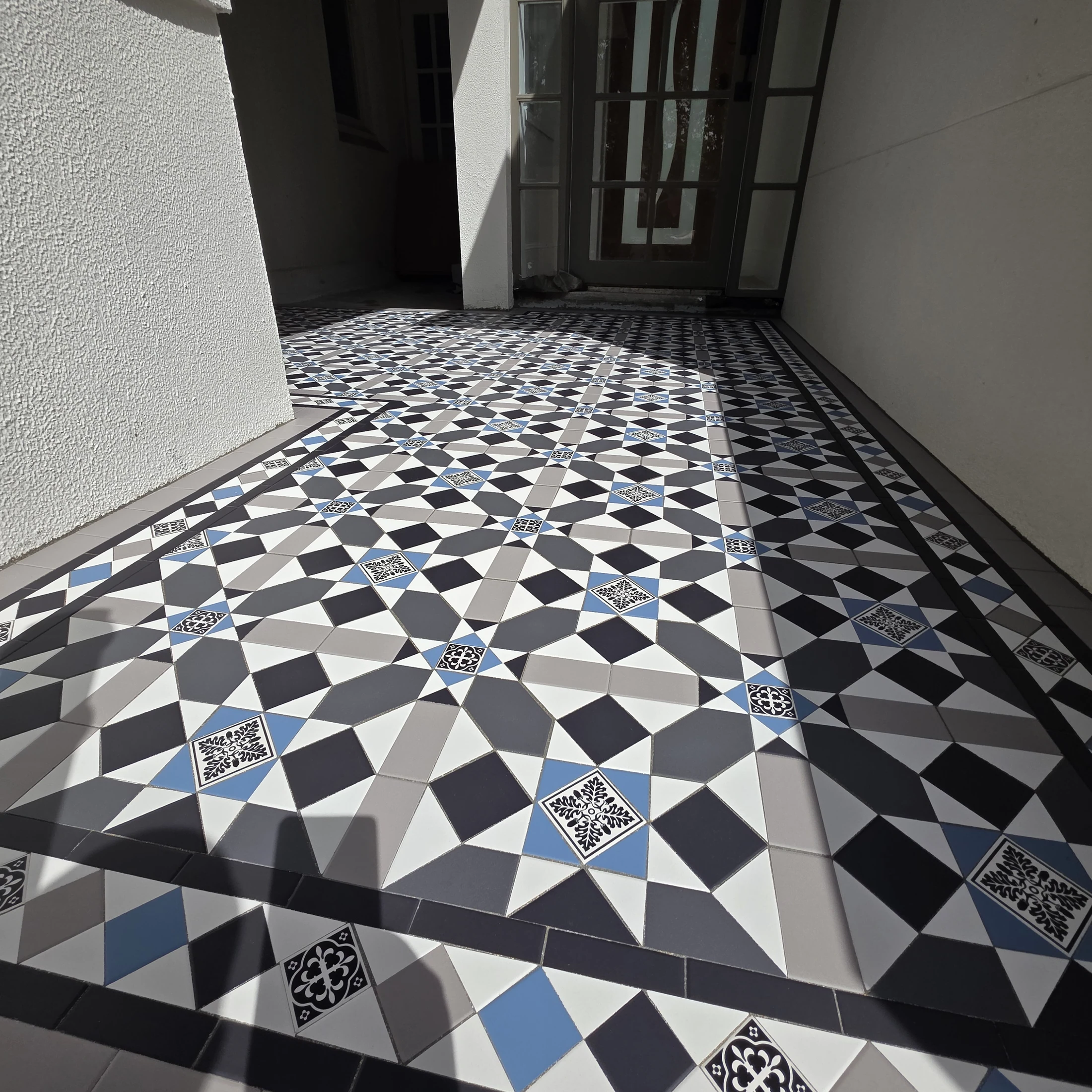
That variety is useful design context, not a template. A new tessellated pattern can be developed around the proportions and sightlines of the property, while restoration work should begin with what survives: original layout, border details, steps, thresholds and adjoining masonry or stonework.
Randwick City Council publishes heritage conservation-area information for named precincts including Randwick Junction, The Spot, North Randwick, West Kensington, Struggletown, St Judes and Malabar Headland. A property-led review should establish whether the site is listed or within a conservation area before work is specified.
Our Suburb Histories - Randwick City Council Our StoryHeritage conservation areas — Randwick City Council
Design decisions for verandahs, paths and entrances
Council guidance identifies original verandahs, front fences and front gardens as important contributors to streetscape character. These interfaces deserve careful coordination: tile scale, border width, stair nosings, drainage falls and the transition into the house should be considered together rather than selected as isolated finishes.
For a new installation, design inspiration can come from the geometry and rhythm of the building without pretending that every Randwick property shares one period or pattern. For an existing tiled surface, photographs and close inspection can help distinguish surviving original work from later repairs before a matching or complementary scheme is developed.
Where stone steps or thresholds are part of the entrance, stone bullnose or edging coordination can help the tiled work meet the existing construction cleanly. The suitable detail depends on the property, exposure and condition found during assessment.
Check the property context before changing original fabric
Randwick Council says conservation should respect existing building fabric and minimise change to original features. Its heritage list and the NSW State Heritage Inventory are useful starting points for checking a property's status, while the Randwick LEP and Development Control Plan provide the relevant planning context.
A heritage listing or conservation-area location is property-specific. It does not mean that every nearby house is listed, and a tile contractor cannot determine the approval pathway from the suburb name alone. Council advises that even minor works may have separate consent or approval requirements in some circumstances, including where State Heritage Register listing applies.
For that reason, retain photographs of the existing surface, note any original borders or thresholds, and confirm the appropriate planning advice before removing or covering fabric that may contribute to significance.
Heritage list — Randwick City CouncilLooking after your heritage house — Randwick City CouncilRandwick Local Environmental Plan 2012 - NSW Planning Portal
Tessellated tile supply, installation and restoration
Authentic Heritage Tiling Co can help coordinate design consultation, tessellated tile supply, installation, restoration and stone bullnose or edging details for Randwick City properties. The right brief may be a new verandah or pathway scheme, a careful extension of an existing tiled area, or selective restoration where original work remains.
A consultation can focus on the building's proportions, the condition of the existing substrate and tiles, access, transitions and the visual relationship between the entry and the street. The existing service routes for Randwick City and its listed localities provide the relevant starting points for a locality-specific enquiry.
Looking after your heritage house — Randwick City CouncilOur Suburb Histories - Randwick City Council Our Story
Randwick area directory
Your Heritage Tiling Questions
Is every older property in Randwick City heritage listed?
No. Randwick City Council distinguishes individual heritage items from heritage conservation areas and provides a search pathway through its heritage information and the State Heritage Inventory. A property should be checked individually rather than assumed to be listed because it is in an older suburb or streetscape.
What should be checked before replacing tiles on a heritage property in Randwick?
Check the property's heritage-listing or conservation-area status, photograph and document the existing tiles and borders, and obtain the relevant planning advice before work begins. Council's heritage guidance says original fabric should be respected and notes that some minor works may still involve other consent or approval requirements.
Can a new tessellated pathway suit a Randwick period home without copying every historic detail?
Yes. A new scheme can take cues from the property's scale, entry proportions and existing materials while remaining clearly new work. The design should be developed for the individual building and its setting, rather than assuming one pattern or period applies across Randwick City.
Are verandahs and front gardens relevant to a Randwick tiling design?
They can be. Randwick Council identifies original verandahs and front gardens as contributors to house and streetscape character. Tile layout, thresholds, steps and pathway edges should therefore be considered as part of the whole entrance setting.
Discuss Your Heritage Tiling Project
Share your location, project details and photographs using our enquiry form, or call 0433 932 711.