
Tessellated tiles in Matraville
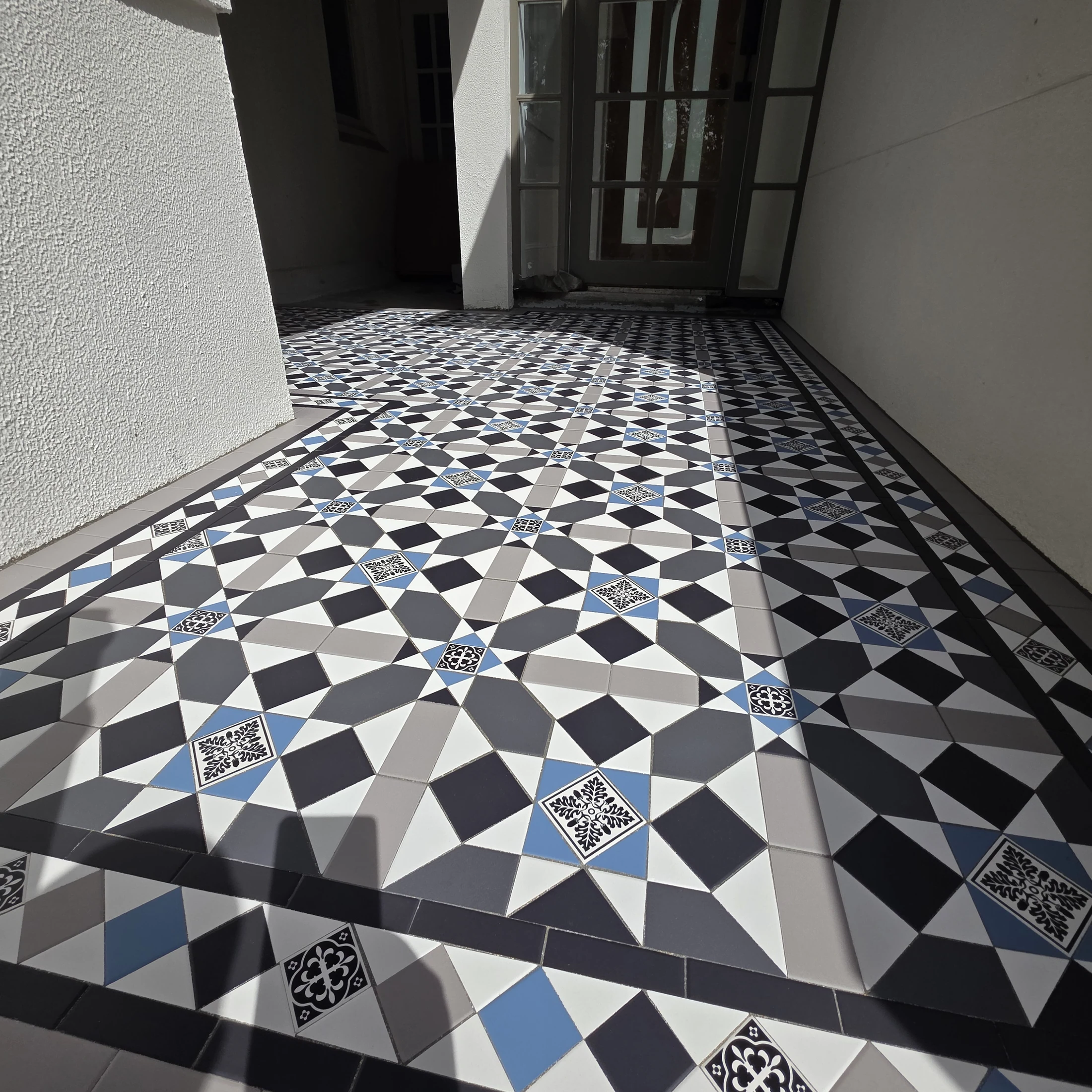
Matraville's south-eastern Sydney setting brings together a documented sandhill and market-garden history, a post-First World War returned-soldier settlement, and a long relationship with local industry. For a home or public-facing property, tessellated tiles can connect a new verandah, path or floor to its setting without assuming that every building has the same history or heritage status. AHTC can discuss design, tessellated tile supply, installation, restoration and stone bullnose or edging coordination around the existing property.
A locality shaped by sand, gardens and industry
Randwick City Council's local history record describes Matraville as a place of sandy, low-nutrient terrain that supported market gardens, including gardens worked by Chinese immigrants. It also records Samuel Dive's brickworks, which operated locally for generations, and the 1932 Matraville incinerator designed by Walter Burley Griffin. These are useful reminders that Matraville's built setting was shaped by both working landscapes and industry, not by one uniform house style.
The Dictionary of Sydney places Matraville in south-eastern Sydney between the eastern beaches and Botany Bay, and records its development after the First World War as a returned-soldier settlement. When selecting a tessellated layout, begin with the individual property's frontage, scale, existing thresholds and surviving materials rather than applying a generic period label.
Design considerations for Matraville properties
A useful starting point is to identify what is already doing the visual work: a front step, verandah edge, pathway, porch or interior threshold. A restrained border can help a new surface sit comfortably with existing brickwork and joinery, while a more detailed geometric field may suit a clearly defined architectural feature. The right proportions depend on the site and the relationship between the tiled area and the rest of the building.
Matraville's documented material history makes an on-site review especially valuable. Existing brick, concrete, stone edging, drainage falls and door clearances should be considered before a pattern or colour direction is fixed. Where an older tiled surface survives, restoration or selective repair may be more appropriate than replacing sound original fabric.
Check the property's actual heritage position
Matraville's historical significance does not mean every house is heritage-listed or located in a heritage conservation area. Randwick Council explains that conservation areas are identified precincts, streetscapes, groups of buildings, landscapes, suburbs or towns with particular heritage values, and provides official maps and Statements of Significance for listed areas. Check the current council heritage list and mapping for the specific property before relying on a heritage assumption.
If the property is listed or falls within a relevant conservation area, retain the council's terminology and seek current planning guidance before substantial external work. AHTC's role is to help assess the tile and property brief; it is not to provide council approval or imply that a proposed design has heritage endorsement.
Craftsmanship for a lasting tiled surface
Good craftsmanship starts with clear documentation of the existing condition and the intended use of the area. For a verandah or pathway, the conversation should cover transitions, edges, exposure and how the surface meets adjacent materials. For restoration, record the surviving pattern and tile dimensions before deciding whether the work should be a repair, a carefully matched replacement or a new complementary section.
The final layout should be judged in the context of the property, not by a catalogue pattern alone. Design consultation, tile supply, installation, restoration and stone bullnose or edging coordination can be considered as one connected brief, with the scope confirmed after the site and existing fabric are understood.
Heritage conservation areas — Randwick City CouncilMatraville 2036 | Randwick City Council Our Story
Your Heritage Tiling Questions
Does living in Matraville mean my home is heritage-listed?
No. Matraville's documented history is not the same as a listing for every property. Check the specific address against Randwick City Council's current heritage list and conservation-area mapping before making assumptions about controls.
Can tessellated tiles suit a newer Matraville renovation?
They can, when the pattern, scale, borders and adjoining materials are selected for the actual building. Matraville's history includes different residential and industrial phases, so a property-led design review is more reliable than assigning one suburb-wide style.
Should an older tiled verandah be replaced or restored?
Start by documenting what remains and assessing its condition. If original or compatible fabric can be retained, selective restoration may preserve more of the property's character; replacement is a separate design decision that should account for thresholds, edges and surrounding materials.
Who should I check with about heritage requirements in Matraville?
Use Randwick City Council's current heritage list, conservation-area maps and heritage-planner contact pathway for property-specific guidance. A tiling consultation does not replace council planning advice or any approval process that may apply.
Discuss Your Heritage Tiling Project
Share your location, project details and photographs using our enquiry form, or call 0433 932 711.