
Tessellated Tiles Little Bay
Little Bay's coastal setting and the former Prince Henry Hospital precinct create a clear reason to plan tile work around the character of the property, not just the pattern. For a verandah, entry, pathway or interior floor, begin by identifying whether existing tiles, masonry, landscape elements or a heritage setting need to be retained and understood. AHTC can help with design consultation, tessellated tile supply, installation, restoration and stone bullnose or edging coordination for projects in Little Bay and the wider Randwick area.
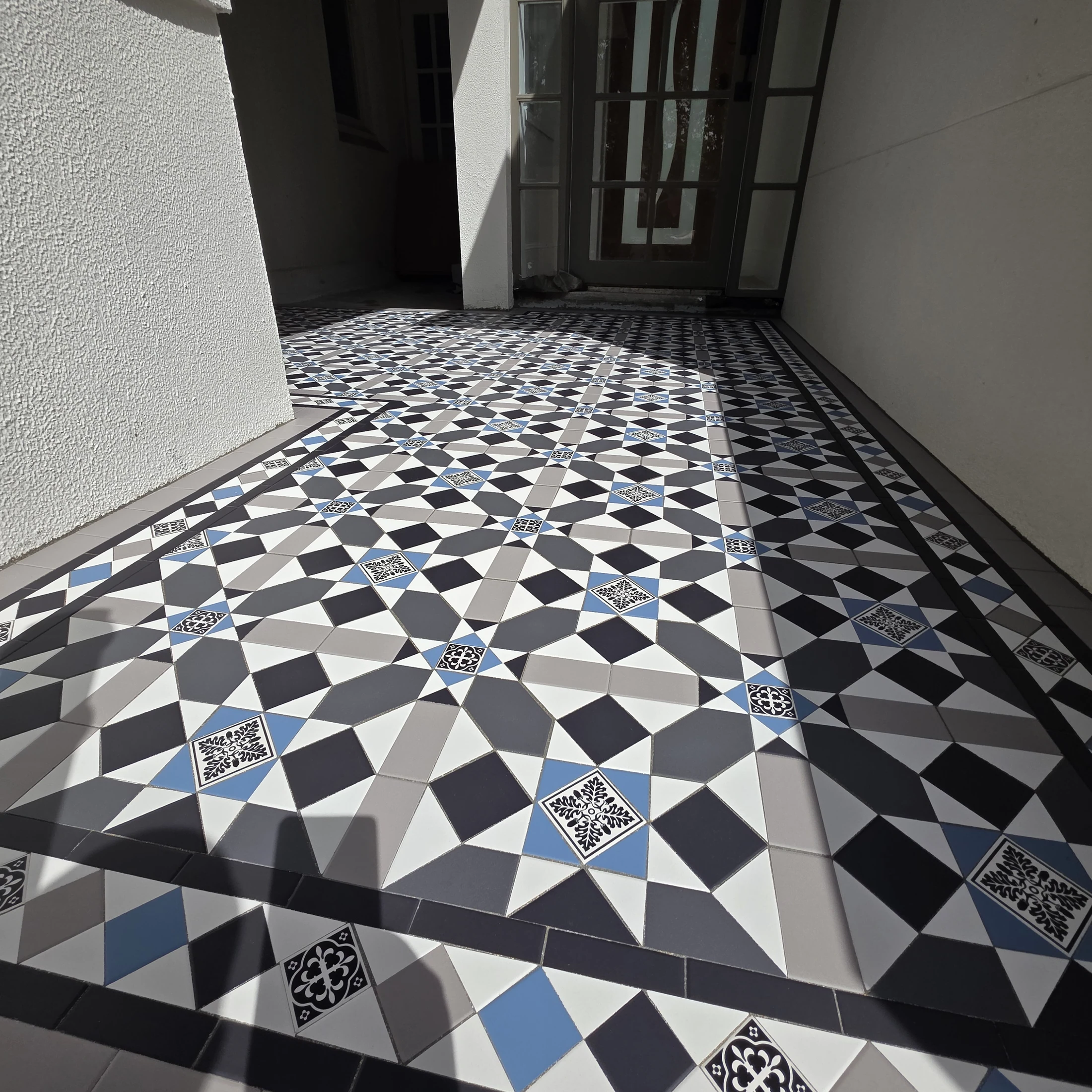
A coastal locality with a specific heritage context
Little Bay sits on Sydney's eastern coast within the Randwick City Council profile area. The locality is associated with the former Coast Hospital, established there in 1881 and later known as Prince Henry Hospital. The Prince Henry site is not a shorthand for every home's history, but it is an important local reminder that buildings, landscape, archaeology and views can form part of a wider place story.
For work near a heritage precinct or on a property with older fabric, establish the property's own status and constraints before selecting a pattern or removing material. The Randwick planning document identifies significant buildings, landscape elements, Aboriginal and archaeological features, and conservation-management material for the Prince Henry site. Those controls are site-specific; they do not mean ordinary residential tile work automatically needs heritage approval.
Little Bay 2036 — Randwick City Council Our StoryPrince Henry Site, Little Bay — Randwick Comprehensive Development Control Plan 2013
Plan the pattern around the property
On a Little Bay verandah or entry, proportions, thresholds and sightlines matter as much as the motif. A restrained border can clarify the edge of a path, while a more detailed field may suit a sheltered interior floor. Existing steps, brickwork, render, stone and drainage should be surveyed before a new tiled finish is designed around them.
Coastal exposure makes practical detailing part of the design conversation. Consider how water moves away from the building, how the tiled surface meets stairs and paving, and how maintenance access will work. The council's beach information records a steep access route and ongoing environmental management in the coastal setting; those facts are a useful prompt to assess each property's own exposure rather than assume a universal installation method.
Little Bay Beach — Randwick City CouncilPrince Henry Site, Little Bay — Randwick Comprehensive Development Control Plan 2013
Restoration and new work with a clear scope
Where original or established tiles survive, document the layout, edge details, condition and transitions before deciding whether to retain, repair or replace sections. Matching is a property-led exercise: the existing pattern, scale, colour relationships and surrounding materials should guide the next step rather than a generic period label.
The NSW Government's account of work at the Coast Centre for Seniors records repairs to verandah surfaces, brickwork, render, concrete and drainage carried out with regard for the building's heritage character. It illustrates why a tile brief may need to coordinate with adjacent masonry and water-management work, while still avoiding any claim that one precinct repair method applies to every Little Bay home.
NSW Government preserves heritage on Little Bay's Coast Centre for Seniors
Design inspiration for verandahs, pathways and floors
Little Bay's documented hospital, coastal and landscape history can inform a thoughtful design without turning a home into a replica of a public heritage place. Clear geometry, a legible border and durable transitions can suit an entry or pathway; a quieter field and carefully proportioned edge can help an interior connect with an older home. Where a property sits beside mature planting or open coastal views, keep the tile composition subordinate to the setting and test how strong contrast will read in changing light.
AHTC's design consultation can help compare a new tessellated layout with restoration or selective replacement of existing work. The appropriate outcome depends on the property's substrate, retained fabric, access and drainage, which should be assessed at the project rather than assumed from the suburb name.
Prince Henry Site, Little Bay — Randwick Comprehensive Development Control Plan 2013Little Bay Beach — Randwick City Council
Your Heritage Tiling Questions
Is every property in Little Bay heritage-listed?
No. The documented heritage significance relates to particular places and elements, including the Prince Henry precinct. A property's own listing, planning controls and surrounding context should be checked before work begins; the suburb name alone does not establish heritage protection or an approval requirement.
Can existing tessellated tiles in a Little Bay home be restored rather than replaced?
That depends on the condition, extent and significance of the existing work. A careful assessment can record the pattern, edges, transitions and adjacent materials before a decision is made about retention, selective repair or new installation.
What should be considered for a Little Bay verandah or pathway?
Start with the property's thresholds, falls, drainage, stairs, edges and exposure. Little Bay is a coastal locality, and council information records steep coastal access and ongoing environmental management at the beach, so the project's own water-management and maintenance conditions should be assessed rather than relying on a standard detail.
Does work near the Prince Henry site automatically require heritage approval?
Not automatically. The Prince Henry planning document describes site-specific heritage, archaeological and landscape controls and points applicants to conservation-management material. Check the particular property and proposed work with the relevant authority or adviser before proceeding; AHTC can provide tile and restoration guidance but does not grant heritage approvals.
Discuss Your Heritage Tiling Project
Share your location, project details and photographs using our enquiry form, or call 0433 932 711.