
Monash heritage tiling area directory
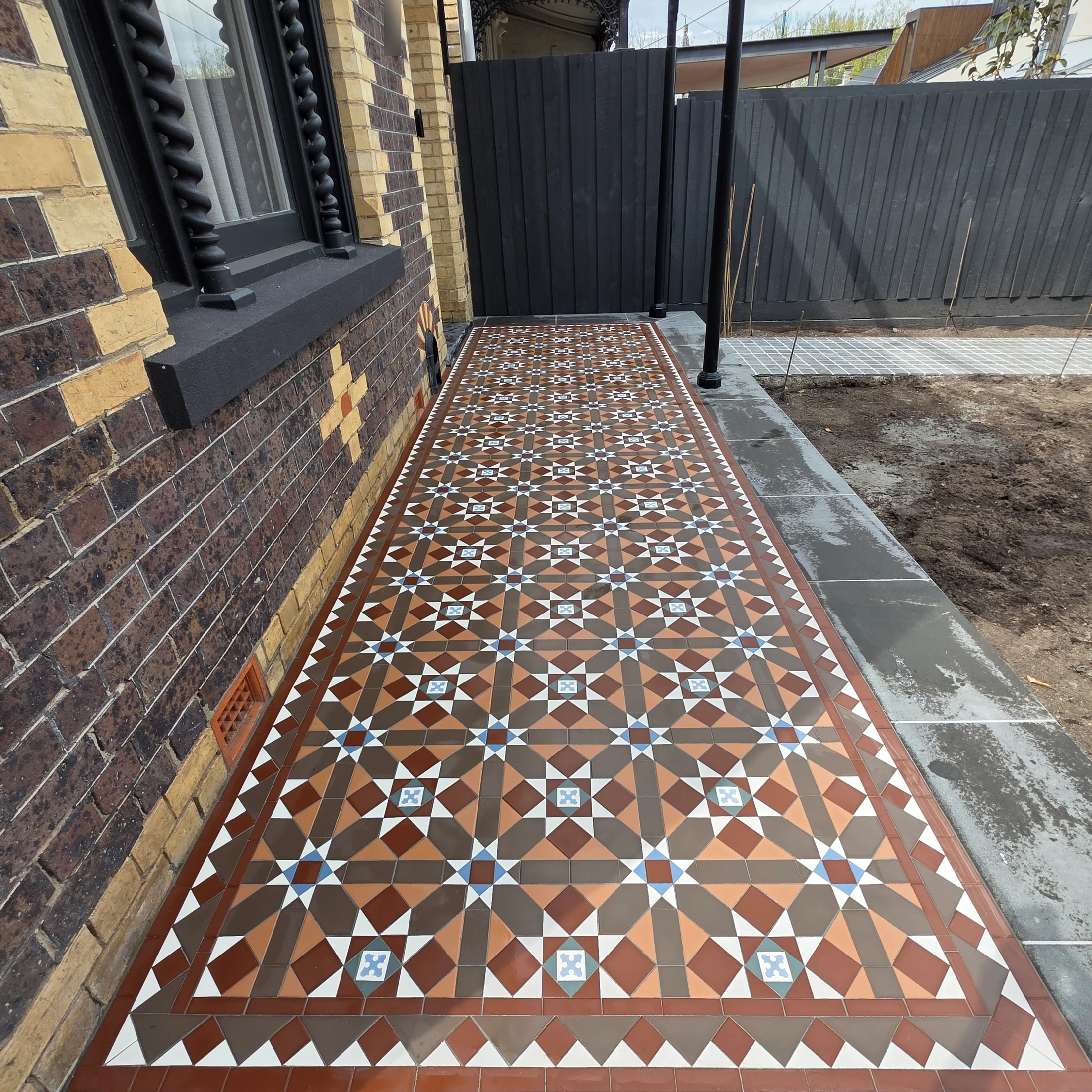
Use this Monash area directory to find locality-specific heritage tiling guidance. Monash brings together established residential neighbourhoods, activity centres and a documented garden-city character across Melbourne's south-east. For a verandah, entry, pathway or interior floor, tessellated tiling works best when the pattern, scale, edge treatment and new work are considered alongside the property and its setting. Authentic Heritage Tiling Co provides design consultation, tessellated tile supply, installation, restoration and stone bullnose or edging coordination across the Monash area.
A property-led approach for Monash homes
Monash Council describes neighbourhood character as the relationship between buildings, vegetation and topography, and identifies a valued garden-city character in its residential areas. That makes the approach to a tiled verandah, path or entry more than a choice of pattern: proportions, sightlines, planting, thresholds and the relationship with the front elevation all matter.
The municipality contains different character settings rather than one uniform architectural style. Council's planning material identifies heritage precincts, creek environs, the Dandenong Valley Escarpment and garden-city areas among its designated precinct types. A design consultation can therefore begin with the actual property, the existing fabric and the way the proposed tiled surface will meet adjoining steps, walls, garden edges and drainage points.
Neighbourhood Character — City of MonashKnow Your Council — Monash City Council
Check the property before changing heritage fabric
Some Monash properties and areas are covered by a Heritage Overlay. Council explains that a permit may be needed for work such as demolition, extensions, external structural alterations or a new front fence, while some repairs and routine maintenance may be exempt when they do not change appearance or are carried out to the same details, specifications and materials.
Overlay status and the relevant controls are property-specific. Before removing an existing tiled surface or altering a frontage, check the City of Monash interactive maps and the applicable planning information, then obtain independent planning advice where needed. Tiling guidance can support careful design and workmanship; it is not council approval or a substitute for a permit decision.
Heritage Overlay Zone — City of MonashSchedule to Clause 43.01 Heritage Overlay — Monash Planning Scheme
Design considerations for verandahs, paths and entries
For a verandah or entrance, start with the geometry of the space: establish the centre line, decide how borders will turn at corners and allow the pattern to meet steps and thresholds cleanly. A restrained border can help a small entry feel ordered, while a larger path may need deliberate transitions so the pattern remains legible from the garden approach.
Colour and motif can be selected to sit comfortably with the property's brickwork, render, timber, stone and planting. Existing fabric should be assessed before new tiles are ordered, particularly where a repair needs to sit beside surviving work. Edges and changes in level deserve the same attention as the field pattern; stone bullnose or other edging coordination may be appropriate where the design meets steps or exposed boundaries.
Neighbourhood Character — City of MonashMonash Heritage — City of Monash
Monash area directory
Your Heritage Tiling Questions
Does every Monash home need heritage approval before tiling work?
No. Heritage controls are property-specific. Monash Council says some areas are covered by a Heritage Overlay and that permit requirements depend on the proposed work and the applicable schedule. Check the property through Council's mapping and planning information before altering an existing frontage or tiled surface.
How should a new tessellated path respond to Monash's neighbourhood character?
Begin with the property's buildings, vegetation and topography. Monash Council describes those elements as contributors to neighbourhood character and identifies a valued garden-city character, so pattern scale, path proportions, planting edges, thresholds and views to the front elevation should be considered together.
Can existing tessellated tiles be restored rather than replaced?
Often the first step is an assessment of what survives: tile condition, missing areas, borders, transitions and the surrounding substrate. A restoration-led brief can then distinguish repair and careful matching from areas where new installation is more suitable. Where a property is affected by heritage controls, check the relevant planning requirements before work begins.
Which Monash areas can this service cover?
The existing local routes cover Clayton, Glen Waverley, Mount Waverley, Mulgrave, Oakleigh, Oakleigh East, Oakleigh South, Hughesdale, Huntingdale, Chadstone, Wheelers Hill and Notting Hill. The appropriate starting point is the locality route that matches the property, followed by a brief describing the tiling task and site context.
Discuss Your Heritage Tiling Project
Share your location, project details and photographs using our enquiry form, or call 0433 932 711.