
Tessellated tile services in Hughesdale
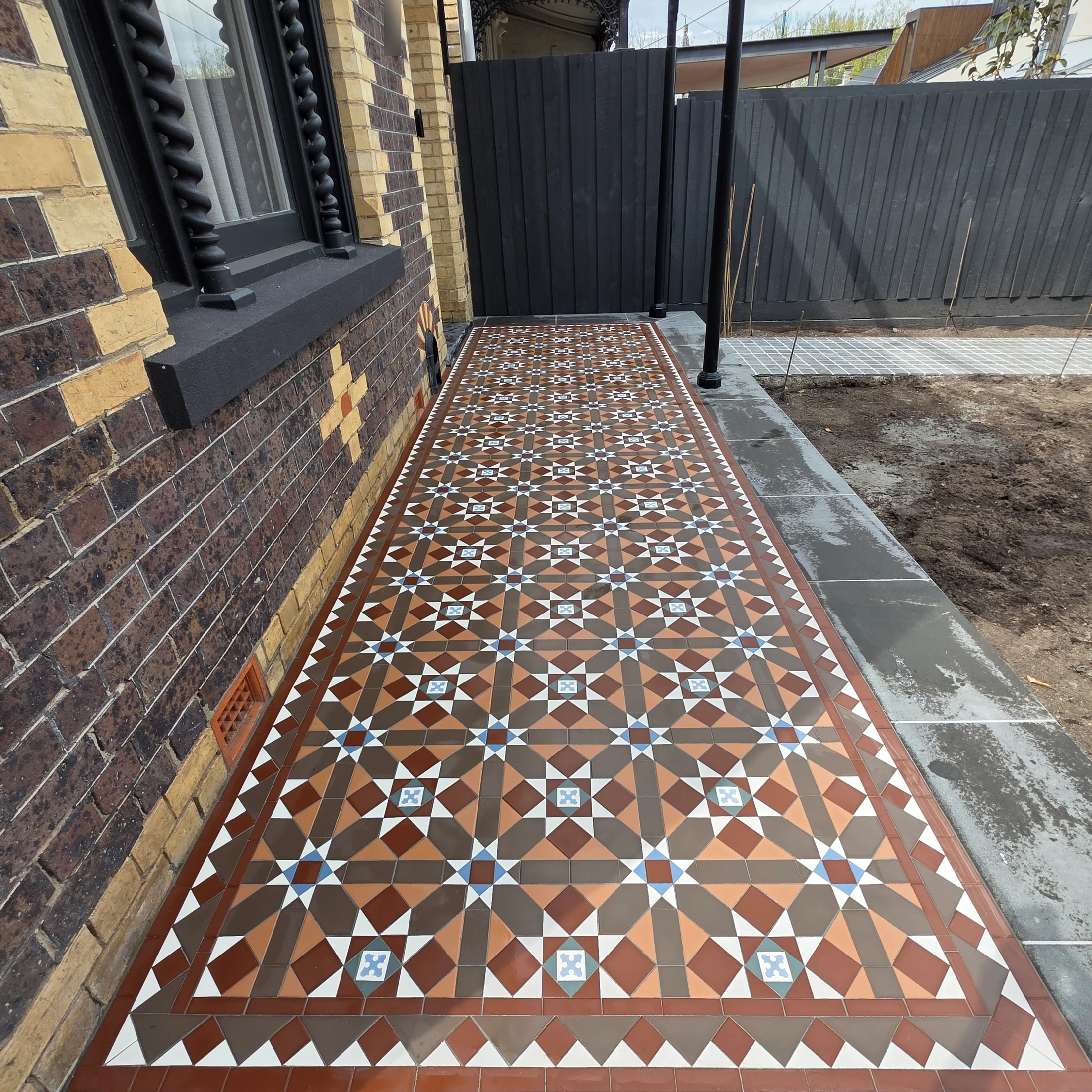
Hughesdale's built setting combines railway-era suburban growth with continuing change around its activity centre. For a period home, church, shopfront, verandah or pathway, tessellated tile work is best planned around the property that is actually there: its proportions, surviving surfaces, thresholds, drainage and relationship to the street. AHTC can help with design consultation, tessellated tile supply, installation, restoration and stone bullnose or edging coordination.
A railway-shaped local setting
Monash's local history records Hughesdale's railway station and the subdivision growth that followed improved rail access in the 1920s. The same history records Hughesdale State School opening in 1924 as the surrounding population grew. That background helps explain why a Hughesdale project may sit within an established residential streetscape rather than a single uniform architectural period.
Planning Victoria describes the present Hughesdale activity-centre setting as a blend of historic and modern built form, with walkability and nearby green spaces valued by residents. A new tiled entry, verandah or pathway therefore needs to be considered as part of the home's frontage and movement through the site, not as an isolated pattern choice.
Designing for the property in front of you
For an older Hughesdale property, useful early questions include whether original tiles remain, how the entry meets the footpath, whether borders or steps survive, and how the proposed layout relates to the building's scale. A restrained tessellated field, border or threshold treatment can be developed from those observations rather than imposed as a generic period look.
The local planning context also points to the importance of landscape, public-realm amenity and human-scale streetscapes. On a constrained site, tile selection and edging coordination should be resolved alongside levels, falls, drainage, garden edges and access. A site assessment is needed before deciding whether restoration, selective replacement or new installation is the appropriate path.
Checking heritage and planning context
Hughesdale includes individually recorded heritage material, including the George Fincham pipe organ at Hughesdale Uniting Church. The Monash planning scheme also refers to identified heritage precincts in Oakleigh and Hughesdale and to heritage and vegetation overlays. These records are property- and area-specific: they do not mean every Hughesdale home is heritage-listed or that tile work automatically requires approval.
Before changing an established frontage or removing surviving fabric, check the property's current planning information and ask the relevant authority whether any permit or other approval applies. AHTC's role is to help assess the tile design and practical scope; it is not to provide heritage-authority approval.
A considered approach to Hughesdale tile work
A project can begin with photographs, dimensions and a conversation about the property's existing character. From there, design consultation can address pattern, scale and transitions; supply and installation can be coordinated for new work; and restoration can focus on retaining viable original material where practical. Stone bullnose or edging coordination can be considered where steps, borders or exposed edges need a compatible finish.
The right brief depends on the condition of the existing surface and the way the area is used. For that reason, a Hughesdale enquiry is more useful when it identifies whether the work concerns a surviving tiled floor, a new verandah, a front path, an entry threshold or a repair to a limited section.
Your Heritage Tiling Questions
Does every Hughesdale property require heritage approval for tessellated tiles?
No. Heritage controls are property- and area-specific. Hughesdale has identified heritage places and planning-scheme references to heritage precincts, but a current property check is needed before deciding whether any approval applies.
Can tessellated tiles suit a Hughesdale home with both older and newer additions?
They can, when the layout responds to the whole property. Proportion, thresholds, existing materials, garden edges and the transition between old and new work should be reviewed before choosing a pattern or border.
Is restoration or replacement better for an older Hughesdale tiled area?
That depends on what survives and its condition. An assessment can distinguish viable original fabric from areas that need selective replacement or a new installation, while keeping access, drainage and finished levels in view.
What should I provide when asking about a Hughesdale verandah or pathway?
Useful starting information includes clear photographs, approximate dimensions, the property's location, any visible cracks or movement, and whether the work is restoration, extension or entirely new. Those details help shape a practical design and installation discussion.
Discuss Your Heritage Tiling Project
Share your location, project details and photographs using our enquiry form, or call 0433 932 711.