
Tessellated tiles and heritage tiling in Wheelers Hill
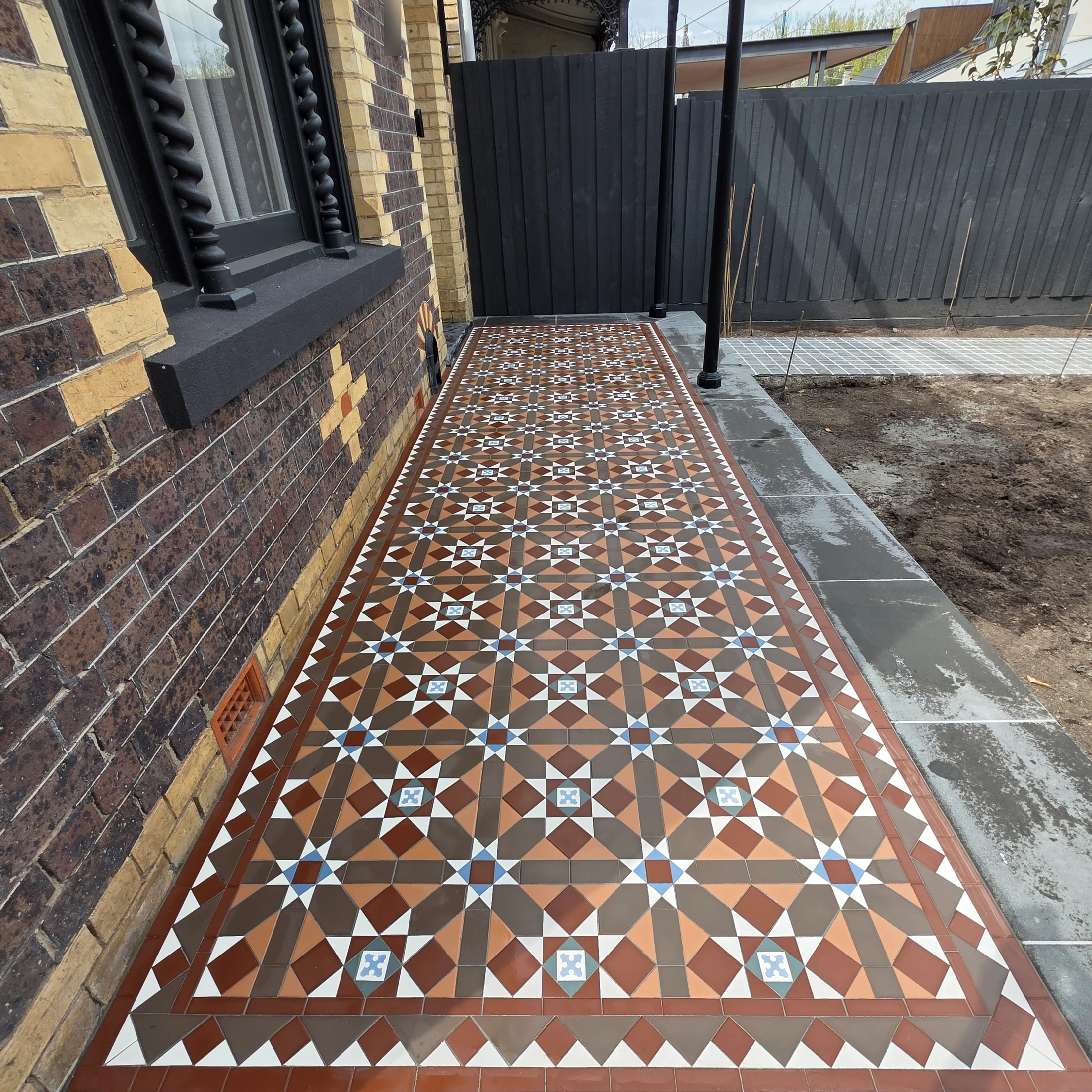
Wheelers Hill's established residential streets, garden setting and changing housing mix call for tile choices that respond to the individual property. For a verandah, entry, pathway or interior floor, pattern scale, borders, thresholds and edging should be considered alongside the building, landscape and the way the surface meets adjoining areas. AHTC provides design consultation, tessellated tile supply, installation, restoration and stone bullnose or edging coordination for properties in Wheelers Hill and Melbourne's south-east.
A suburban setting with more than one housing context
The City of Monash lists Wheelers Hill among its suburbs in Melbourne's south-east. The ABS treats it as a defined Suburbs and Localities area, while recent council planning material records a mix of housing types and building scales in an approved development-plan amendment. That combination is a reason to begin with the actual home, rather than assume one period, frontage or tile layout represents the whole suburb.
For a new tiled surface, look at the property's proportions, roof and wall materials, front setback, planting, steps and the relationship between the entrance and the street. A quiet border and carefully scaled repeat may suit one frontage, while another may need a stronger transition between an existing house and a later addition. The design should be specific to the site and the way the space is used.
Planning verandahs, entries and pathways
A Wheelers Hill verandah or pathway can be read from several distances: close up at the threshold, across the front garden and from the street. Design consultation can resolve the field pattern, border, colour balance and edge treatment before supply and installation are arranged. Transitions at doors, steps and garden paths deserve the same attention as the central pattern.
Site conditions should be reviewed rather than assumed. Existing paving, falls, drainage, movement, access and the interface with walls or steps can all influence the practical approach. Where stone bullnose or edging is part of the design, it should be coordinated with the levels and adjacent materials. There is no universal substrate or installation recipe for every Wheelers Hill property.
Check the property before changing older fabric
Monash Council explains that some areas and places have Heritage Overlay controls and directs owners to its interactive maps to check an individual property. The council lists possible controls affecting demolition, extensions, external structural changes, front fences and some vegetation, while noting that certain repairs and routine maintenance may be treated differently when they do not change appearance or use the same details and materials.
That guidance does not mean every Wheelers Hill property is heritage-listed or that every tile project follows the same approval pathway. Before removing or covering older tiles, record the pattern, border, thresholds, steps and adjoining masonry or paving. Check the property and proposed scope with the relevant authority, and consider whether retention, repair or a carefully matched replacement best respects what remains. AHTC can discuss the tiling work; it does not provide council approval or heritage certification.
Restoration, matching and new work
Restoration begins with understanding the existing surface. Loose or missing tiles, later infill, worn edges, moisture, movement and the condition of adjoining steps can each change the sensible next step. Matching should consider the surviving layout and colour relationships as well as the visible tile size, so that a repair does not look disconnected from the original work.
For a new design, supply and installation can be planned together so that the pattern, border and edge details are resolved before the work reaches site. For an older entrance or pathway, restoration may be more appropriate than replacement, or a new section may need to meet retained fabric with a deliberate transition. The right approach depends on the property assessment and the owner's goals.
A property-led way to begin
Start with photographs and measurements of the area, including the approach to the house, existing edges, steps and any damaged or missing tiles. Note whether the work is a new verandah or pathway, a repair to surviving tessellated tiling, or a larger change that may involve other building elements. Those details help shape a more useful design conversation.
The Monash area service directory remains the broader local navigation point, while this Wheelers Hill page focuses on the property's tile decisions. From there, design consultation can lead to tessellated tile supply, installation, restoration or stone bullnose and edging coordination as appropriate.
Your Heritage Tiling Questions
Are all Wheelers Hill homes heritage-listed?
No. Monash Council says some areas and places have Heritage Overlay controls and directs owners to check the individual property on its interactive maps. Wheelers Hill's suburb identity alone does not establish that a particular home is listed or controlled.
What should I check before replacing old tiles in Wheelers Hill?
Record the existing pattern, border, thresholds, steps, edges and adjoining paving or masonry, then check the property through the City of Monash planning and heritage information. The condition of the surface and the proposed scope should guide whether retention, repair or replacement is appropriate.
Can a tessellated pattern suit a newer Wheelers Hill home or addition?
Yes, the design can be developed around the particular building rather than assuming a period reproduction. Consider the frontage, roof and wall materials, garden setting, thresholds, access and the relationship between old and new work. Pattern scale and edging should be resolved with the whole entrance or pathway in view.
Does a Heritage Overlay automatically mean tile work needs a permit?
Not every task follows the same pathway. Monash Council says controls can apply to works such as extensions, external structural changes and demolition, while some repairs and routine maintenance may not need a permit when they do not change appearance or use the same details and materials. Check the individual property and proposed work with Council before starting.
Can AHTC help with both new tessellated tiling and restoration in Wheelers Hill?
Design consultation, tessellated tile supply, installation and restoration can be considered for a Wheelers Hill property, along with stone bullnose or edging coordination where it suits the design. The appropriate scope depends on the existing surface, access, levels and the owner's objectives.
Discuss Your Heritage Tiling Project
Share your location, project details and photographs using our enquiry form, or call 0433 932 711.