
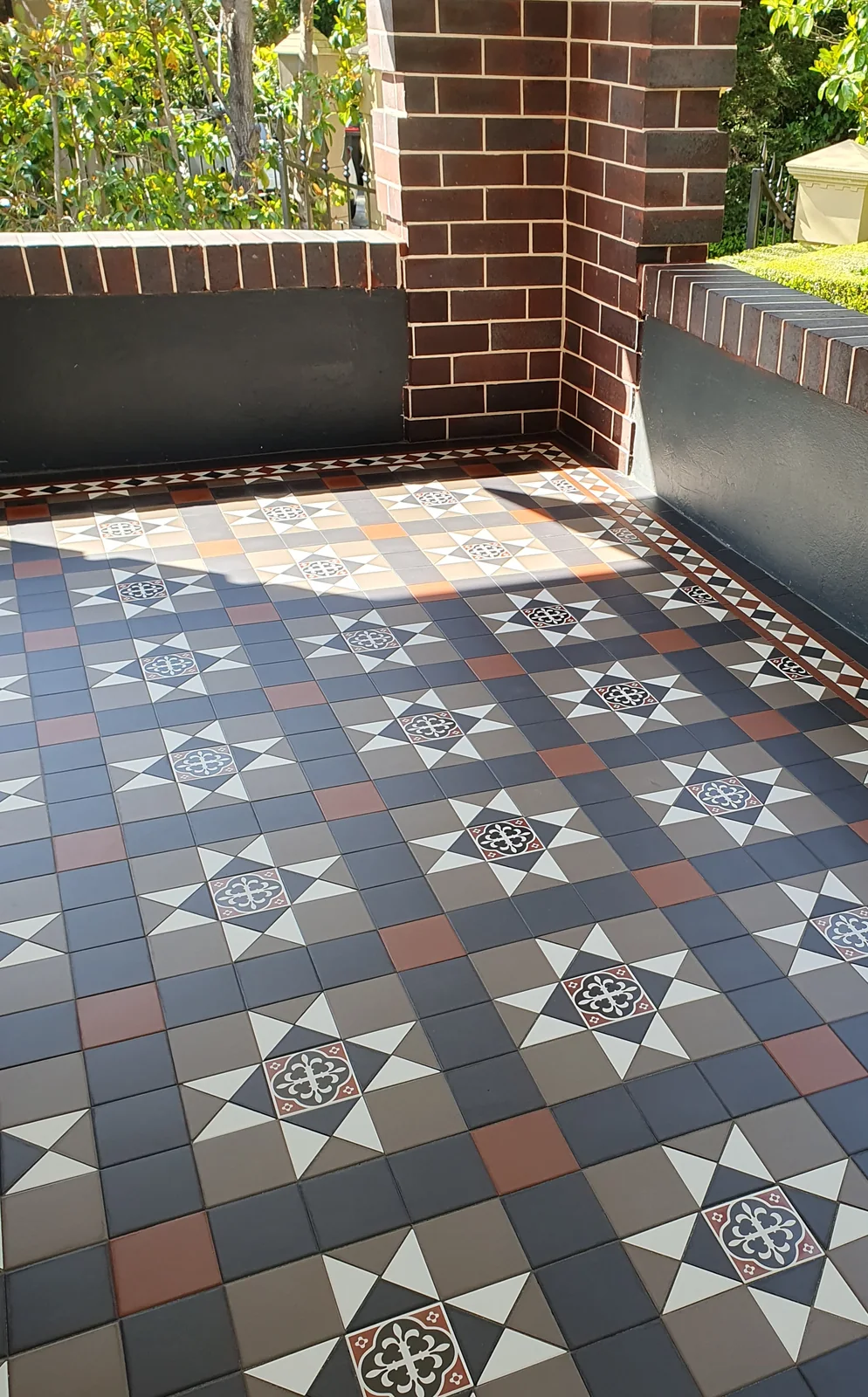
Artarmon, NSW
Artarmon NSW tessellated tiling
Supply and installation tessellated tiles for the verandah in Artarmon, NSW.
Read the projectUse this Willoughby area directory to find locality-specific heritage tiling guidance. For homes and public-facing spaces across Willoughby, Chatswood, Artarmon, Northbridge, Castlecrag, Middle Cove, Castle Cove and Willoughby East, tessellated tiles can contribute to the character of a verandah, entry, path or interior floor. The right approach depends on the property, the surviving fabric and the proposed work. Authentic Heritage Tiling Co provides design consultation, tessellated tile supply, installation, restoration and stone bullnose or edging coordination for projects in the area.
Willoughby City Council identifies twelve Heritage Conservation Areas in its local government area. These areas are protected through the Willoughby Local Environmental Plan 2012 and Development Control Plan Part H, so a property-led check is important before altering a prominent verandah, entry or pathway. A heritage conservation area is not the same thing as every home being individually heritage listed.
Council also distinguishes local heritage items from places on the NSW State Heritage Register. That distinction matters when planning tile repairs or new work: the relevant listing, setting and planning pathway should be checked for the individual property rather than inferred from its suburb or from the wider service area.
Heritage Conservation Areas | Willoughby City CouncilHeritage Items | Willoughby City CouncilWilloughby Local Environmental Plan 2012 | NSW Legislation
The Willoughby DCP describes Artarmon’s conservation area as a mix of Federation-era development and substantial 1920s and 1930s bungalow development, with some 1930s flats near the station. In a property with this kind of streetscape setting, tile scale, border proportions, stair edges and the relationship between the path and the front garden can be considered together rather than selected as isolated decorative details.
The same DCP records hilly ground, vegetated drainage reserves, wide grassy verges and mature street trees in the Artarmon area. For a new path or verandah, those site conditions make transitions, falls, threshold levels and edge treatment part of the design conversation. A site assessment can help determine whether a restrained period pattern, a carefully matched repair or a clearly contemporary insertion is the more respectful result.
Willoughby Development Control Plan Part H: Heritage Items and Heritage Conservation Areas 2023
Where original tiles remain, the first question is often what can be retained. Colour variation, worn edges, repaired sections and the relationship between field tiles and borders can all affect the finished appearance. Restoration may involve careful assessment and selective repair; new supply and installation may be more appropriate where a surface is missing, substantially altered or being planned as part of a new build.
Willoughby’s heritage guidance emphasises sympathetic treatment of existing character, and its DCP advises retaining and repairing original elements where possible. The same principle can guide tile work: document what survives, consider the wider frontage and choose edging, bullnose pieces and transitions that sit comfortably with the building and landscape rather than treating the floor as an unrelated surface.
Willoughby Development Control Plan Part H: Heritage Items and Heritage Conservation Areas 2023Willoughby Local Environmental Plan 2012 | NSW Legislation
Council says that minor or maintenance work to a local heritage item or a building in a heritage conservation area may still require notification or a written local heritage exemption. Its examples include like-for-like repairs and front-verandah restoration. If the proposed tile work forms part of broader building work or requires consent, the applicable documentation and assessment pathway should be confirmed with Council before materials are ordered or work starts.
For a Willoughby-area consultation, useful starting information includes photographs of the existing tiles, the frontage and access, approximate dimensions, and any known heritage or planning information. These details help separate restoration of surviving fabric from a new installation and support a practical discussion about pattern, edges, levels and sequencing.
Gain exemption from requiring development consent for heritage works | Willoughby City CouncilHeritage Conservation Areas | Willoughby City CouncilHeritage | NSW Government Environment and Heritage
No. Willoughby Council distinguishes individual local heritage items and State Heritage Register items from broader Heritage Conservation Areas. The status and applicable controls need to be checked for the particular property.
It depends on the property and the proposed work. Willoughby Council says minor or maintenance work may still require notification or a written local heritage exemption, while other work may follow a development-approval pathway. Confirm the relevant requirements with Council before starting.
Start with the building and its setting. The Willoughby DCP describes Federation-era and 1920s–1930s bungalow development in the Artarmon conservation area, as well as hilly ground, grassy verges and mature street trees. Pattern scale, borders, stair edges, drainage, thresholds and the relationship with the garden can therefore be reviewed together during design consultation.
Often the first step is an assessment of what survives and whether selective repair can retain useful original fabric. The appropriate result depends on tile condition, previous alterations, the extent of missing areas and the property’s heritage context.
Share your location, project details and photographs using our enquiry form, or call 0433 932 711.