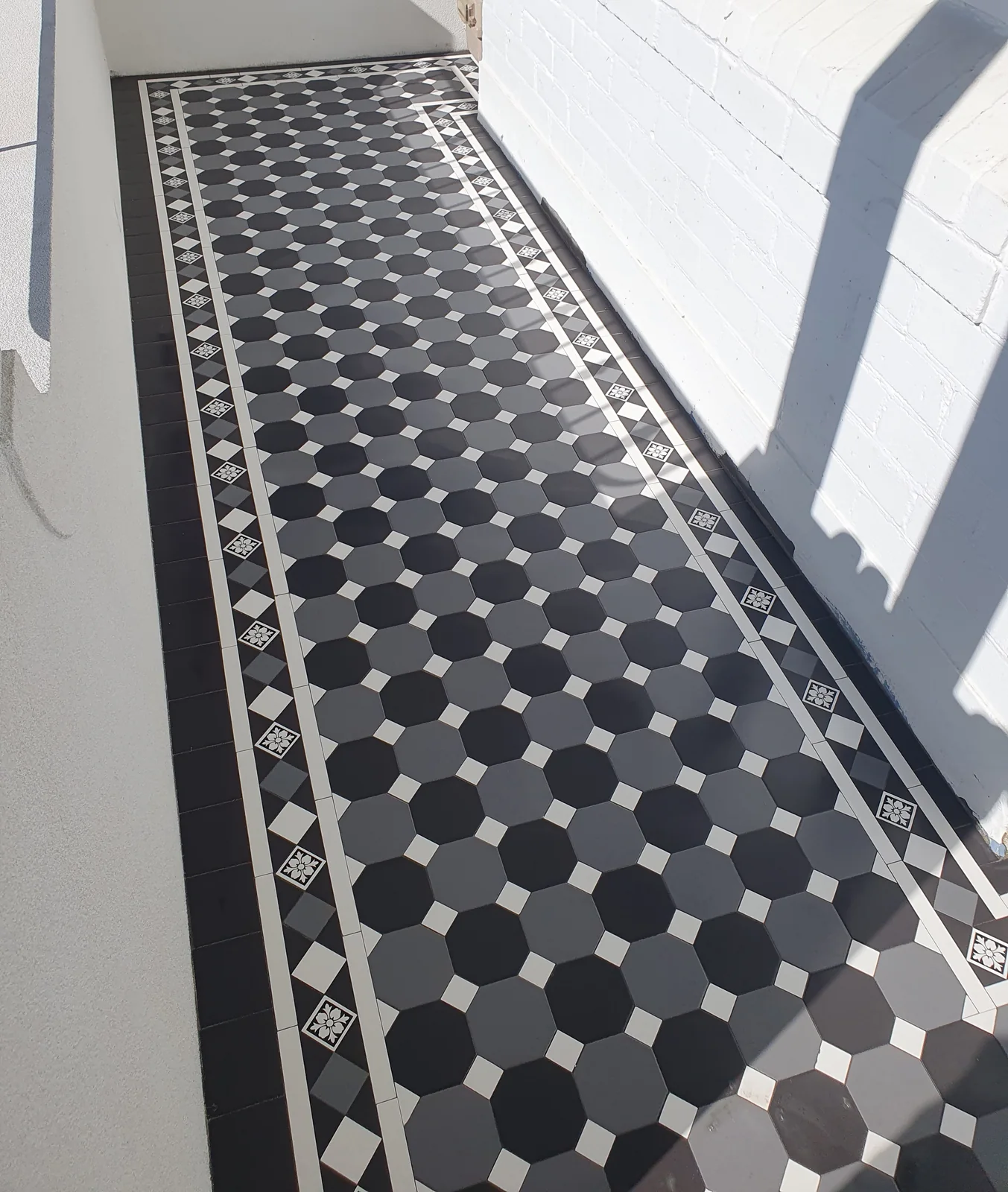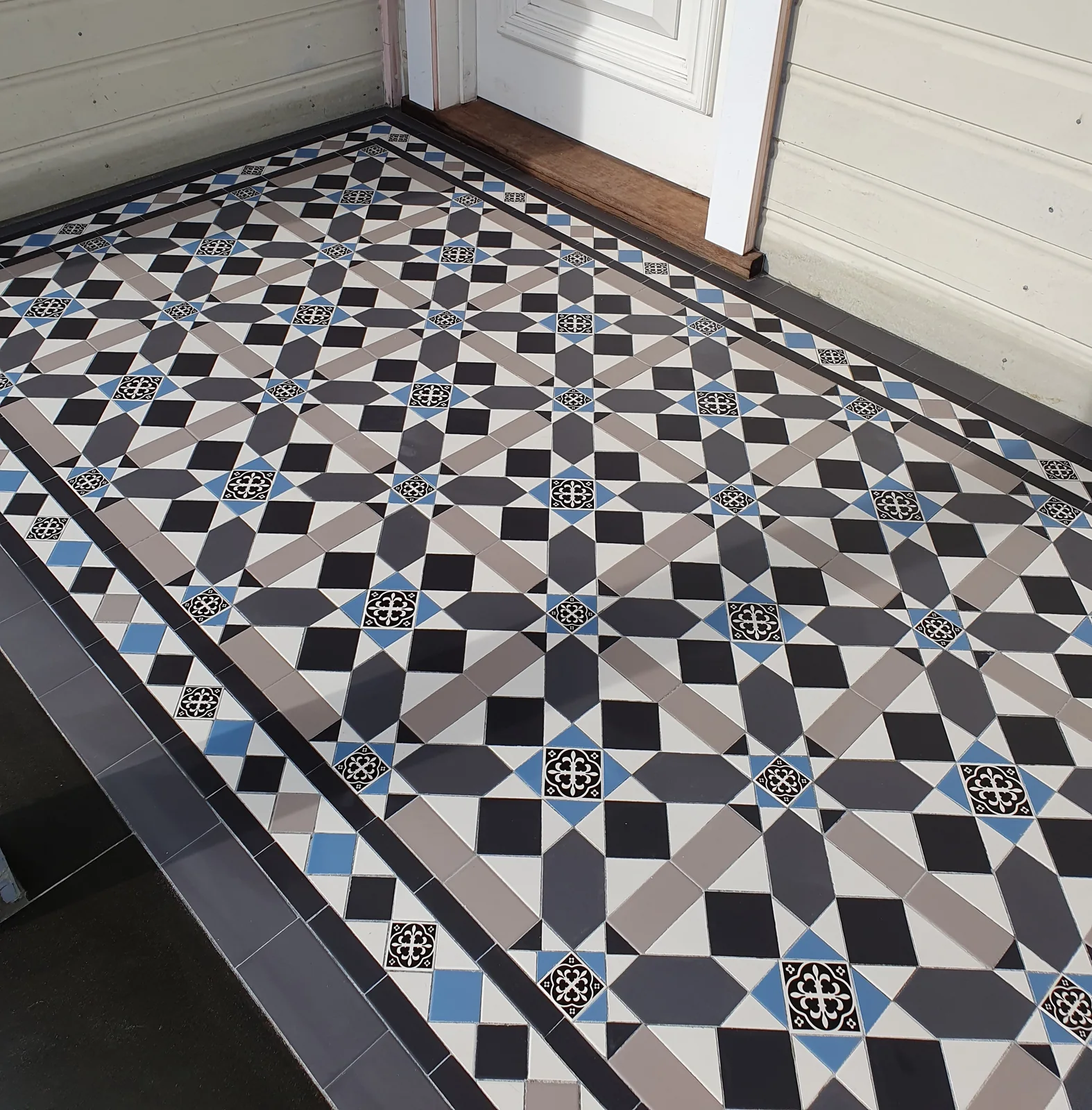
Cammeray, NSW
Cammeray NSW tessellated tiling
Supply and installation tessellated tiles for the verandah in Cammeray, NSW.
Read the projectUse this North Sydney area directory to find locality-specific heritage tiling guidance. North Sydney combines a busy metropolitan centre with established residential neighbourhoods, waterfront settings and locality areas shaped by different streetscape characters. For a verandah, pathway, entry or interior floor, the right tessellated tile approach starts with the property itself: existing pattern, surviving fabric, surrounding materials, access and the character of the locality. Authentic Heritage Tiling Co provides design consultation, tessellated tile supply, installation, restoration and stone bullnose or edging coordination for North Sydney projects.
North Sydney Council's planning framework separates the LGA into planning areas and more detailed localities. Those localities may reflect a conservation area, a common land-use pattern or a consistent character, so a tile choice that suits one street or property may not suit another. We use the immediate setting as a design reference rather than assuming a single North Sydney style.
The area includes dense residential and commercial development as well as established neighbourhoods. That makes practical planning important: access, transitions, drainage exposure, adjoining finishes and the relationship between a new tiled surface and retained building fabric should be considered before installation.
North Sydney Development Control Plan 2013 — ContextNorth Sydney Development Control Plan 2025 — Section 1: Planning and Locality Areas
Council distinguishes individual heritage items from conservation areas. Conservation-area character can be carried by the relationship between buildings, gardens, subdivision, materials and the street. For a new verandah or pathway, proportion, border treatment, thresholds and the visual weight of the pattern can help the work sit comfortably with that setting.
Where original tessellated tiles remain, restoration planning should begin with a close look at the surviving pattern, colour relationships, edge condition and any later alterations. Where the work is new, a considered layout can draw on the property's architectural cues without pretending that every North Sydney home has the same period or level of protection.
Heritage property protection and regulationsNorth Sydney Development Control Plan 2025 — Section 1: Planning and Locality Areas
North Sydney Council directs owners to the North Sydney LEP, Heritage Map, DCP and State Heritage Inventory when checking heritage status. An individual heritage item and a building in a conservation area are not the same designation, and the relevant controls depend on the property and proposed work.
For heritage-related work, ask Council about the applicable pathway before construction begins. Council notes that some minor maintenance can be addressed through written guidance, while larger changes may require a Development Application and, depending on the work, a Statement of Heritage Impact or Conservation Management Plan. Our role is to help assess the tile work, document the design and coordinate the supply, installation or restoration scope; Council remains the source of planning and approval advice.
Heritage property maintenanceNorth Sydney Local Environmental Plan 2013 — clause 5.10 Heritage conservationHeritage property protection and regulations
A successful tessellated tile project depends on careful setting-out and a finish that responds to the building rather than competing with it. Design consultation can address pattern scale, borders, thresholds and transitions. Supply and installation can then be coordinated around the agreed layout, site access and the relationship with adjacent stone or other finishes.
For existing tiled areas, restoration starts with understanding what can be retained and what needs repair. Selective restoration may be appropriate where the original layout remains legible; a new installation may be more suitable where the surface is substantially altered or a new area is being designed. Stone bullnose and edging coordination can help resolve exposed edges and changes in level where the property requires it.
No. Council distinguishes individually listed heritage items from buildings and places within conservation areas. Check the relevant LEP, Heritage Map, DCP and State Heritage Inventory records for the specific property rather than assuming that a suburb or street name determines its status.
The answer depends on the property and the proposed work. North Sydney Council advises owners to seek written maintenance guidance for some minor work and notes that larger changes may require a Development Application. Ask Council for the current pathway before removing or altering an established tiled surface.
Review the existing building and garden setting, any surviving original tile pattern, the property's heritage or conservation status, access, thresholds, drainage exposure and the relationship with adjoining finishes. A proportionate border and layout can help new work sit comfortably with the locality without copying a style that is not evidenced for the property.
Often the first step is an assessment of what remains, including the pattern, edges, condition and later changes. Where the original layout is sufficiently intact, selective restoration may be considered; where the surface has been extensively changed or a new area is required, a new design may be more suitable.
Share your location, project details and photographs using our enquiry form, or call 0433 932 711.