
Tessellated tiles in Wollstonecraft
Wollstonecraft's houses, gardens, streetscapes and later apartment development sit within a layered North Sydney setting. For a verandah, entry, pathway or interior floor, a considered tile scheme should respond to the property that remains, the way the space is used and any heritage controls that apply. Authentic Heritage Tiling Co. can discuss design, tessellated tile supply, installation and restoration for Wollstonecraft projects.
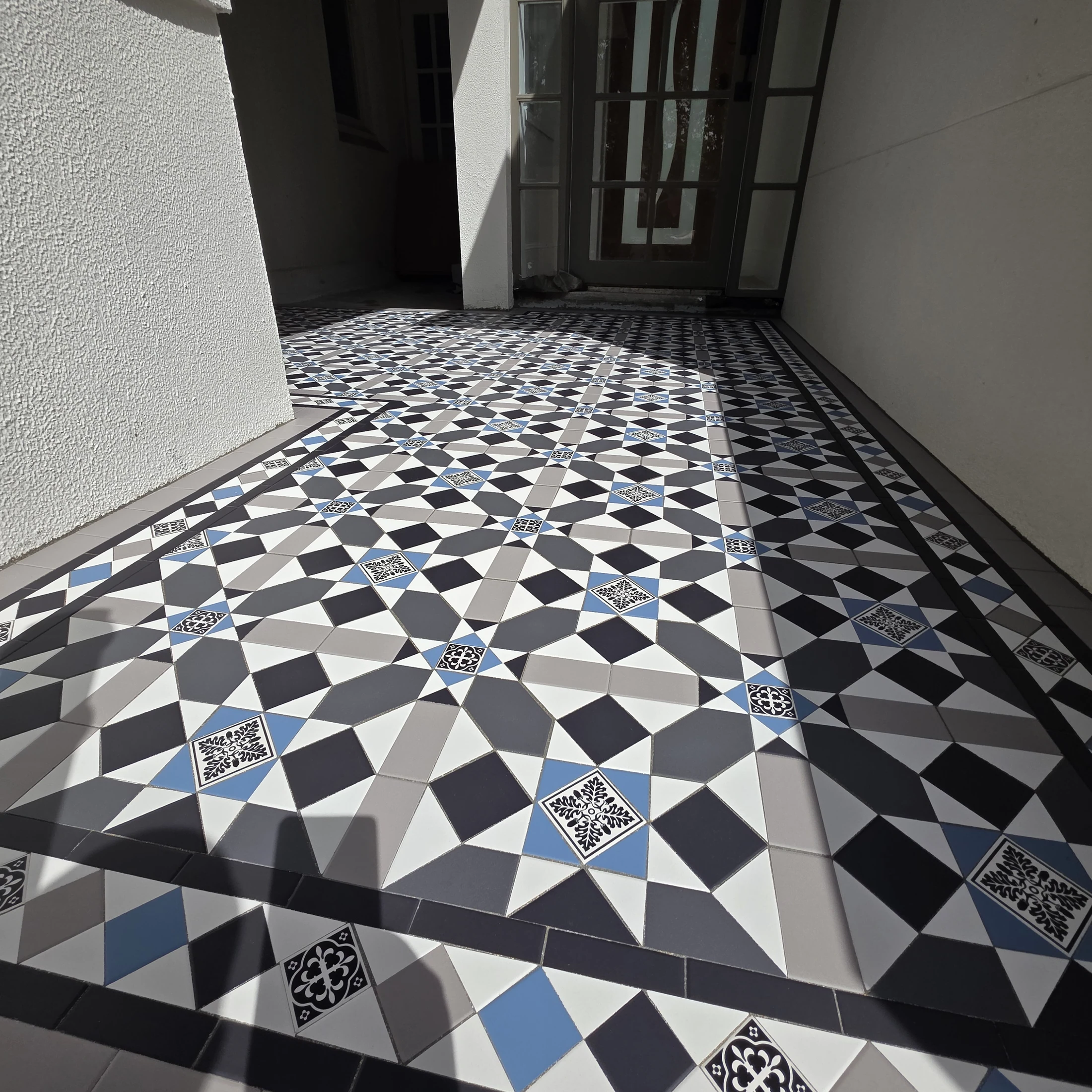
A layered Wollstonecraft setting
North Sydney Council's Wollstonecraft History Walk describes a locality that changed from large houses and gardens to apartments and units in little more than 50 years. It also records late nineteenth-century subdivision and an original architectural character associated predominantly with English Revival styles. That history is a useful starting point, but it does not mean every Wollstonecraft property has the same period, style or surviving fabric.
The North Sydney Development Control Plan 2025 places Wollstonecraft in the Waverton / Wollstonecraft Planning Area and identifies both Wollstonecraft Peninsula Neighbourhood and Wollstonecraft Conservation Area. The DCP heritage appendix records contributory properties in Wollstonecraft, including examples associated with more than one conservation-area context. A property-led assessment is therefore more useful than applying a single suburb-wide pattern.
Wollstonecraft History WalkNorth Sydney Development Control Plan 2025 — Section 1: Planning and Locality AreasNorth Sydney Development Control Plan 2025 — Heritage: Contributory, Neutral & Uncharacteristic Items
Design inspiration for verandahs, paths and floors
For an older house, tile proportions, border geometry and colour relationships can be chosen to sit comfortably with the existing facade, joinery, garden edges and path alignment. Where original tiles remain, photographs and close inspection can help distinguish a repair or sympathetic extension from a wholly new pattern. Where no original tilework survives, a restrained scheme can take its cue from the property's scale and architectural details without pretending to reproduce an undocumented original.
Wollstonecraft's documented mix of older houses, gardens, apartment redevelopment and harbour-side landscape also makes transitions important. Entry thresholds, steps, drainage falls, exposed edges and connections to sandstone or other existing site elements should be considered before selecting a layout. The aim is a durable, legible result that belongs to the property rather than a generic period effect.
Wollstonecraft History WalkHeritage property protection and regulationsHeritage property restrictions
Check the property context before work begins
North Sydney Council distinguishes individual Heritage Items from Conservation Areas. In a Conservation Area, the relevant character can include subdivision, streetscape, landscaping and the age, style or materials of the building stock; the listing focus is generally the external envelope, gardens and site structures. A property is not automatically an individually listed Heritage Item simply because it is in Wollstonecraft or near a conservation area.
Council advises that minor maintenance and changes to heritage properties can require written confirmation or a Development Application, depending on the property and proposed work. Before altering an existing verandah, pathway, exterior edge or other visible element, confirm the property's listing and the applicable North Sydney planning advice. Tile design and installation can then be planned around the verified constraints rather than assumptions.
Heritage property protection and regulationsHeritage property maintenanceHeritage property restrictions
Craftsmanship for a Wollstonecraft project
A useful first conversation covers the location of the proposed work, the condition of any existing tiles, the dimensions and geometry of the space, access and the relationship to adjoining surfaces. For restoration, the goal is to understand what can be retained and what needs careful repair. For new work, the design can be developed around the property's proportions, edges and day-to-day use.
The service can include design consultation, tessellated tile supply, installation, restoration and coordination of stone bullnose or edging work. Project-specific decisions should follow the site assessment and any advice required from North Sydney Council; no tile treatment can be prescribed universally from the suburb name alone.
Heritage property protection and regulationsHeritage property maintenanceHeritage property restrictions
Finding the right local guidance
North Sydney Council's heritage property guidance and Development Control Plan are useful starting points for checking whether a property is an individual Heritage Item, sits in a Conservation Area or is affected by nearby heritage controls. Council also points owners to the NSW State Heritage Inventory and its planning advisers. These sources help establish the planning context; they do not replace a property-specific assessment or approval where one is required.
Wollstonecraft's council history walk also provides a broader sense of the area's Aboriginal, natural, residential and industrial layers. That context can inform a respectful design conversation without turning a general local history into a claim about any one home.
Heritage property protection and regulationsHeritage property maintenanceWollstonecraft History Walk
Your Heritage Tiling Questions
Is every Wollstonecraft property heritage listed?
No. North Sydney Council distinguishes individual Heritage Items from Conservation Areas, and explains that conservation-area controls focus on the external envelope, gardens and site structures. Check the particular property and its planning context rather than assuming suburb-wide listing.
Could tile work to a Wollstonecraft verandah or path need council advice?
It may. North Sydney Council says maintenance and changes to heritage properties can require written permission or a Development Application, depending on the property and work. Confirm the applicable controls before changing visible fabric or site elements.
How can a new tessellated tile design suit an older Wollstonecraft home?
Start with the property's proportions, facade and joinery, garden and path relationships, and any surviving tile evidence. A restrained border and layout can respond to those features without claiming to reproduce an undocumented original design.
What should be discussed for tessellated tile restoration?
Discuss what remains, its condition, the areas that need repair, the dimensions and geometry of the space, and how thresholds, steps, drainage and adjoining materials will be handled. The right approach depends on the site and the verified heritage context.
Discuss Your Heritage Tiling Project
Share your location, project details and photographs using our enquiry form, or call 0433 932 711.