
Tessellated Tiles in Goodwood, SA
Goodwood's documented historic character includes the Goodwood (Village) area, where the Unley Heritage Research Study records single-storey bluestone cottages, traditional verandahs and a regular residential layout. For a Goodwood property, tessellated tile choices work best when the pattern, scale, edge treatment and new work are considered alongside the building's existing proportions. AHTC can help with design consultation, tessellated tile supply, installation, restoration and stone bullnose or edging coordination.
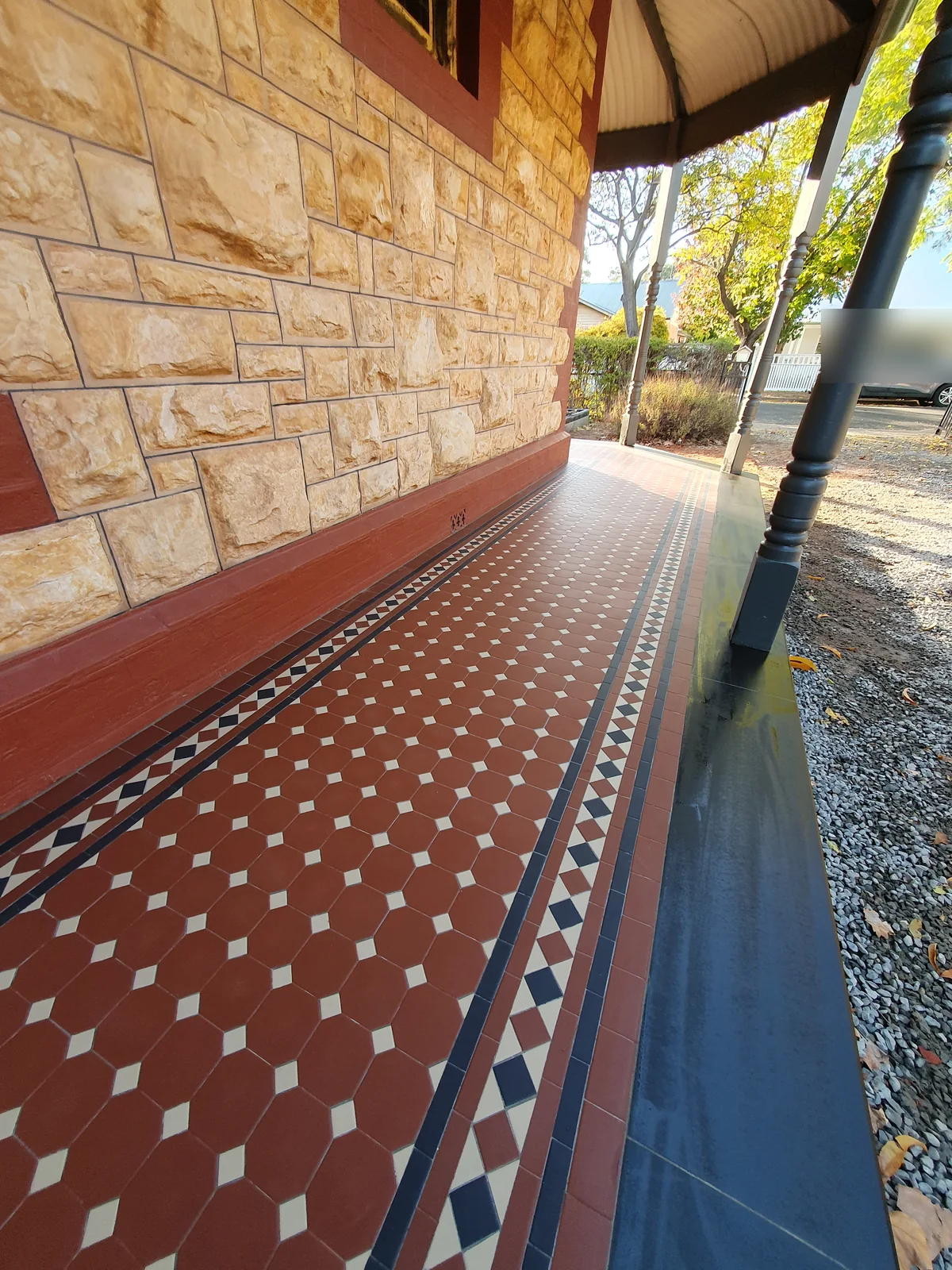
Tile design for Goodwood's older homes
The Goodwood (Village) historic area is described in the Unley Heritage Research Study as a planned residential estate with recurring single-storey cottage forms, bluestone construction, front verandahs and ornamental details. Those features provide useful design cues when considering a tiled entry, verandah or pathway, while still requiring a site-specific response rather than a one-pattern-fits-all approach.
A measured layout can help a new tiled surface sit comfortably with an existing frontage. Consider the visual rhythm of the verandah, the width of the path, thresholds, steps, drainage and the relationship between borders and the main field before selecting a pattern or colour balance.
Verandahs, pathways and stone edging
Goodwood's established residential setting makes transitions especially important. A front path should meet the entry without creating an awkward change in level, while a verandah treatment should respect posts, steps, door clearances and the existing floor line. Tessellated tiles can be considered for a complete layout or a carefully defined new section, depending on the condition and character of the property.
Stone bullnose or other edging coordination may be useful where a tiled step, landing or pathway needs a durable and visually resolved edge. The correct detail depends on the site, adjoining materials, exposure and drainage, so these items should be reviewed together rather than selected in isolation.
Check the property before changing older fabric
A suburb's historic character does not by itself establish that an individual home is listed or that a particular approval is required. South Australia's Planning and Design Code provides address- and development-based information, and the state heritage resources identify relevant State and Local heritage records. Before removing, covering or altering older tiled work, check the individual property and ask the relevant planning authority about the proposal.
Where existing tiles remain, document their pattern, dimensions, border, condition and relationship to adjoining finishes before deciding whether to repair, match, retain or replace them. This helps separate original fabric from later additions and keeps the design decision proportionate to the evidence at the property.
SA Heritage Register and Surveys — Heritage South AustraliaProtecting Heritage and Character Policies in the Planning and Design Code
Plan a Goodwood tiling project
AHTC's Goodwood service page can be used to start a conversation about design, tile supply, installation or restoration. Useful early information includes photographs of the existing area, approximate dimensions, access constraints and whether the work concerns a verandah, entry, pathway or internal floor.
The same review can consider pattern direction, border proportions, matching opportunities and edge coordination. The aim is a durable result that belongs to the property, rather than an assumed historical treatment applied without checking the existing building.
Protecting Heritage and Character Policies in the Planning and Design Code
Your Heritage Tiling Questions
Are all Goodwood homes heritage-listed?
No. Goodwood has documented historic character, including the Goodwood (Village) area described in the Unley Heritage Research Study, but that does not mean every property is individually listed or controlled in the same way. Check the individual address in the relevant South Australian planning and heritage resources before changing older fabric.
Can tessellated tiles suit a Goodwood bluestone cottage or verandah?
They can be considered where the layout, scale and edge details work with the existing cottage or verandah. The documented Goodwood (Village) character includes single-storey bluestone cottages and traditional front verandahs, so the design should be assessed against the particular frontage, steps, thresholds and surviving finishes rather than copied from a generic pattern.
Should existing tessellated tiles be removed before a new design is chosen?
Not necessarily. First record the existing pattern, condition, dimensions and adjoining finishes. Depending on the site, selective restoration, careful matching or a defined new section may be more appropriate than wholesale removal. If heritage or character controls may apply, obtain property-specific guidance before work begins.
What should I provide when asking about a Goodwood pathway or verandah?
Photographs, approximate measurements, the location of steps and thresholds, access information and any details about existing tiles or stone edging are useful starting points. They help the design discussion address pattern scale, borders, transitions, drainage and the condition of the existing surface.
Discuss Your Heritage Tiling Project
Share your location, project details and photographs using our enquiry form, or call 0433 932 711.