
Tessellated Tiles in Malvern
Malvern's residential streets include homes and places shaped by different periods of Melbourne's growth, so a tessellated tile scheme works best when it responds to the building, its approach and the way the space is used. We can help with design consultation, tessellated tile supply, installation, restoration and stone bullnose or edging coordination for verandahs, paths and other suitable areas.
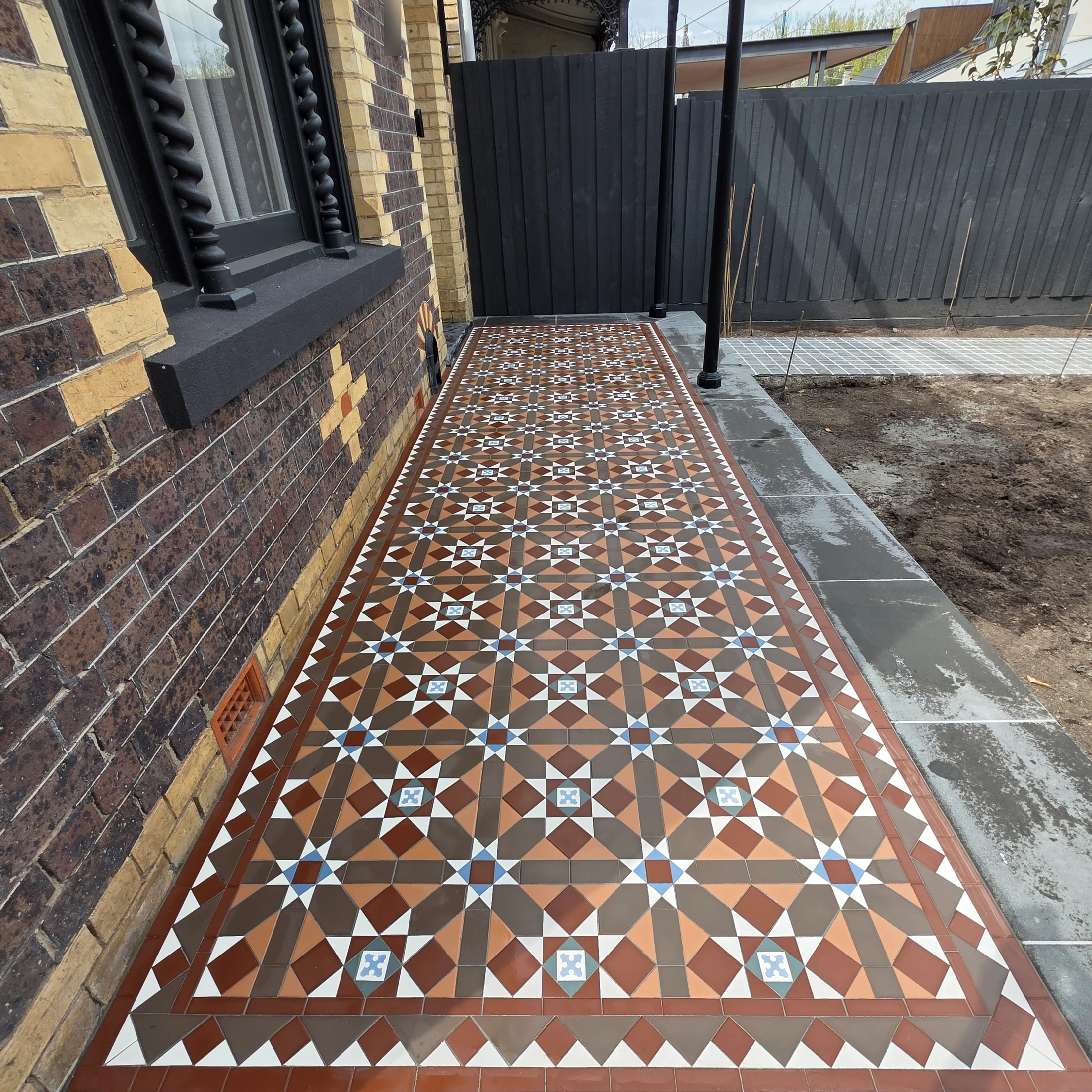
Tiling that responds to Malvern's streetscape
The Victorian Government describes Stonnington as a primarily residential part of Melbourne's inner south-east, known for leafy streets and historical architecture. In Malvern, that setting makes the relationship between a tiled threshold, front path, verandah and the building's proportions especially important. A considered layout can reinforce the entry without making new work look like an unexamined imitation.
The Malvern Heritage Review examined existing heritage places and carried out a street-by-street gap review. That is useful context for design conversations, but it does not mean every home is heritage protected. The starting point is the individual property: its surviving fabric, the visibility of the proposed work and the character of the surrounding streetscape.
Plan around the existing fabric
For an older Malvern home, the design discussion can consider scale, border proportions, transitions at doors and gates, drainage exposure and how the new or repaired surface meets steps and edges. Where original tiles remain, documenting the pattern and condition before work helps separate retention or repair decisions from areas that need new supply.
If a property is within a Heritage Overlay, Stonnington advises that visible external alterations and certain new works may require a planning permit. The council's guidance also says that additions should conserve the appearance from the street and that new features should be recognisable as new work while respecting the place's significance. Planning advice should be checked for the specific property before work is commissioned.
Heritage guidelines and overlaysHeritage FAQsSchedule to Clause 43.01 Heritage Overlay — Stonnington Planning Scheme
Design, supply, restoration and installation
A project may involve a new tessellated layout, matching and extending an existing pattern, restoring a worn area or coordinating a complete supply-and-installation plan. We can also coordinate stone bullnose or edging details where the path, verandah or stair edge needs a durable, visually resolved finish.
The appropriate sequence depends on the site and the existing surface. A consultation can review photographs, dimensions, access, transitions and the condition of any tiles that are intended to remain before a practical approach is discussed.
Check the property before visible changes
A Heritage Overlay is a property-specific planning control. Stonnington recommends checking the applicable overlay and considering the effect of proposed works on the heritage significance of the place. This is particularly relevant where a front path, verandah, steps, driveway edge or other visible feature is being changed.
Tile design and installation advice does not replace planning or heritage advice. If the property is covered by an overlay, confirm the current requirements with the responsible authority before committing to visible external work.
Your Heritage Tiling Questions
Can tessellated tiles suit a Malvern period home?
They can, when the layout is designed in relation to the home's scale, entry sequence and existing materials. A consultation can compare a new pattern with any surviving tiles and consider how the path, verandah or threshold will read from the street.
Will a Heritage Overlay affect a tiled verandah or path project in Malvern?
It may. Stonnington states that a permit can be required for specified external alterations and new works where a property is within a Heritage Overlay. Check the particular property and current overlay schedule before starting visible work.
Can existing Malvern tessellated tiles be restored rather than replaced?
Often the first step is an assessment of what remains, including pattern, condition, movement, failed areas and junctions with steps or edges. The resulting scope may focus on restoration, selective replacement or a new adjoining layout, depending on the surface and the desired outcome.
Can new tiles be used for a front path or verandah?
Yes, the design can be developed around the site's dimensions, access, drainage exposure, transitions and the character of the building. Where the property has heritage controls, visible changes should also be checked against the relevant planning requirements.
What should I prepare for a Malvern tile consultation?
Useful starting information includes photographs of the existing surface, approximate dimensions, the location of steps and doors, access constraints and any available heritage or planning information. This helps the design and installation discussion stay specific to the property.
Discuss Your Heritage Tiling Project
Share your location, project details and photographs using our enquiry form, or call 0433 932 711.