
Tessellated Tiles in Glen Iris
Glen Iris has a distinctive interwar character and village feel, with established buildings and a strong sense of place around High Street. For a period home, verandah or pathway, tessellated tiles can be selected to sit comfortably with the property's proportions and existing materials. AHTC provides design consultation, tessellated tile supply, installation, restoration and stone bullnose or edging coordination for Glen Iris projects across the locality's Boroondara and Stonnington contexts.
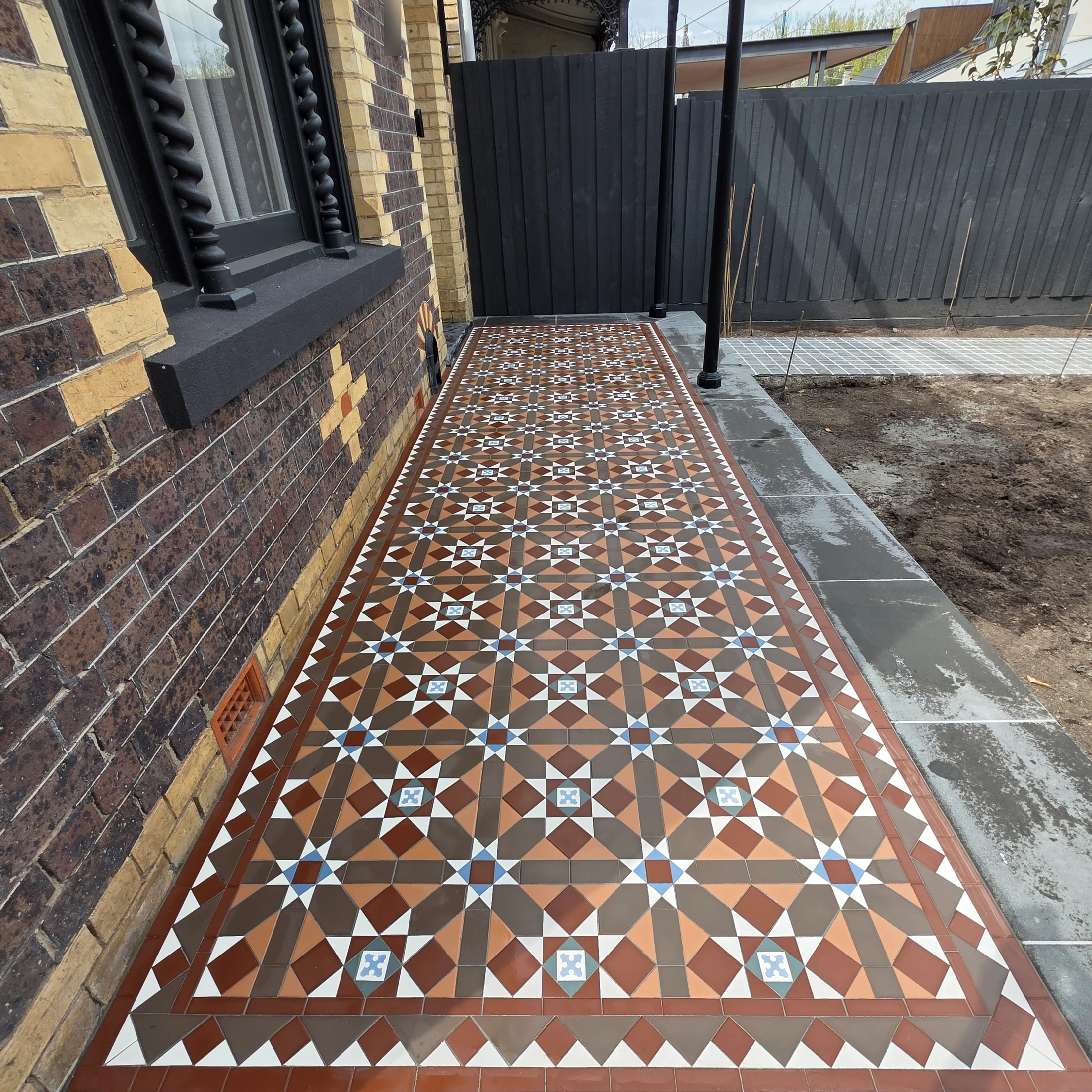
Tile design for Glen Iris homes and streetscapes
Planning Victoria's Glen Iris activity-centre work identifies interwar character, village feel, character-filled buildings and heritage along High Street. Those qualities make proportion, border geometry and colour relationships important when planning a tiled entry, verandah or pathway. The right design should respond to the building in front of you rather than apply a period pattern by assumption.
For a new surface, the design conversation can cover layout, tonal balance, thresholds and how a pathway or verandah relates to the facade and garden. For an existing floor, the first priority is to understand what remains, what has failed and whether a careful repair or a more substantial renewal is appropriate.
Restoring existing tessellated tiles
Older Glen Iris properties may contain surviving tilework or later surfaces that contribute to the building's presentation. Assessment should distinguish loose or damaged tiles from broader movement, moisture or substrate issues before a repair approach is chosen. Where matching is needed, the existing pattern, colour balance, edge treatment and areas of sound fabric all inform the design response.
Restoration decisions are property-led. A heritage-sensitive result does not mean making every new element look artificially old; it means understanding the existing work and choosing a compatible, clearly considered intervention.
Check the property before external tile work
Glen Iris includes properties in different municipal planning contexts. Boroondara provides an address-based Heritage Overlay and grading map and recommends checking VicPlan and a planning property report. Stonnington explains that a Heritage Overlay may require a permit for demolition, external alterations, verandahs, driveways and other visible works.
Overlay coverage and grading are not suburb-wide assumptions. Before changing a front verandah, pathway, crossover or other visible element, confirm the property's controls with the relevant council or planning authority. AHTC's role is to help develop a considered tile and restoration brief; it does not replace formal planning advice or approvals.
Boroondara Heritage Overlay and heritage grading mapHeritage guidelines and overlays
A measured approach from design through installation
A Glen Iris enquiry can begin with the property, the proposed area and any photographs or drawings that help explain the work. Design consultation can then consider pattern and proportion, while supply, installation, restoration and stone bullnose or edging coordination are planned around the site's actual requirements.
The same local guidance applies through both existing Glen Iris routes. The Stonnington and Boroondara paths are retained for their established service-group contexts, while the locality-specific design and heritage considerations remain consistent.
Your Heritage Tiling Questions
Does every Glen Iris property have heritage protection?
No. Heritage Overlay coverage and grading are property-specific. Use the relevant council's mapping and planning-property information, and confirm the current controls before external work.
Can tessellated tiles suit an interwar Glen Iris home?
They can be a considered option where the pattern, scale, colours and edge details respond to the building and its setting. A design review should start with the actual facade, entry, verandah or pathway rather than assume one pattern suits every home.
What should I check before replacing a Glen Iris verandah or pathway?
Check the property's council context, Heritage Overlay status, grading and any relevant planning controls. Stonnington notes that visible external alterations, verandahs, driveways and related works may need a permit in an overlay; Boroondara recommends checking VicPlan and a planning property report.
Can existing Glen Iris tiles be restored rather than replaced?
Often the right choice depends on the condition and extent of the surviving work. An assessment can separate local damage from wider movement or moisture issues and consider whether repair, careful matching or a new design is the more suitable response.
Discuss Your Heritage Tiling Project
Share your location, project details and photographs using our enquiry form, or call 0433 932 711.