
Tessellated tiles in Salisbury East
Planning tessellated tiles in Salisbury East calls for a response to the property rather than a preset suburb style. The area sits within Adelaide's north-eastern metropolitan growth and the wider Salisbury district combines established residential neighbourhoods with a longer institutional, agricultural and town history. We can help you compare a new pattern with the character of the house, or assess surviving tiles before deciding what should be retained, repaired or replaced.
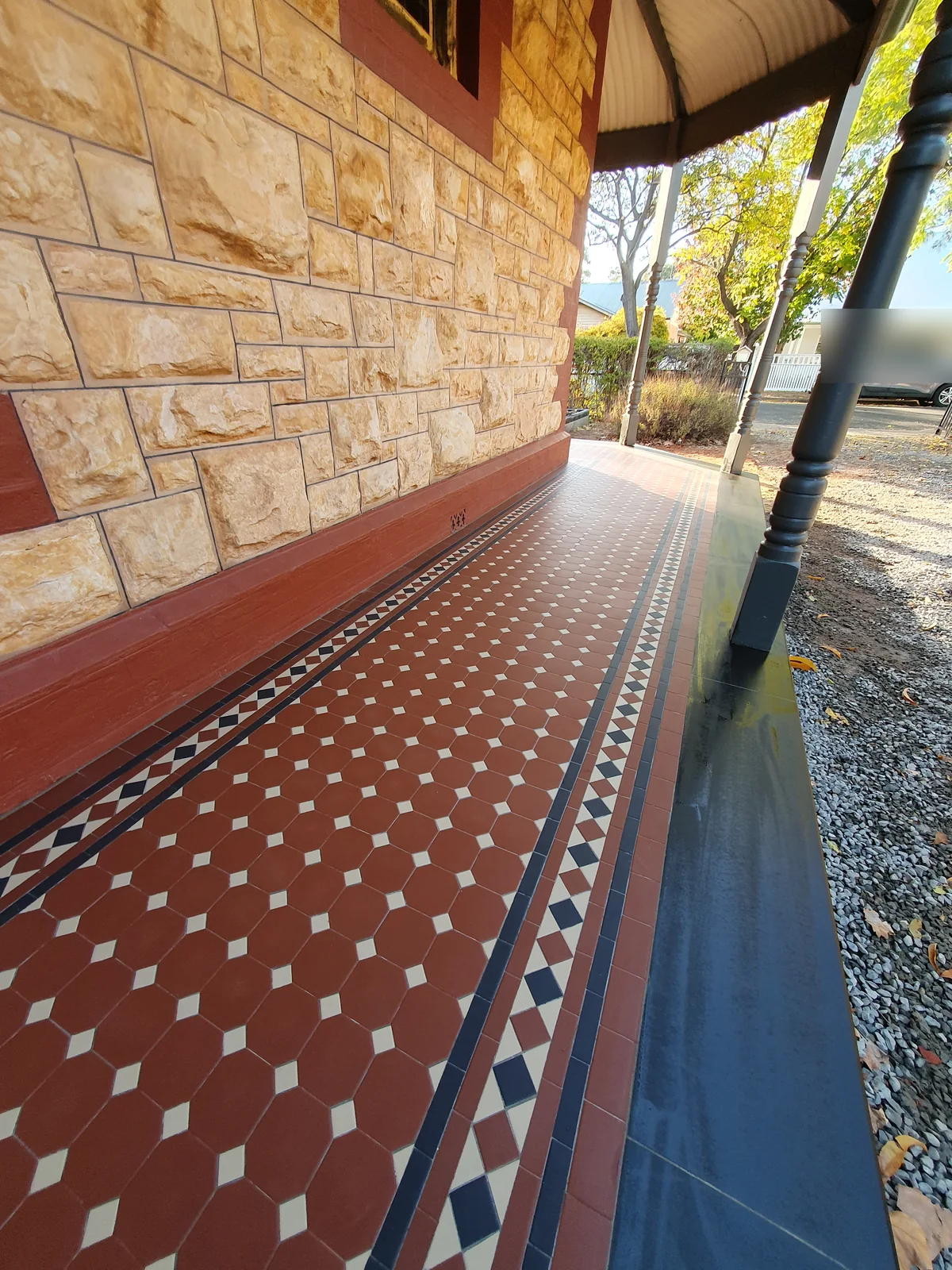
A Salisbury East approach shaped by the property
Salisbury East is part of the City of Salisbury and is listed with postcode 5109. The wider council area extends north of Adelaide and has grown substantially since the post-war period, so properties in the locality should be read individually rather than assigned one assumed architectural period.
That matters when choosing a tessellated floor. A restrained border may suit a later suburban entry, while a more formal geometric layout may be appropriate where the house, verandah proportions and existing details support it. The aim is a coherent relationship between the tile field, thresholds, steps, garden edges and the building's scale.
Quick facts — City of SalisburyOur History — City of Salisbury
When an existing floor or older fabric needs care
The Salisbury Heritage Survey records a specific institutional history at Salisbury East through the former movement of Salisbury Teachers' College to a 50-acre campus. It also explains that Salisbury's broader physical character reflects successive agricultural, town and metropolitan phases. Those facts provide useful context, but they do not make every nearby dwelling heritage listed or establish a uniform tile pattern across the suburb.
For an older floor, begin with a close inspection of the tile condition, pattern, edges, thresholds and areas of loss. Matching colour and geometry is only part of the decision; the practical question is whether the existing fabric can be stabilised and kept legible. If a proposal may affect a listed place or another regulated feature, check the applicable South Australian planning information for the individual address before work begins.
Design, supply and installation for entries, verandahs and paths
For a new Salisbury East verandah or front path, layout decisions should account for the approach to the door, changes in level, drainage exposure and how the border meets paving or garden edges. A measured design consultation can test the pattern against the available width before supply and installation are coordinated.
Where stone bullnose or edging is part of the scheme, it should be considered alongside the tile module and the edge detail, not added as an unrelated finish. Restoration, installation and new design each need a different conversation, and the existing service route can guide you to the most relevant next step.
Check the address before committing to a design
South Australia's planning guidance explains that zones, policies and overlays apply to a particular property. If your Salisbury East project involves a listed place, an overlay or other regulated feature, use the relevant address-based planning information and obtain independent advice where needed. Tile design assistance is not a substitute for a planning or heritage determination.
Your Heritage Tiling Questions
Can you help design tessellated tiles for a Salisbury East verandah or pathway?
Yes. We can discuss the proportions of the verandah or path, the relationship to the house and thresholds, the border treatment, and whether stone bullnose or edging coordination is needed before supply and installation are planned.
Does living in Salisbury East mean my house is heritage listed?
No. A suburb name does not establish heritage listing. The Salisbury Heritage Survey identifies particular places and discusses the wider district's history, while South Australian planning information should be checked for the individual address when a heritage or planning issue may apply.
Can an existing tessellated floor be restored rather than replaced?
Often the right choice depends on the condition of the existing tiles, the pattern, missing areas, edges and the underlying setting. An assessment can help separate repairable damage from areas where carefully matched new work may be more practical.
How should I choose a pattern for a Salisbury East home?
Start with the building and the space: consider the entry width, verandah proportions, existing joinery, steps and the visual weight of the border. A pattern should support those features rather than assume that every Salisbury East property belongs to one period or style.
Do I need to check planning information before tiling?
If the work may affect a listed place, an overlay or another regulated feature, check the applicable South Australian planning information for the property address before proceeding. The relevant requirements depend on the site and proposal.
Discuss Your Heritage Tiling Project
Share your location, project details and photographs using our enquiry form, or call 0433 932 711.