
Ryde heritage tiling area directory
Use this Ryde area directory to find locality-specific heritage tiling guidance. Ryde sits in Sydney's central northern metropolitan area and includes a varied residential setting across the Parramatta and Lane Cove river divide. For a verandah, entry path or interior floor, tessellated tile choices should respond to the property's proportions, existing fabric, exposure and intended use. Our design consultation, tile supply, installation, restoration and stone bullnose or edging coordination can be considered together for work in Ryde and the surrounding service area.
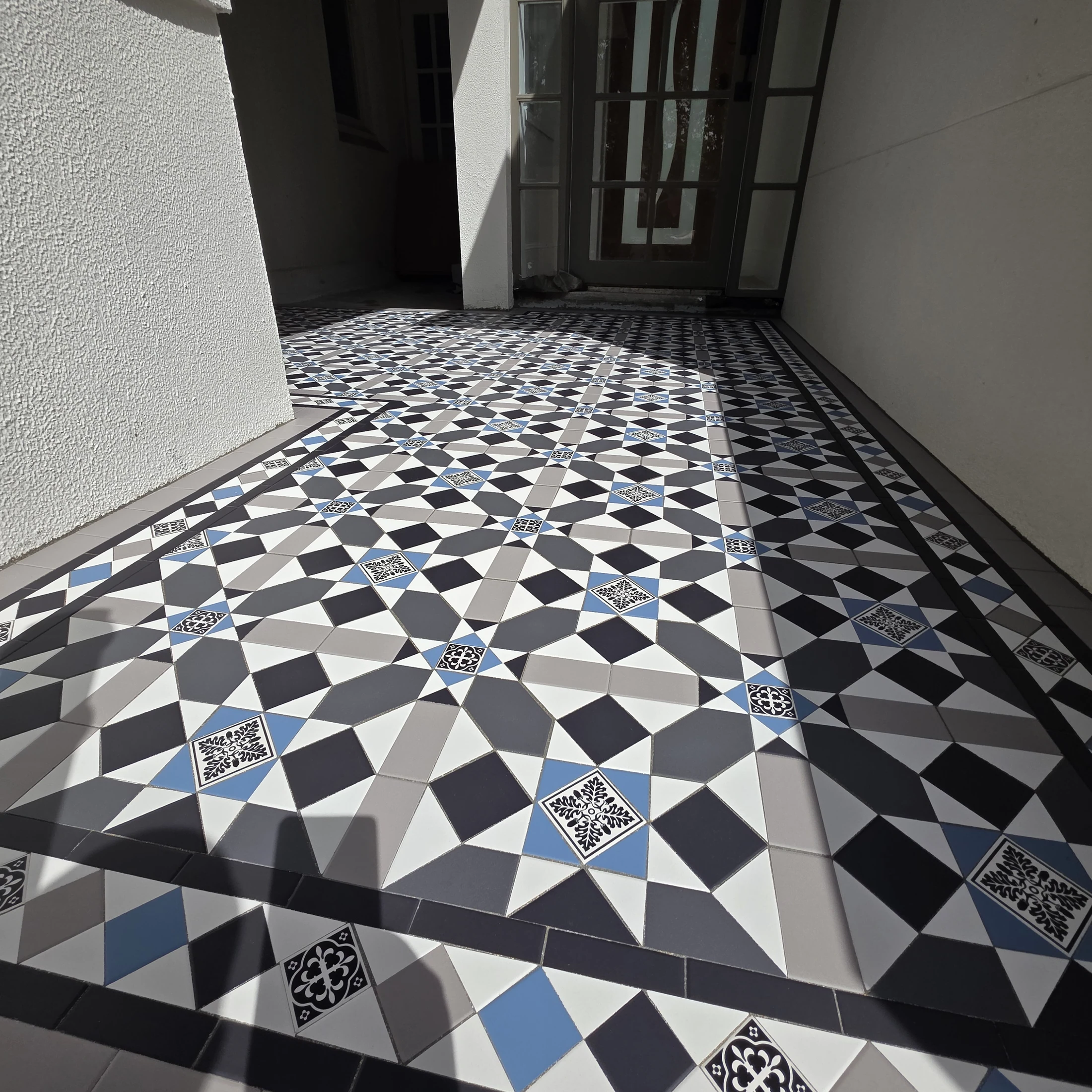
A varied Ryde setting calls for a property-led approach
The City of Ryde profile describes a largely residential area with separate houses alongside medium- and high-density dwellings. That range matters when planning tiled work: a restored front path, a new verandah surface and a replacement floor each need a different response to access, scale, drainage and the fabric already present.
The profile also identifies the Parramatta and Lane Cove river divide and extensive foreshore and creek environments. On exposed paths and verandahs, layout and edge details should be considered alongside water movement, thresholds and day-to-day wear rather than selected from a pattern alone.
Heritage-sensitive tiling without assuming every home is listed
Ryde's heritage review added individual items and conservation areas across the local government area. Its examples include Federation buildings, Inter-War bungalows, Victorian Georgian villas, parks and street-tree boulevards. These are useful cues for careful design, but they do not mean that every property or every suburb has the same heritage status.
Before altering an older verandah or pathway, compare what survives with the proposed work: border proportions, repeat geometry, thresholds, steps, adjacent brickwork and any original tiles worth retaining. Where a property is a listed item or sits in a conservation area, check the current planning information for that property before work begins.
Heritage Review | City of RydeRyde Heritage Review | NSW Planning Portal
Design details that make a Ryde project feel considered
A good tessellated layout starts with the space. For a narrow path, the border and central repeat need to be set out around gates, steps and changes in direction. On a verandah, the edge, stair nosings and relationship to the house frontage can be resolved before the field pattern is finalised.
Where original tiles remain, restoration may call for careful assessment and selective matching rather than wholesale replacement. New work can still draw on the property's scale and period character while meeting the practical requirements of the site. Stone bullnose or edging coordination can help complete steps and transitions where those details are part of the design.
Ryde area directory
Your Heritage Tiling Questions
Are all older Ryde homes heritage-listed?
No. The City of Ryde heritage review records particular heritage items and conservation areas across the local government area, but it does not make every older home heritage-listed. Check the property's current planning and heritage status before treating a heritage-sensitive approach as a statutory requirement.
What should I consider before replacing tiles on a Ryde verandah or path?
Start by recording what remains, including borders, repeat geometry, thresholds, steps and adjoining materials. Then consider the space's proportions, exposure, access and water movement before choosing a layout and scope of work.
Does the Ryde service area have one planning authority for every listed locality?
Not necessarily. The City of Ryde profile identifies shared suburbs, including Eastwood with Parramatta and Gladesville with Hunters Hill. Use the property's actual address to identify the applicable council and planning information; the service directory is not a statement of legal boundaries.
Can original tessellated tiles be retained while new areas are added?
Often the first step is an assessment of the surviving fabric and the relationship between old and new areas. A design consultation can consider selective restoration, matching and transitions so that new work sits comfortably with the existing property rather than assuming full replacement.
Discuss Your Heritage Tiling Project
Share your location, project details and photographs using our enquiry form, or call 0433 932 711.