
Tessellated Tiles in Northmead
Northmead's setting north of the Parramatta CBD brings together creek edges, former orchard and market-garden land, early subdivision and a long mix of residential, commercial and light-industrial uses. For a verandah, entry, pathway or interior floor, a considered tile layout can respond to the character of the property without assuming that every home shares the same period or heritage status.
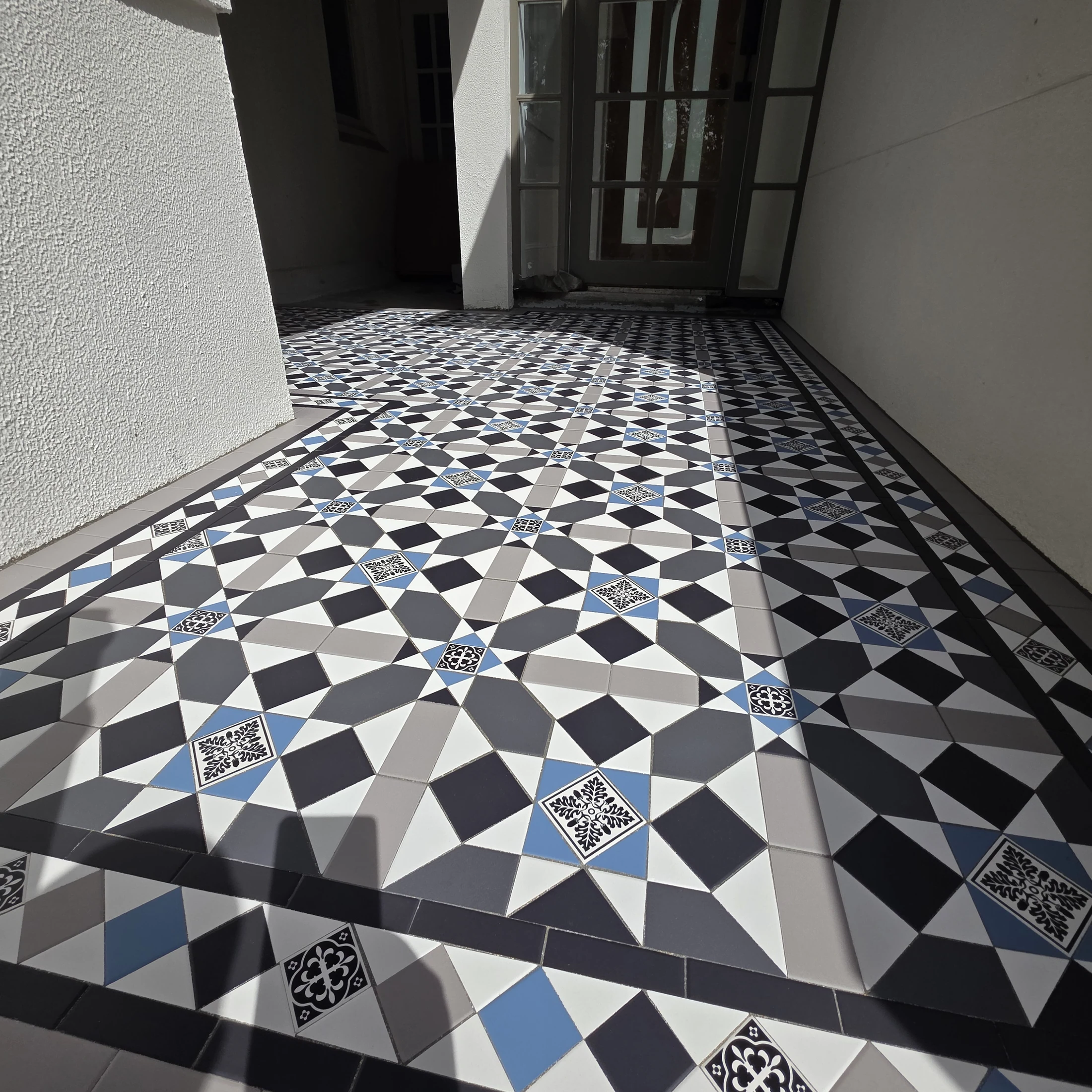
A locality shaped by creeks, orchards and subdivision
City of Parramatta's local history places Northmead between Toongabbie Creek, Northmead Gully and Darling Mills Creek, with Old Windsor Road and Windsor Road forming important parts of its irregular boundary. The area was once part of the Parramatta Domain before the northern portion became Northmead.
Orchards, market gardens and mixed farming preceded the residential subdivisions that began around 1911. The 1914 Northmead Estate and later street development created a layered suburb rather than one uniform architectural period. That history is useful design context, but it is not evidence that a particular property is heritage-listed or that a single tile pattern belongs across the whole locality.
Northmead - A Brief HistoryNorthmead - Origin of Street Names
Design around the property you are working with
Start with the building's own proportions, existing thresholds and the way visitors approach the entry or verandah. A restrained border, a repeatable geometric field or a carefully scaled pathway can make the transition from garden or street feel intentional without copying a historic detail that is not evidenced at the property.
Northmead's documented history includes early cottages, later subdivisions, quarrying and industrial activity. Those layers make close observation important: note surviving floor fabric, stair and threshold levels, drainage exposure, later additions and the relationship between indoor and outdoor areas before choosing a new layout or restoration approach.
Northmead - A Brief HistoryNorthmead - Origin of Street Names
When existing tiles or fabric need a careful decision
If original or older tiles remain, record their pattern, colour relationships, edge treatment and condition before removing anything. Selective restoration may be more appropriate than wholesale replacement when the surviving fabric contributes to the character of the room or threshold.
City of Parramatta explains that heritage protection can apply to individual items or conservation areas and provides property-specific development information. Check the relevant planning and heritage mapping for the particular property before work begins; a suburb name alone does not establish a listing or an approval requirement.
Heritage Protection Types | City of ParramattaHeritage Conservation AreasParramatta Local Environmental Plan 2021 Heritage Map
Tessellated tile supply, installation and restoration
For new work, design consultation can help coordinate the field, borders, transitions and stone bullnose or edging details with the property's proportions and intended use. Supply and installation planning should follow an inspection of the actual area, including access, levels and the condition of the surface.
For older floors, verandahs and pathways, restoration begins with understanding what remains and what can be retained. Matching and repair decisions should be made from the existing evidence rather than from a generic period assumption. The same property-led approach can guide a new tessellated layout where no original tile fabric survives.
Northmead - A Brief HistoryHeritage Protection Types | City of Parramatta
Your Heritage Tiling Questions
Is every Northmead home a heritage property?
No. Northmead's documented history does not make every home heritage-listed. City of Parramatta distinguishes individual heritage items and Heritage Conservation Areas, so check the particular property's planning and heritage information before making assumptions about protection or approvals.
What local context can inform a Northmead tile design?
Northmead's documented context includes creek-defined edges, former Parramatta Domain land, orchards and market gardens, early twentieth-century subdivision, quarrying, milling and mixed later land uses. These are useful prompts for proportion, thresholds and transitions, but they do not prescribe one pattern for every property.
Can older Northmead tessellated tiles be restored rather than replaced?
Often the first step is an assessment of what survives, including the pattern, edges, condition and relationship to thresholds. A property-led assessment can then distinguish selective restoration from new work; the suitable choice depends on the actual floor, verandah or pathway.
Should I check planning or heritage information before tiling?
Yes, particularly where older fabric, a mapped heritage item or a conservation-area context may be involved. City of Parramatta publishes heritage protection and mapping information, but the relevant status is property-specific and should be confirmed through the appropriate council or planning information for the site.
Discuss Your Heritage Tiling Project
Share your location, project details and photographs using our enquiry form, or call 0433 932 711.