
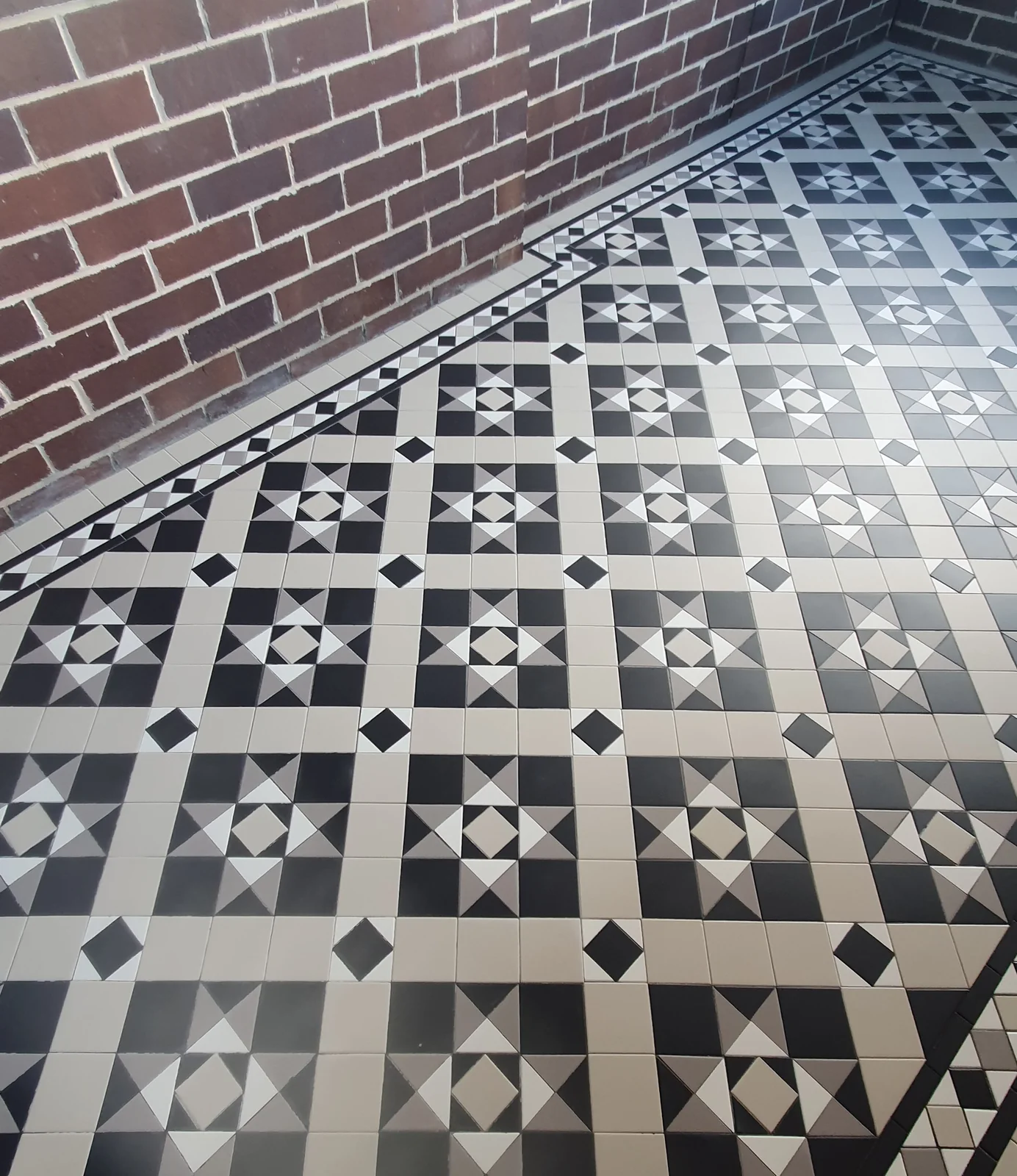
Parramatta, NSW
Parramatta NSW tessellated tiling
Supply and installation tessellated tiles for the pathways and entrance in Parramatta, NSW.
Read the projectUse this Parramatta area directory to find locality-specific heritage tiling guidance. Parramatta sits at the centre of Sydney's western suburbs and is identified in metropolitan planning as the metropolitan centre of the Central River City. For homes and buildings across this service area, tessellated tile work is best planned around the character of the property, the intended use of the space and the condition of any existing floor or pathway. Authentic Heritage Tiling Co can assist with design consultation, tessellated tile supply, installation, restoration and stone bullnose or edging coordination.
Parramatta is part of Sydney's western suburbs, while Greater Parramatta is the metropolitan centre at the core of the Central River City. The surrounding service directory reaches across a group of localities with different streetscapes, property ages and planning contexts, so a tile layout should be developed for the individual site rather than assumed from the suburb name alone.
For a verandah, entry, porch or garden pathway, useful early decisions include the relationship between the pattern and the building frontage, the transition to adjoining surfaces, the width of borders and the way water is expected to move through the site. These practical choices help new work sit comfortably with the property without pretending that every Parramatta-area home has the same architectural character.
City of Parramatta - History of SuburbsGreater Sydney Region Plan: A Metropolis of Three Cities, NSW Government
The City of Parramatta contains heritage items and Heritage Conservation Areas across several levels of protection. A listed property is not automatically unable to change, but Council guidance says new work should recognise significance, retain original features where possible and complement the building's form, scale, materials and finishes.
Before lifting, covering or replacing an established tiled surface, record what remains and check the applicable planning controls for the property. Council's Local Environmental Plan and Development Control Plan include heritage-related controls, and proposed work to heritage items or properties in Heritage Conservation Areas may require approval. Nearby properties can also form part of a heritage item's setting.
Heritage Protection Types | City of ParramattaHeritage Development Approvals | City of ParramattaLocal Heritage Planning Controls | City of Parramatta
A considered tessellated layout starts with the space rather than a catalogue pattern. On a front verandah or entry, proportions, thresholds and the sightline from the street can guide the balance between field tiles and border detail. On a pathway, the pattern needs to work with the route's width, turns, drainage and connection to steps or paving. Indoors, the existing floor levels and adjoining finishes matter as much as the motif.
Where original or earlier tiles survive, careful assessment can distinguish sound areas from loose, cracked or altered sections. Restoration may involve retaining viable fabric and designing compatible new work around it; a fully new installation can instead use a pattern and finish selected for the property's form and the way the space will be used. Supply, installation and stone bullnose or edging coordination can be planned together so the finished edges and transitions are resolved rather than treated as an afterthought.
No. Heritage protection applies to particular items, places or conservation areas. The City of Parramatta identifies several heritage protection levels, but a suburb-wide assumption is not enough to establish a property's status. Check the relevant planning information for the exact address and proposed work.
It may be possible, but the design and approval pathway depend on the property and the work. Parramatta Council says new work should be sympathetic, retain original features where possible and complement the building's form, scale, materials and finishes. Work to heritage items and properties in Heritage Conservation Areas may require a development application.
Not necessarily. If earlier tiles remain, documenting their condition before removal can help separate sound original or established fabric from later repairs and guide a retention, repair or replacement approach. Heritage advice should be checked for the property before changes begin, particularly where the surface is visible from the street or sits within a conservation context.
Consider the pathway's width and turns, the relationship to the building and garden, thresholds and steps, adjoining surfaces, edge treatment and how water moves through the site. These decisions help the pattern remain legible and make the finished route practical as well as visually related to the property.
Share your location, project details and photographs using our enquiry form, or call 0433 932 711.