
St Peters, NSW
St Peters NSW tessellated tiling
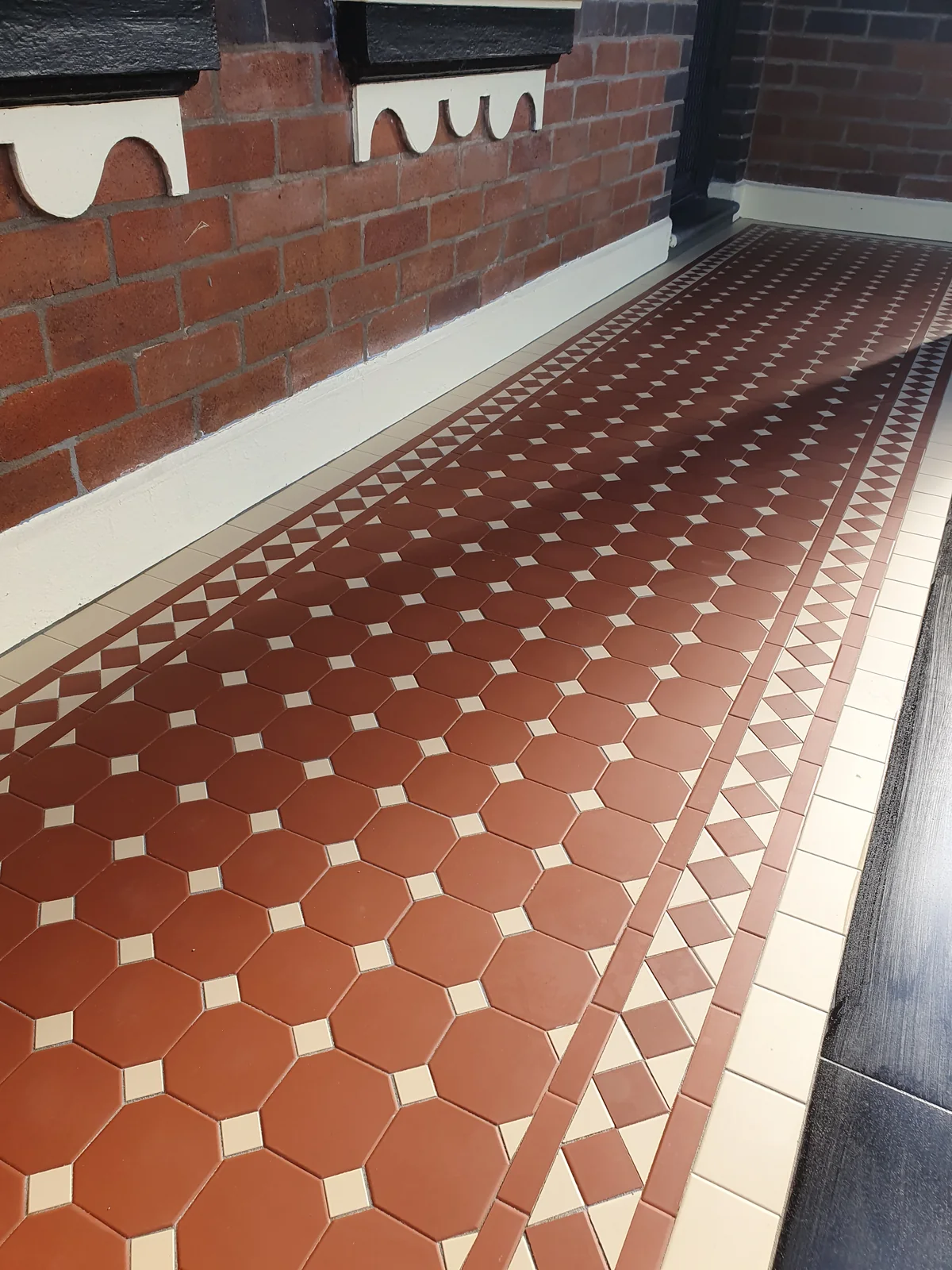
Supply and installation tessellated tiles for the entrance in St Peters, NSW.
Read the projectSt Peters has a layered Inner West character, from the late Victorian and Federation terraces documented in the Goodsell Estate Heritage Conservation Area to the brick and iron railway structures recorded at St Peters Station. For a front path, verandah or entrance, tessellated tiles can be selected to sit comfortably with the proportions, materials and surviving details of the property. AHTC provides design consultation, tessellated tile supply, installation and restoration, with stone bullnose or edging coordination where it suits the design.
The Goodsell Estate statement describes narrow terraces, cottages and houses arranged in a cohesive streetscape, with consistent roof rhythms, chimneys, setbacks, mature trees and sandstone kerbing. Those observations are specific to the conservation area rather than a description of every St Peters property, but they offer a useful starting point: assess the width of the approach, the relationship between the front boundary and facade, and the details that should remain visually quiet around a new tiled surface.
Where an entrance is close to original brickwork, a restrained border and a pattern scaled to the path can help the paving support the building rather than compete with it. Existing thresholds, steps, drainage, fences and garden edges should be checked before a layout is fixed. Heritage-sensitive design is about responding to the individual property; it is not a claim that every home is listed or that a particular pattern is mandatory.
The local history of brickmaking also makes material relationships worth considering. Brick, sandstone and dark or warm tile accents can be assessed together during design consultation, while the final palette should respond to the actual facade, light and surrounding finishes rather than a generic period label.
C85 Goodsell Estate (St Peters) Heritage Conservation Area | Inner West CouncilHeritage conservation areas | Inner West Council
A new pathway or verandah and the repair of an existing tessellated floor are different briefs. New work can be developed around the available proportions, access and edge conditions. Restoration starts with an assessment of what survives, including the pattern, colour relationships, perimeter tiles, thresholds and any areas that have been altered over time.
The Goodsell Estate guidance identifies original details, consistent roof and building forms, appropriate finishes and unobtrusive additions as contributors to streetscape character. A tiling proposal should therefore be tested against the visible setting and the property-specific heritage information before work begins. Inner West Council's heritage map and individual statements are the appropriate starting points for checking whether a particular property or area has relevant controls.
For listed places such as the St Peters Railway Station group, the Heritage NSW record describes a specific State Heritage Register-listed site whose fabric is to be retained and conserved. This is not a general approval for residential work and should not be read as applying to nearby homes.
C85 Goodsell Estate (St Peters) Heritage Conservation Area | Inner West CouncilSt Peters Railway Station group, including interiors | Heritage NSW State Heritage InventoryHeritage conservation areas | Inner West Council
St Peters offers several grounded design cues without requiring a literal copy of any historic building. The Goodsell Estate's narrow terrace rhythm suggests careful attention to border width and repeat scale on compact approaches. Its mature street planting and sandstone kerbing point to the importance of transitions between paving, garden and public-edge elements. The railway station record adds another local reference in brickwork, tiled roofing and finely made iron and steel components.
A consultation can compare these cues with the actual house: the height and material of the steps, the width of the path, the colour of the brick, and whether the entrance is formal, modest or already layered with later work.
C85 Goodsell Estate (St Peters) Heritage Conservation Area | Inner West CouncilSt Peters Railway Station group, including interiors | Heritage NSW State Heritage Inventory
Our St Peters project involved a 7-square-metre supply-and-installation project for a Victorian property. The selected design was a custom hybrid of the Maida Vale pattern in oatmeal and red, framed with honed bluestone edging. It is useful as a local reference for the way pattern, colour and edge treatment can be developed together, while the property's exact conditions remain the basis for any new brief.
No. The Goodsell Estate Heritage Conservation Area is a defined area, and the St Peters Railway Station group is a separately listed heritage place. Heritage controls depend on the individual property, its listing or conservation-area setting and the applicable planning instruments. Check the Inner West Council heritage map and property information before planning work.
Yes, the layout should be developed from the measured entrance, path width, thresholds and surrounding facade. The Goodsell Estate statement records narrow terraces and a cohesive streetscape, which makes scale and border proportions important considerations in that documented area. A consultation can test a pattern and palette against the individual property rather than assuming one local design fits every home.
Yes. Restoration begins by assessing surviving tiles, pattern, perimeter and substrate conditions, while new installation starts with a new design and site brief. The appropriate scope depends on what is present at the property and how the new work will meet existing steps, thresholds and drainage.
No. The Heritage NSW record concerns the St Peters Railway Station group at King Street and identifies its own listed fabric and management requirements. It is useful local context, not evidence that surrounding residential properties share the station's listing.
First identify whether the property is within a documented conservation area or is individually listed, then check the current council and planning information for the proposed work. Keep any original details that contribute to the property's character in view, and discuss the entrance condition, access, edge treatments and intended pattern before selecting tiles. AHTC can then scope design consultation, supply, installation or restoration around the property-specific brief.
Share your location, project details and photographs using our enquiry form, or call 0433 932 711.