
Tessellated tiles in Erskineville
Erskineville's low-scale residential streets include terrace and cottage rows, small lots, rear lanes and close connections between homes and village streets. If you are planning a tessellated floor, verandah or pathway here, the existing proportions, rooflines, front setbacks and surrounding streetscape can help guide a considered design. AHTC can discuss tessellated tile supply, installation, restoration, design consultation and stone bullnose or edging coordination for your property.
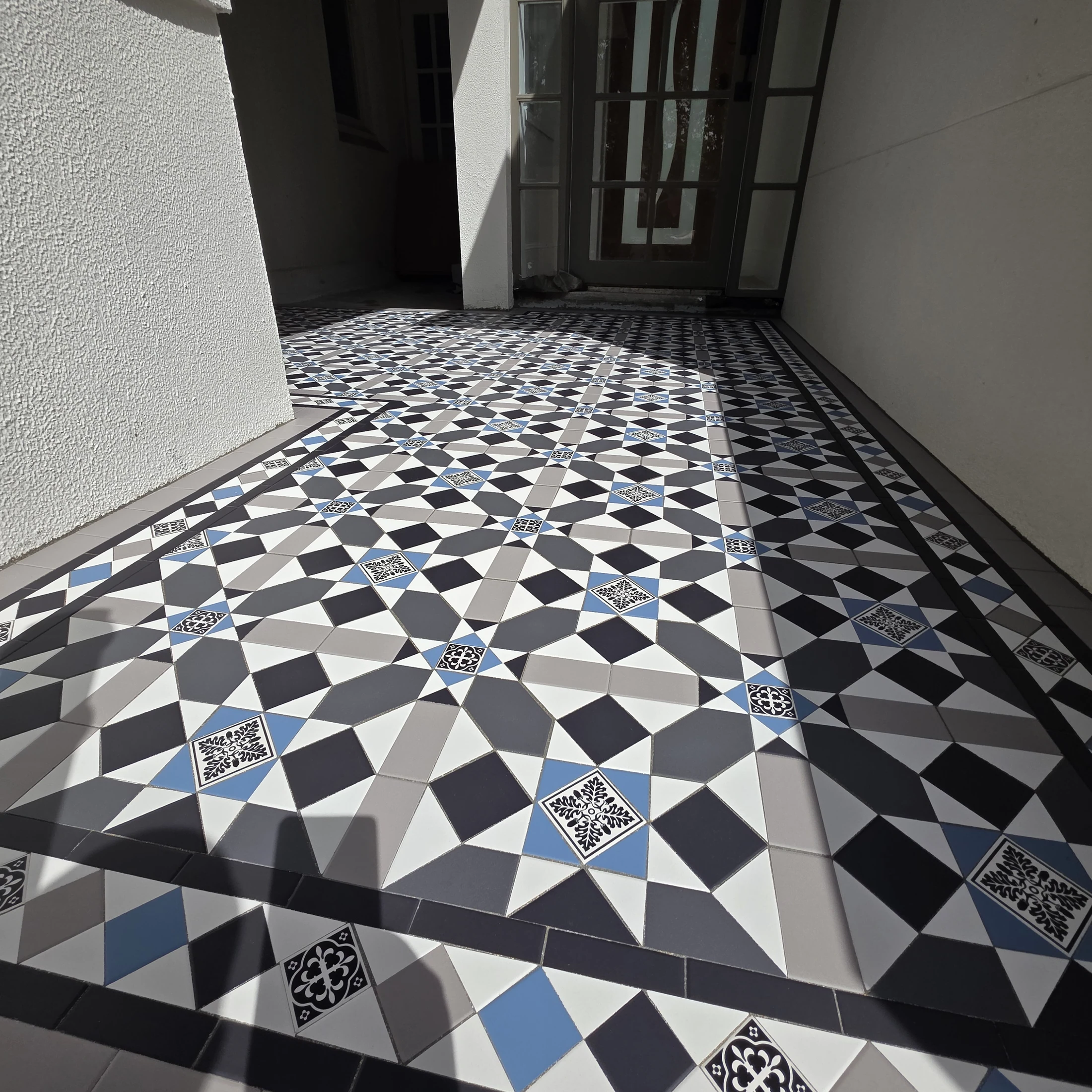
A streetscape-led starting point
The City of Sydney's locality statement describes Erskineville as a predominantly residential, low-scale area with a cohesive built form and small-lot subdivision. It highlights the consistency of terrace and cottage rows, their scale and proportion, roof design, materials palette and intact rear laneways. Those observations are useful when selecting a tessellated layout: the floor should be considered as part of the home's threshold, verandah, path and front setback rather than as an isolated pattern.
For a terrace or cottage, begin by looking at the existing width, alignment, step levels, door thresholds and relationship to the footpath. A restrained border or proportionate field may sit more comfortably than a layout that overwhelms a narrow frontage. Where an older surface remains, document it before removing or covering anything so that restoration, selective repair or a carefully matched new work can be considered.
The locality statement also calls for development to respond to heritage items and contributory buildings within conservation areas, streetscapes and lanes. That is design context, not a blanket approval or listing claim. Property-specific heritage and planning checks should be made before work begins.
Sydney Development Control Plan 2012 — Section 2 Locality StatementsConservation Areas Review Planning Proposal — City of Sydney, June 2025
Design and craftsmanship for verandahs and paths
Erskineville's compact lots make transitions especially visible. Consider how a tessellated verandah meets the front step, how a pathway turns or narrows, and whether a stone bullnose or other edging detail needs to coordinate with existing masonry. A design consultation can resolve pattern scale, borders, thresholds and the relationship between new work and retained fabric before supply and installation are coordinated.
Exposure, falls, drainage, access and the condition of the existing substrate are property questions rather than assumptions to apply to every home. On a restoration project, the first decision is whether original tiles can be retained and repaired. On new work, the layout should be developed around the actual site, adjoining levels and the character of the building.
Sydney Development Control Plan 2012 — Section 2 Locality Statements
Heritage context without overclaiming
Erskineville contains recognised heritage places and mapped conservation-area context. The Imperial Hotel is listed on the NSW State Heritage Register for its cultural and historical significance, including its role in the Newtown/Erskineville LGBTQIA+ precinct. The Lady Gowrie Child Centre has been the subject of a NSW listing nomination consultation and should be described as under consideration in that source, not as a confirmed listing.
These examples show why a property-led approach matters. They do not mean that every Erskineville dwelling is heritage listed, nor that a tile project has automatic heritage approval. Check the relevant City of Sydney planning and heritage controls for the particular property and seek any required advice before altering fabric that may contribute to a conservation area.
Pride and preservation: the Imperial Hotel listed on the NSW State Heritage RegisterLady Gowrie Child Centre — Heritage listing nominationConservation Areas Review Planning Proposal — City of Sydney, June 2025
Planning a local tile project
AHTC's service discussion can cover design consultation, tessellated tile supply, installation, restoration and coordination of stone bullnose or edging details. For an existing floor, photographs and a description of what is retained can help frame the conversation. For a new verandah or pathway, note the dimensions, access, steps, drainage and how the proposed work meets the building and boundary.
The Erskineville page remains the local service route. It should connect to the broader Sydney heritage and restoration guidance for people who need city-wide service navigation, while keeping this page focused on the locality's documented built-form considerations.
Sydney Development Control Plan 2012 — Section 2 Locality Statements
Your Heritage Tiling Questions
Does living in Erskineville mean my home is heritage listed?
No. Erskineville has heritage items and conservation-area context, but a suburb location alone does not establish that an individual home is listed or subject to the same controls as another property. Check the relevant City of Sydney planning and heritage information for the specific address before changing older fabric.
What should I consider when choosing tessellated tiles for an Erskineville terrace or cottage?
Start with the building's existing scale and proportion, the width of the frontage, threshold and step levels, and the relationship to the front setback and rear or side access. The City of Sydney locality guidance highlights terrace and cottage rows, roof design, materials and lanes as important parts of the area's character, so a proportionate pattern and carefully resolved edges can be more appropriate than an isolated decorative treatment.
Can an existing tessellated floor in Erskineville be restored?
It may be possible, depending on the condition, extent and significance of the surviving fabric. Begin with an assessment and photographs before removal or replacement is considered. A restoration discussion can then distinguish retention and selective repair from new supply and installation, while any planning or heritage requirements are checked for the property.
Is the Imperial Hotel's heritage listing the same as a heritage listing for nearby homes?
No. The NSW Government's listing concerns the Imperial Hotel and recognises that place's cultural and historical significance. It is not evidence that nearby homes share the same listing or controls.
Is the Lady Gowrie Child Centre already listed on the State Heritage Register?
The NSW Government consultation page says the Lady Gowrie Child Centre was being considered for listing and may meet the criteria. That consultation material should not be treated as confirmation of a final listing decision. Check current official records if the project is near that place or may be affected by a particular control.
Discuss Your Heritage Tiling Project
Share your location, project details and photographs using our enquiry form, or call 0433 932 711.