
Tessellated tiles in Balmain
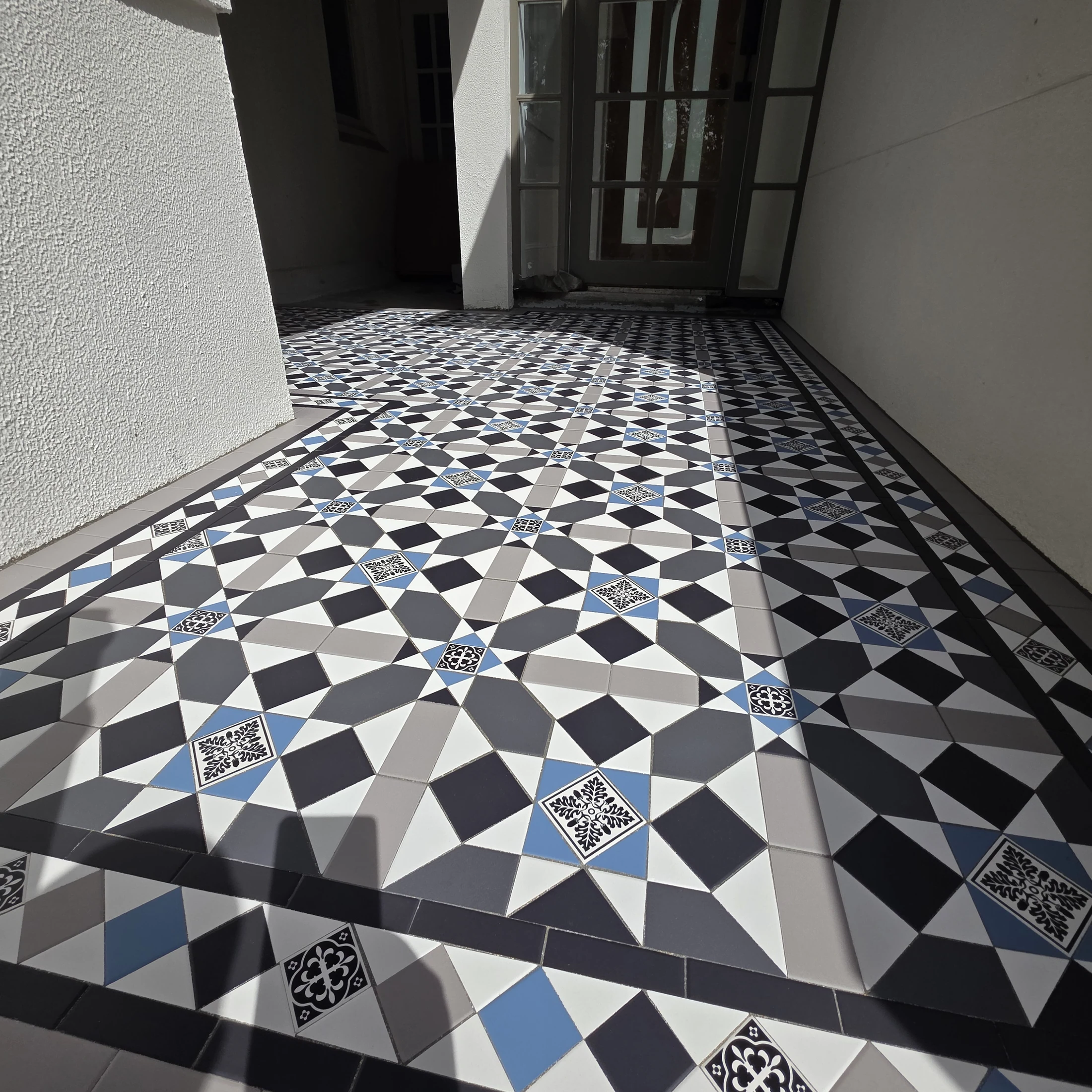
Balmain's narrow streets, changing levels, historic terraces and former industrial edges create a distinctive setting for verandahs, paths and interior floors. We can help you consider tessellated tile design, supply, installation or restoration in a way that responds to the existing property and its setting, rather than treating every Balmain home as the same.
A harbourside suburb shaped by topography and industry
Inner West Council describes Balmain as a low-rise, medium-density suburb shaped by rugged sandstone headlands, steep foreshores, bays and a ridgeline. Its streets and lots developed incrementally alongside water-based industry, and the suburb now combines historic terraces with repurposed industrial sites. [Council's Balmain controls](the official heritage reference) also state that the entire suburb is within a Heritage Conservation Area. This makes the relationship between a tiled surface, the building and the streetscape important when planning new work or repairing surviving fabric.
The council's Balmain material refers to The Valley, Waterview Estate and Town of Waterview heritage contexts. Documented character elements include timber buildings, original plaster and face-brick finishes, narrow streets, sandstone kerbs and gutters, and maritime or industrial buildings. These are local cues to investigate, not a claim that every property contains each feature.
4.3 Balmain — Inner West Council Development ControlsHeritage conservation areas | Inner West Council
Plan the tile work around the property
For a Balmain verandah, entry path or floor, begin by recording what remains: tile dimensions and colours, border or field arrangement, edge conditions, thresholds, drainage, steps and any adjoining sandstone, timber, masonry or painted finishes. A measured record and clear photographs help separate original fabric from later repairs before a replacement pattern is selected.
On a sloping or tightly accessed site, the practical design questions can be as important as the pattern: how the tiled surface meets a stair or doorway, how water is managed at edges, and how the finished level sits with existing thresholds. These questions should be resolved for the individual property rather than assumed from the suburb name.
4.3 Balmain — Inner West Council Development ControlsHeritage and development | Inner West Council
Respect surviving fabric and local character
Where original tessellated tiles survive, selective repair and careful matching may be preferable to removing a sound field. Where a new surface is appropriate, the design can take its cues from the building's proportions, verandah geometry, path width and adjacent materials without copying a neighbouring property. The aim is a coherent result that sits comfortably with Balmain's layered streetscapes.
Inner West Council advises that work affecting a heritage item or a Heritage Conservation Area should be checked before it begins. Its guidance includes tessellated tile repairs among minor works that may be considered through a Heritage Exemption Certificate, but the council's written advice and the actual property circumstances determine the pathway. A tile specialist can help describe the proposed work; that does not replace council or planning advice.
Heritage and development | Inner West CouncilInner West Local Environmental Plan 2020 — NSW Planning Portal document
Design, supply, installation or restoration
AHTC's Balmain service discussion can cover a new tessellated layout, tile supply, installation planning, restoration of existing work, and coordination of stone bullnose or edging where it suits the property. The useful starting point is the condition and intended use of the surface, followed by a design conversation about scale, colour, border treatment and transitions.
If you are unsure whether the project is primarily restoration or new work, share the age and condition of the surface, what is visible from the street, and any council information already available. This helps keep the brief focused on the actual property without assuming that a heritage listing or conservation-area setting dictates one universal tile solution.
Your Heritage Tiling Questions
Is all of Balmain heritage-listed?
No. Inner West Council distinguishes individual heritage items from Heritage Conservation Areas and other heritage categories. The council's Balmain controls state that the entire suburb is within a Heritage Conservation Area, but that does not mean every building is an individually listed heritage item or that every property has the same significance. Check the council's heritage map and property-specific records before planning work.
Can tessellated tile repairs be carried out in Balmain without approval?
Do not assume that they can. Inner West Council lists tessellated tile repairs as an example of minor heritage work that may be considered through a Heritage Exemption Certificate, but its guidance says the council must provide written advice for that pathway and that other work may require a development application or complying development certificate. Confirm the requirements for the specific property before work starts.
What should I record before restoring an old Balmain tiled verandah?
Photograph the whole verandah and close details of the field, border, corners, thresholds, steps and damaged areas. Note tile sizes, colours, missing sections and any adjoining sandstone, timber or masonry. Property history and council heritage information can then be considered before deciding between selective repair, matching replacement or a new layout.
How can a new tiled path suit a Balmain property?
Start with the building's proportions, the path or verandah geometry, existing levels and the materials at the edges. Balmain's documented character includes narrow streets, varied topography and layered residential and industrial forms, so a site-measured layout and considered transitions are more reliable than applying a generic pattern. Any heritage or planning requirements should be checked separately with Inner West Council.
Discuss Your Heritage Tiling Project
Share your location, project details and photographs using our enquiry form, or call 0433 932 711.