
Tessellated tiles in Seacliff
Seacliff's coastal setting and established residential character call for tile choices that feel considered rather than generic. For a verandah, pathway, entry or interior floor, we can help develop a tessellated layout, coordinate tile supply and plan installation or restoration around the property, the existing fabric and the way the space is used.
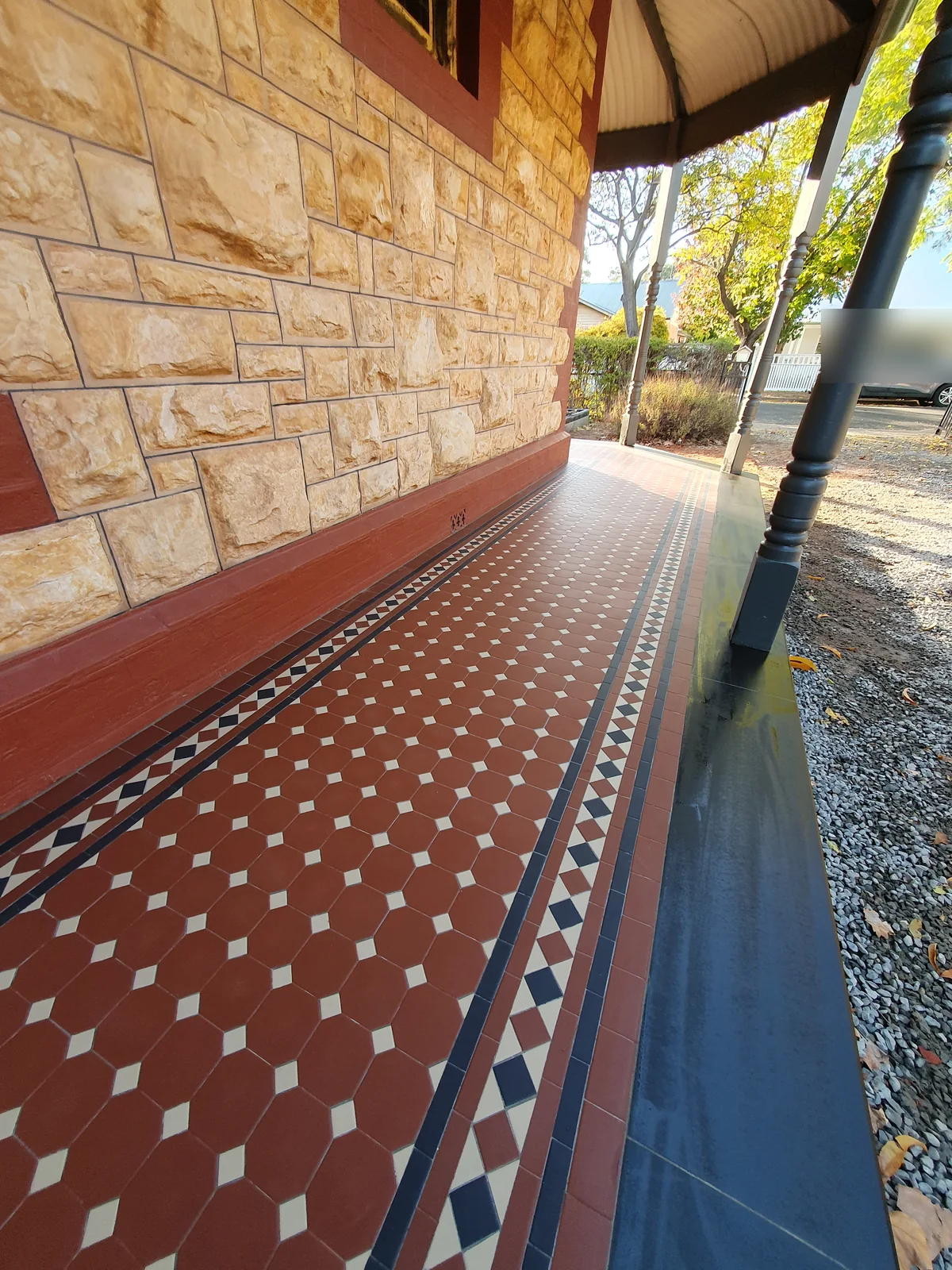
A local character worth reading before choosing a pattern
City of Holdfast Bay planning material describes the Seacliff Character Area as predominantly single-storey detached housing from the 1880s to 1920s, with bungalow and Spanish Mission examples. It also notes hipped and gable roofs, fine-grain detailing and strong solid-to-void proportions. Those cues can help a new tessellated floor sit comfortably with a facade without pretending that every home shares one period or style.
The council's local history also records a layered coastal community of early cottages, workers' cottages, churches, shops, hospitality buildings and foreshore structures. A design consultation can use the house's own proportions, thresholds, steps and sightlines as the starting point for scale, border treatment and colour balance.
Designing for a Seacliff entry, verandah or pathway
For an exposed coastal approach, layout and detailing need to be considered alongside the practical route into the home. We can discuss the relationship between a border and the main field, transitions at doors and gates, falls and drainage, and how a pattern will read from the street and from inside the property.
Where an existing floor or path is being retained, the useful question is not simply whether a new tile looks old. It is whether the scale, geometry, colour relationships and edge treatment respect what is already there. Stone bullnose or edging coordination can be considered where a step, landing or boundary needs a durable, visually resolved finish.
Restoration with the property in view
Restoration begins with looking closely at the surviving surface: its pattern, edges, wear, previous repairs and the way water reaches it. The appropriate response may involve careful restoration, selective replacement or a new layout that is clearly new while remaining sympathetic to the setting.
Seacliff's Character Area is not the same thing as blanket heritage listing. A property may have its own heritage status or be affected by current planning controls, so owners should confirm the position for their particular site with the relevant authority before work begins. Design advice can support that conversation but does not replace statutory advice or approval.
Plan a tessellated tile project in Seacliff
Share the space you are considering, the age and character of the property, and any existing tile or stone details that need to remain. We can then discuss design, tessellated tile supply, installation, restoration and edging coordination as one considered scope for the home.
The retained enquiry form is available for the next step. A consultation can focus on the right pattern and construction approach for the actual site rather than assuming a standard solution.
Your Heritage Tiling Questions
Are all Seacliff homes heritage-listed?
No. Council material describes a Seacliff Character Area and separately identifies individual heritage places. Character-area guidance and a property's own heritage status are different questions, so check the particular site before making assumptions about approvals or alterations.
What local details can inform a tessellated tile design in Seacliff?
The council's description of the Character Area points to bungalow and Spanish Mission forms, hipped and gable roofs, fine-grain detail and strong solid-to-void proportions. These can inform scale, border weight and colour relationships, while the individual house remains the design starting point.
Can existing tessellated tiles in a Seacliff home be restored?
Often the first step is an on-site assessment of the existing pattern, loose or damaged tiles, edges, wear and water movement. The resulting scope may involve restoration, selective replacement or a new complementary section; the suitable option depends on the actual condition and the property's requirements.
Are coastal exposure and drainage relevant to a Seacliff pathway or verandah?
Yes. A coastal approach should be considered as a complete route, including thresholds, falls, drainage, edges and transitions. The local setting makes site observation important, rather than relying on a pattern chosen in isolation.
Should I check planning or heritage requirements before changing tiles?
Yes. Confirm the requirements for the specific property and proposed work with the relevant authority before starting. A local character area does not automatically mean every home has the same heritage status or approval pathway.
Discuss Your Heritage Tiling Project
Share your location, project details and photographs using our enquiry form, or call 0433 932 711.