
Tessellated tiles in The Rocks
The Rocks sits on the western shore of Sydney Cove and is known for a precinct of restored nineteenth-century buildings. For a tiled verandah, entry, pathway or interior, the right approach starts with the property itself: understand the existing fabric, consider the surrounding streetscape and confirm whether heritage controls or exemptions apply before work begins.
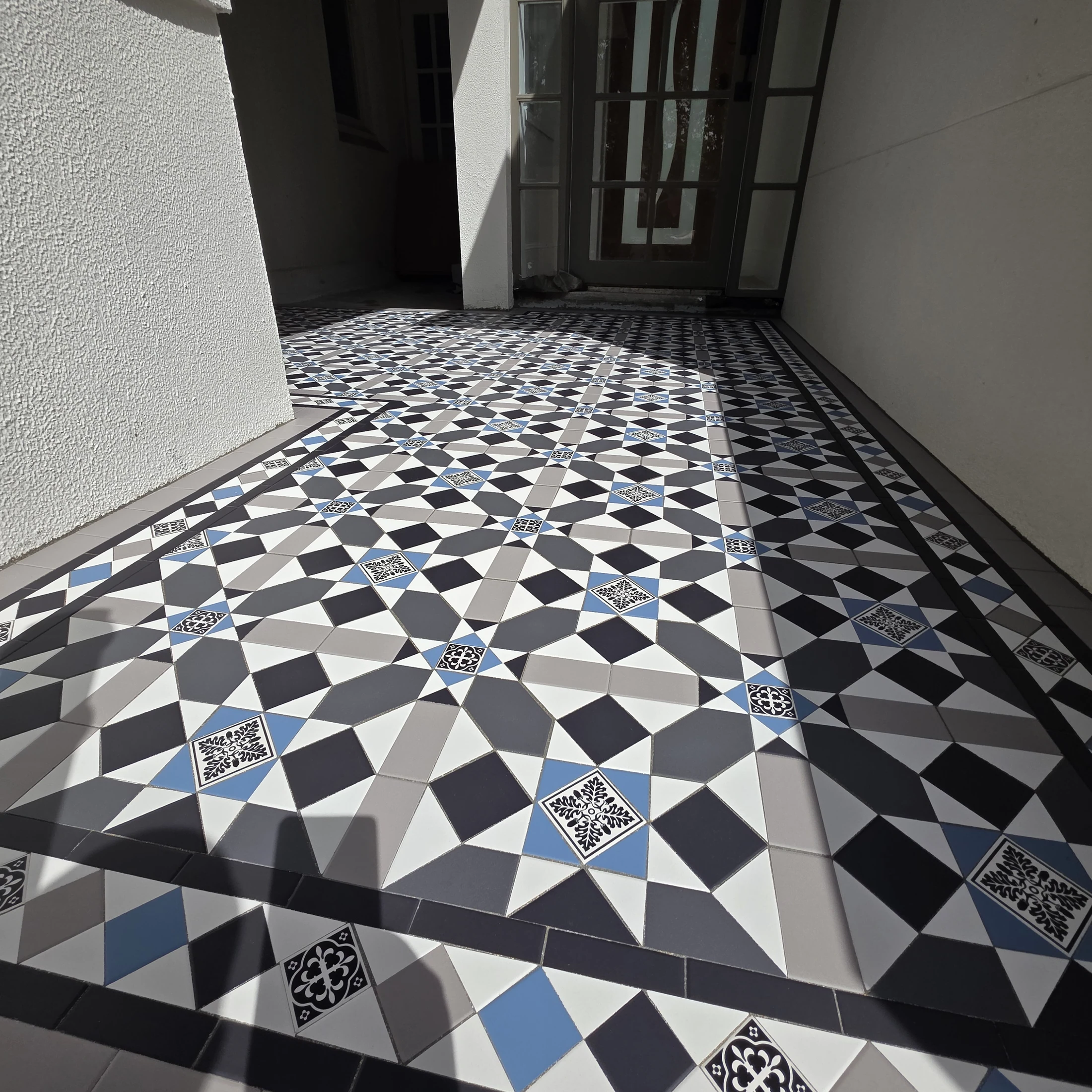
Tiling for a historic harbour-side setting
The Rocks has a documented historic character shaped by its early settlement, surviving and restored nineteenth-century buildings, and compact urban setting. That context makes proportion, edges, transitions and the relationship between a tiled surface and the building frontage important design questions rather than afterthoughts.
A design consultation can consider how a tessellated pattern sits beside existing masonry, thresholds, steps, verandahs or narrow approach paths. Where original or earlier fabric remains, record it before deciding whether the work should retain, repair, match or clearly distinguish new work.
The Rocks historic precinct case study — NSW Environment and HeritageCity of Sydney Heritage Development Control Plan 2006
Pattern, borders and careful detailing
For a The Rocks property, pattern scale and border proportions should respond to the room, frontage or path instead of being selected in isolation. A restrained border can help define an entry sequence, while a carefully set field pattern can work with existing door lines, steps and changes in level.
Craftsmanship is also part of the result. Existing surfaces, junctions and edge conditions should be assessed before installation or restoration is planned. Tessellated tile supply, installation and restoration can then be coordinated around the site’s access, layout and condition rather than a universal recipe.
Check the property before heritage-related work
A locality with heritage significance does not mean every property has the same listing or approval pathway. The City of Sydney advises owners to check the individual address and proposed work, including whether a local heritage item or heritage conservation area applies. NSW Environment and Heritage likewise explains that requirements depend on the listing level, the work and any available exemption.
Before changing an existing tiled surface, confirm the relevant status with the City of Sydney and, where applicable, NSW Heritage. A tiling consultation can support design and scope discussions, but it is not heritage approval or an endorsement by either authority.
Gain exemption from requiring development consent for heritage works — City of SydneyWhat heritage listing means — NSW Environment and Heritage
Design, supply, installation and restoration
AHTC’s existing service route can help with tessellated tile design consultation, tile supply, installation and restoration planning for The Rocks. The useful starting information is the location, the intended area, photographs of existing surfaces and any heritage information already held for the property.
Where stone thresholds, bullnose edges or other transitions are part of the brief, note them early so the tile layout and adjoining finishes can be considered together.
Gain exemption from requiring development consent for heritage works — City of SydneyCity of Sydney Heritage Development Control Plan 2006
Your Heritage Tiling Questions
Does every property in The Rocks require heritage approval for tiling?
Not necessarily. Heritage requirements depend on the individual property’s listing or conservation-area status, the proposed work and any applicable exemption. Check the address and scope with the City of Sydney and, if the place is state listed, NSW Heritage before starting.
Can new tessellated tiles be designed to sit comfortably with an older building?
Yes, the design can be developed around the building’s proportions, thresholds, steps, frontage and existing materials. City of Sydney heritage guidance emphasises responding to surrounding form and character, retaining significant fabric where applicable and making new materials compatible without pretending they are original.
Should an existing tiled surface be removed before it is assessed?
Assessment should come first. Photograph and document the surface, edges and adjoining fabric before deciding whether repair, matching, selective replacement or new work is appropriate. The decision should also take account of the property’s heritage status and the significance of the existing material.
Can AHTC confirm whether my property has heritage approval?
No. AHTC can discuss the tiling scope and help coordinate a design brief, but heritage status and approval requirements are determined through the relevant City of Sydney and NSW heritage processes for the individual property and proposed work.
Discuss Your Heritage Tiling Project
Share your location, project details and photographs using our enquiry form, or call 0433 932 711.