
Tessellated tiles and heritage-sensitive tiling in Haymarket
Haymarket sits at the southern edge of central Sydney and has a distinctive urban character shaped by markets, theatres, Chinatown and continuing cultural change. For a property in this active inner-city setting, a good tile decision starts with the building and the space: whether existing fabric is worth retaining, how a new pattern will meet a shopfront or threshold, and how the finish will sit within the surrounding streetscape. AHTC can help with design consultation, tessellated tile supply, installation, restoration and stone bullnose or edging coordination.
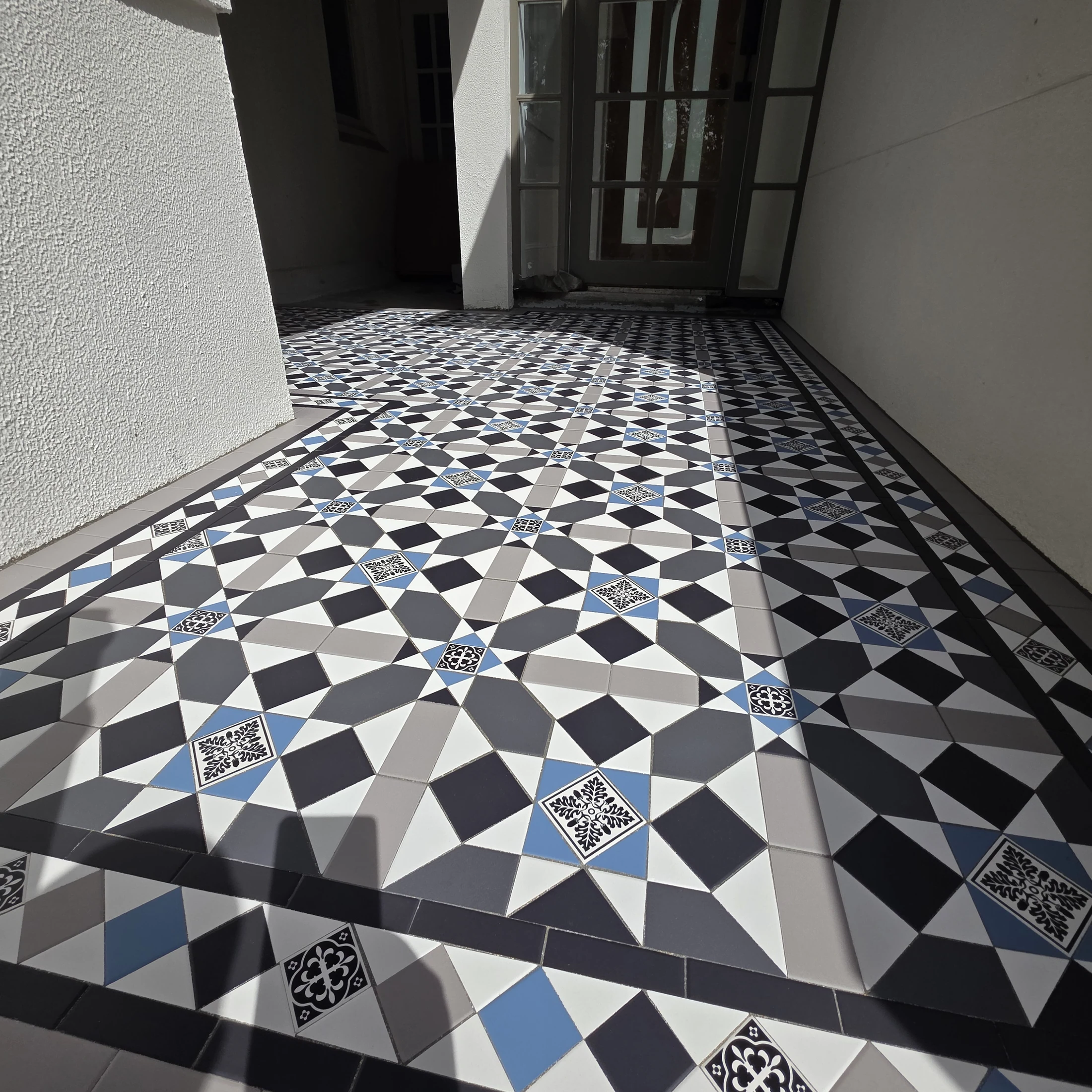
A Haymarket context shaped by culture and change
The City of Sydney describes Haymarket as lively, diverse and ever changing, with historic links to Chinese culture and communities. The wider precinct includes Chinatown, Thaitown, Koreatown, Railway Square and Darling Square, so a tile scheme may need to work within a dense, highly public urban setting rather than a quiet suburban frontage.
The City also identifies Chinatown as a Special Character Area and is progressing public-domain, shopfront and heritage-related work. That context makes a measured approach useful: observe the building's existing proportions, frontage and transitions before choosing a pattern, border or edge detail.
Start with the property's surviving fabric
For an older Haymarket building, first distinguish original or established tilework from later repairs and replacement surfaces. Photographing the field, borders, thresholds, nosings and damaged areas can help a design consultation focus on what should be retained, matched, repaired or replaced.
The City of Sydney's heritage guidance recommends researching the individual property's history, significance, previous changes and degree of intactness. That does not mean every Haymarket property is heritage listed, and it does not establish approval requirements for a particular address. It does mean that a property-specific assessment is a better starting point than choosing a generic pattern from a locality name alone.
Design inspiration for compact inner-city spaces
Haymarket's market and theatre history can inform a restrained palette, a legible border and a durable transition between interior and public-facing areas without imitating a building that has not been documented. For a verandah, entry or pathway, consider how the pattern reads at walking distance, where the edge finishes, and how it meets doors, drainage points and adjoining paving.
Where existing tiles remain, careful matching of scale, colour relationships and layout can keep new work visually connected to the old. Where the work is wholly new, design consultation can instead establish a pattern that suits the building's proportions and the practical demands of the site. Installation sequencing, substrate condition and access should be assessed for the particular property rather than assumed from the suburb.
Haymarket precinctCity of Sydney Heritage Development Control Plan 2006
Check the right heritage and planning information
A locality's cultural significance is not the same as a heritage listing for every building. Before altering established tilework, confirm the property's own listing, conservation-area or streetscape context and the work proposed. The City's heritage guidance notes that application information can vary with significance, contribution to a conservation area or streetscape, and the nature of the proposal.
AHTC's role is to provide design and tiling services, not heritage approval. Where a planning or heritage question arises, use the relevant City of Sydney and NSW guidance for the property and obtain any advice or consent required before work begins.
City of Sydney Heritage Development Control Plan 2006Haymarket precinct
Your Heritage Tiling Questions
Does every Haymarket property need heritage approval for tile work?
No general conclusion can be made from the suburb name. Heritage status and application requirements depend on the individual property, its significance or streetscape context, and the proposed work. Check the relevant City of Sydney and NSW information before altering established fabric.
Can existing tessellated tiles in Haymarket be restored rather than replaced?
That depends on condition, intactness, previous changes and the extent of missing or damaged areas. A condition-led inspection can separate repairable original or established work from later material and inform a retain, match or replace decision.
What should be considered for a Haymarket entry, pathway or shopfront transition?
Consider the building's proportions, the pattern's legibility at walking distance, thresholds and door swings, drainage, access, adjoining paving and the finish at the edge. Inner-city public-facing spaces also benefit from planning the installation sequence around access and surrounding activity.
How can I choose a tile pattern that suits a Haymarket property?
Begin with the property rather than a generic period label. Review any surviving field and border layout, the building's scale, the intended use and the relationship to adjoining materials. Design consultation can then develop a new or matching scheme for the specific space.
Discuss Your Heritage Tiling Project
Share your location, project details and photographs using our enquiry form, or call 0433 932 711.