
Tessellated tiles and heritage-sensitive tiling in Centennial Park
Centennial Park sits within a distinctive Sydney setting shaped by the history of Centennial Parklands. The Parklands opened as a public park in 1888 and include documented heritage landscapes, gates, bridges and buildings. For a private home or property, the useful starting point is to understand the character of the place, then choose a tessellated tile layout, border and finish that suit the building and the work being proposed.
A parklands setting with documented heritage layers
Centennial Parklands' official history describes a landscape shaped by Picturesque and Gardenesque design traditions, with tree-lined avenues, ponds and historic entrances. Its heritage listings identify the Parklands and associated structures across several registers, including the State Heritage Register. That context can inform a restrained approach to new tiling: consider how a verandah, entry path or threshold relates to the surrounding landscape rather than treating a pattern as an isolated decoration.
The Parklands also contain specific architectural and engineering references, from 1890s sandstone bridges to the Victorian-style Superintendent's Residence and the European Arts and Craft-style Rangers Residence. These are useful sources of design inspiration for proportion, durable edges and the relationship between hard surfaces and planting, but they are not evidence that a private Centennial Park property shares the same listing or construction history.
Design decisions for entries, verandahs and pathways
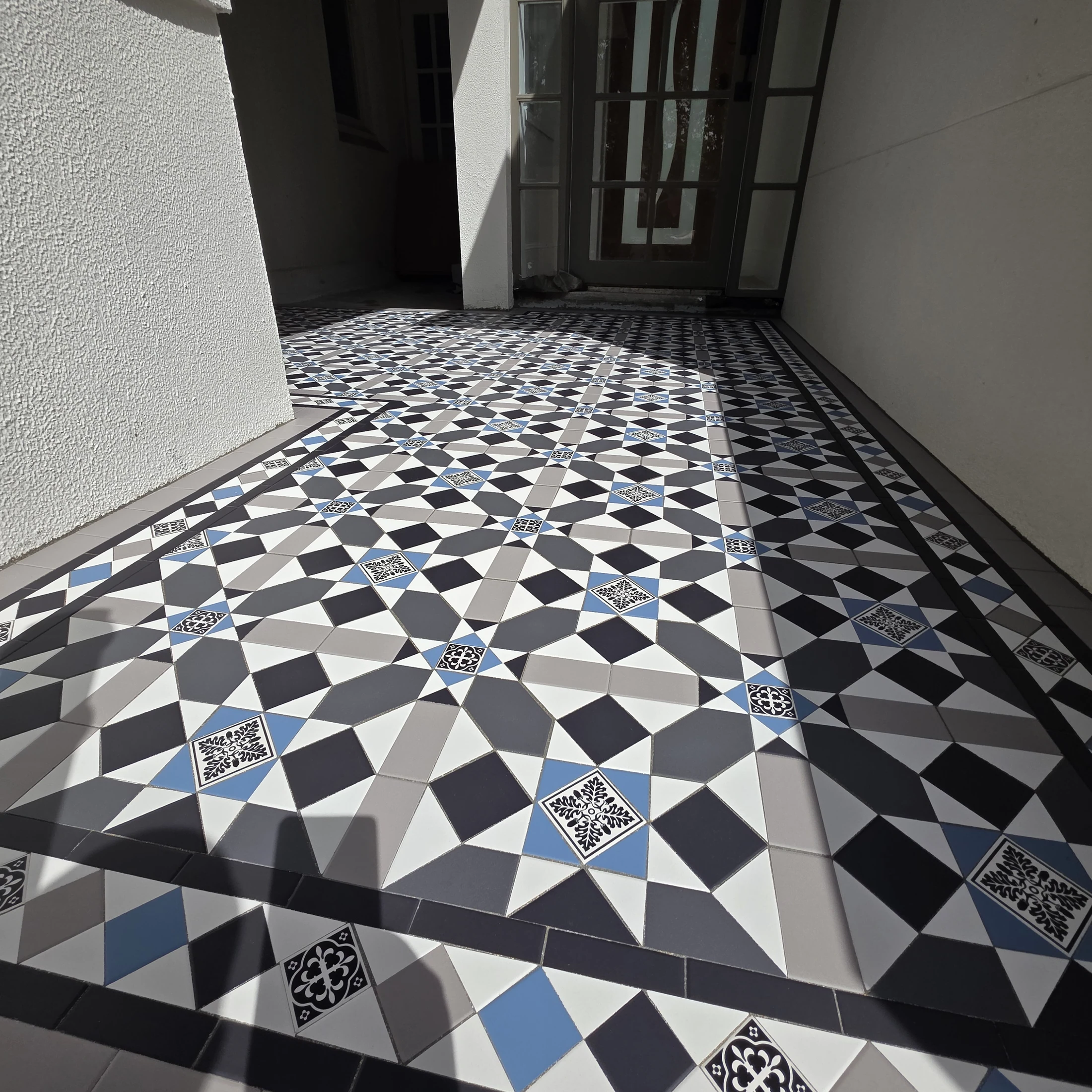
For a Centennial Park property, begin with the existing building lines, threshold levels, drainage path and the way the entry is seen from the street or garden. A tessellated layout can be developed around a clear field, a border or a more articulated transition at a doorway. The right balance depends on the property's scale and surviving details, not on a suburb-wide pattern rule.
Where a new pathway or verandah meets older masonry, stairs or garden edging, careful setting-out and edge detailing matter as much as the motif. A design consultation can test proportions, transitions and colour relationships before supply and installation are coordinated. Stone bullnose or edging may also be considered where the site calls for a durable, visually resolved boundary.
When existing tiles or heritage controls are involved
If original or older tessellated tiles remain, document their condition and pattern before removing anything. Restoration may involve retaining sound fabric, matching a repair area as closely as practical and distinguishing new work where a complete match is not possible. The appropriate scope depends on what is found on site; no universal substrate or repair method should be assumed from the locality alone.
Centennial Parklands' register information distinguishes government-maintained registers from non-government listings. The City of Sydney also directs owners to check heritage maps and explains that controls and approval pathways vary with the property and proposed work. Confirm the applicable council or land manager, listing and conservation-area status before work begins. A tiling service can help with design and condition discussions, but it does not provide heritage authority approval.
Heritage | City of SydneyCentennial Parklands Plan of Management
Craftsmanship that follows the property
Good tessellated tiling is built around accurate set-out, considered transitions and a finish that works with the building's existing materials. In Centennial Park, the documented sandstone, garden and civic landscape context makes proportion and edge treatment particularly important for visible paths and entries. The practical sequence is to review the site, develop the design, confirm the tile selection, then coordinate installation or restoration around the property's access and existing fabric.
AHTC provides design consultation, tessellated tile supply, installation, restoration and stone bullnose or edging coordination. The local page is intended to help property owners start that conversation without making assumptions about listing status, approvals or the history of an individual home.
Your Heritage Tiling Questions
Is every property in Centennial Park heritage listed?
No. Centennial Parklands contains places recorded on several heritage registers, but that does not establish that every private property in the suburb is listed or in a conservation area. Check the relevant council and heritage maps for the individual property.
Which council should a Centennial Park property owner contact about heritage controls?
Do not rely on the service-directory grouping alone. Greater Sydney Parklands states that the Parklands are within or near the City of Sydney, Randwick, Waverley and Woollahra local government areas. Confirm the property's actual authority, planning controls and any land-manager requirements before lodging or commencing work.
Can old tessellated tiles be restored rather than replaced?
Often that is worth assessing, but the answer depends on the tiles' condition, the surviving pattern, previous repairs and the substrate. A site review should document existing fabric before a repair or replacement scope is selected.
What can inspire a Centennial Park tessellated tile design?
The Parklands provide documented references in landscape and built form, including Picturesque and Gardenesque planting traditions, historic gates, sandstone bridges and Arts and Craft or Victorian-style structures. These can inform proportion, borders and material relationships without copying a public heritage structure or claiming that a private property shares its status.
Does a heritage listing automatically mean tile work needs approval?
Not automatically. The applicable pathway depends on the listing, the authority and the proposed work. The City of Sydney explains that exemptions, development applications or state heritage pathways may apply in different circumstances. Obtain property-specific advice before work starts.
Discuss Your Heritage Tiling Project
Share your location, project details and photographs using our enquiry form, or call 0433 932 711.