
Tessellated Tiles in Rostrevor
Rostrevor sits in Adelaide's eastern metropolitan area and includes land administered by more than one council. That boundary detail matters when a property has planning or heritage questions. For tiling work, the practical starting point is the building itself: its entry sequence, verandah or path proportions, existing tile pattern, drainage and the condition of the substrate. A design consultation can help shape a suitable tessellated layout, coordinate supply and plan installation or careful restoration without assuming that every home shares the same period or architectural character.
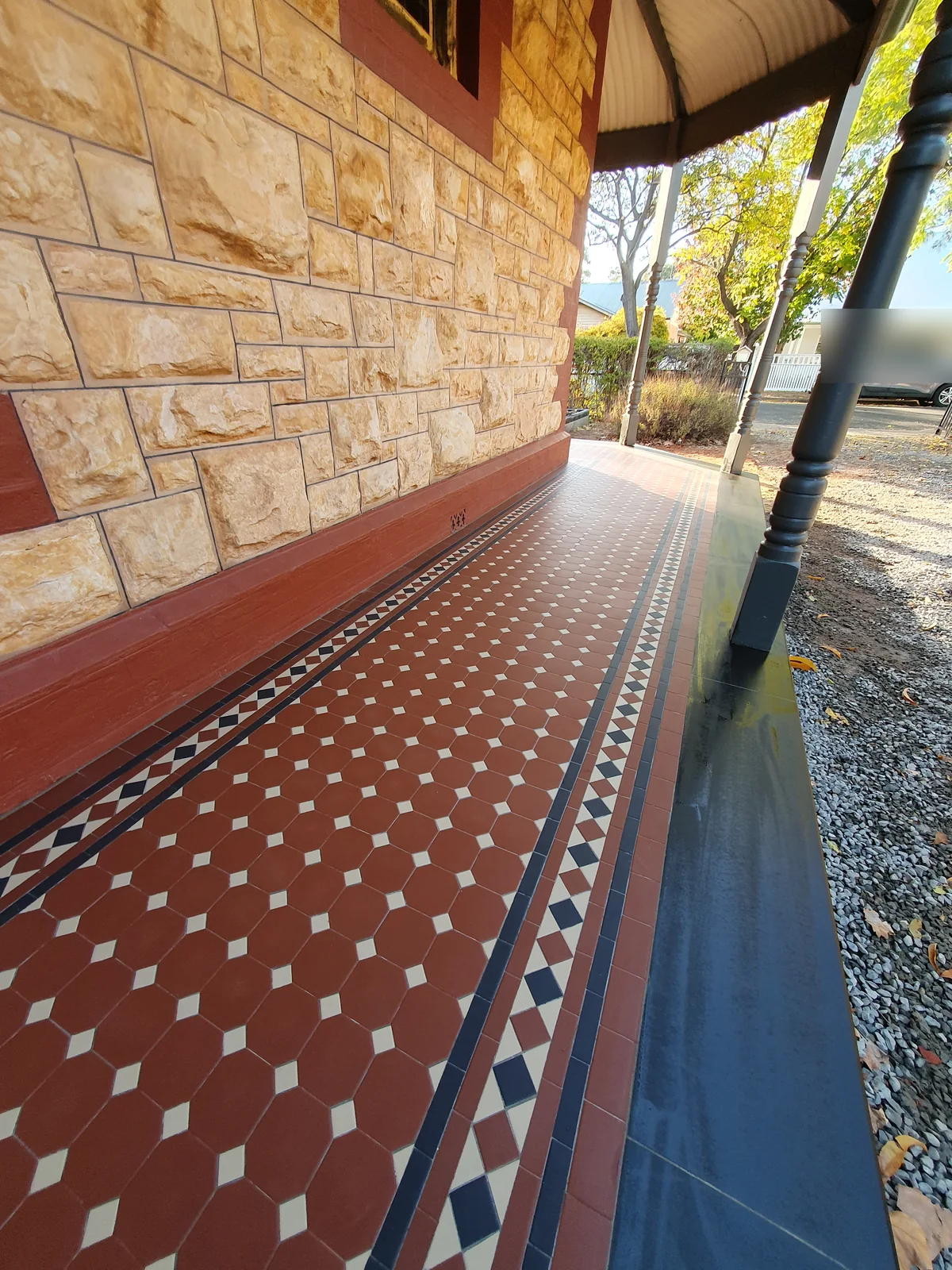
A property-led approach for Rostrevor homes
Rostrevor is recognised within metropolitan Adelaide, but it is not a single-council locality. The City of Campbelltown identifies only part of Rostrevor within its area, with Adelaide Hills Council adjoining its eastern boundary. Before changing an older verandah, front path or tiled entry, the property's exact authority and any relevant heritage listing should be checked rather than inferred from the suburb name.
The local architectural record also rewards a measured approach. The South Australian Heritage Council has described a cluster of Dickson and Platten houses in Rostrevor, including work shaped by site, materials and carefully considered spatial planning. That is useful context for design conversations, not a claim that all Rostrevor houses are architect-designed or heritage-listed.
Designing a tessellated entry, verandah or path
For a Rostrevor project, the most useful design decisions are usually made from the plan and the existing fabric. Consider how a border meets steps, whether the pattern should frame a threshold or run continuously along a path, and how the layout relates to door swings, garden edges and drainage. A restrained border can clarify a long path, while a more composed central field may suit a sheltered entry or verandah.
Existing details should be documented before new work is selected. Tile dimensions, colours, corner conditions, thresholds and any surviving fragments can influence whether a close match, a sympathetic new layout or a selective repair is the better course. Stone bullnose or edging coordination may also be relevant where a tiled surface meets steps, paving or a garden edge.
Restoration, supply and installation planning
Where original or older tiles remain, restoration planning should begin with an inspection of what is sound, what has moved or cracked, and what may be contributing to moisture or unevenness. The right response can range from retaining and cleaning existing areas to replacing only damaged sections or coordinating a new run where the old surface cannot be safely retained. Substrate and sequencing decisions should be made for the particular site, not treated as a universal recipe.
For new work, design consultation, tessellated tile supply and installation can be considered together so that pattern, transitions and practical site conditions are resolved before laying begins. Rostrevor's split council context also makes it sensible to separate tiling design advice from any property-specific planning or heritage approval question; those checks belong with the relevant authority and the property records.
Who we are | Campbelltown City CouncilHeritage sites | Campbelltown City Council
Checking heritage context before altering existing fabric
Campbelltown's heritage information explains that its 1996 survey recorded places of architectural or historical interest and that some have since changed or been demolished. A survey reference is not the same as a blanket control over every property. If a home, verandah, path or associated place may be individually listed, confirm the current register and planning position for that property before removal or alteration.
AHTC can help frame the tiling and restoration questions—such as what to retain, what to match and how a new edge or threshold should be resolved—but the relevant council or state heritage authority remains the source for any statutory requirement.
Heritage sites | Campbelltown City CouncilWho we are | Campbelltown City Council
Your Heritage Tiling Questions
Is Rostrevor in the City of Campbelltown?
Partly. The City of Campbelltown states that it includes part of Rostrevor and that Adelaide Hills Council adjoins its eastern boundary. The authority for a particular property should be checked by address and title records rather than assumed from the suburb name.
Does Rostrevor have a distinctive heritage or architectural character?
Rostrevor has documented architectural interest, including a cluster of Dickson and Platten houses described in a South Australian Heritage Council submission. That evidence concerns identified places and does not mean every home has the same style or heritage status.
Can existing tessellated tiles be restored rather than replaced?
Often the decision depends on condition, movement, cracking, moisture and the availability of suitable matching tiles. An inspection can separate sound original fabric from areas needing repair and help decide between selective restoration, sympathetic replacement or a new layout.
What should I consider for a Rostrevor tiled verandah or pathway?
Start with the path or verandah proportions, thresholds, steps, drainage, existing pattern and how borders meet adjacent paving or garden edges. A design consultation can then coordinate tile supply, installation and any stone bullnose or edging detail for the particular site.
Discuss Your Heritage Tiling Project
Share your location, project details and photographs using our enquiry form, or call 0433 932 711.