
Tessellated Tiles in Athelstone
Athelstone's setting between the River Torrens and the foothills gives local homes a varied design context. From established residential streets to properties near open space and older local places, tessellated tiles can be planned around the character, access and condition of each site. Authentic Heritage Tiling Co. can assist with design consultation, tessellated tile supply, installation, restoration and stone bullnose or edging coordination.
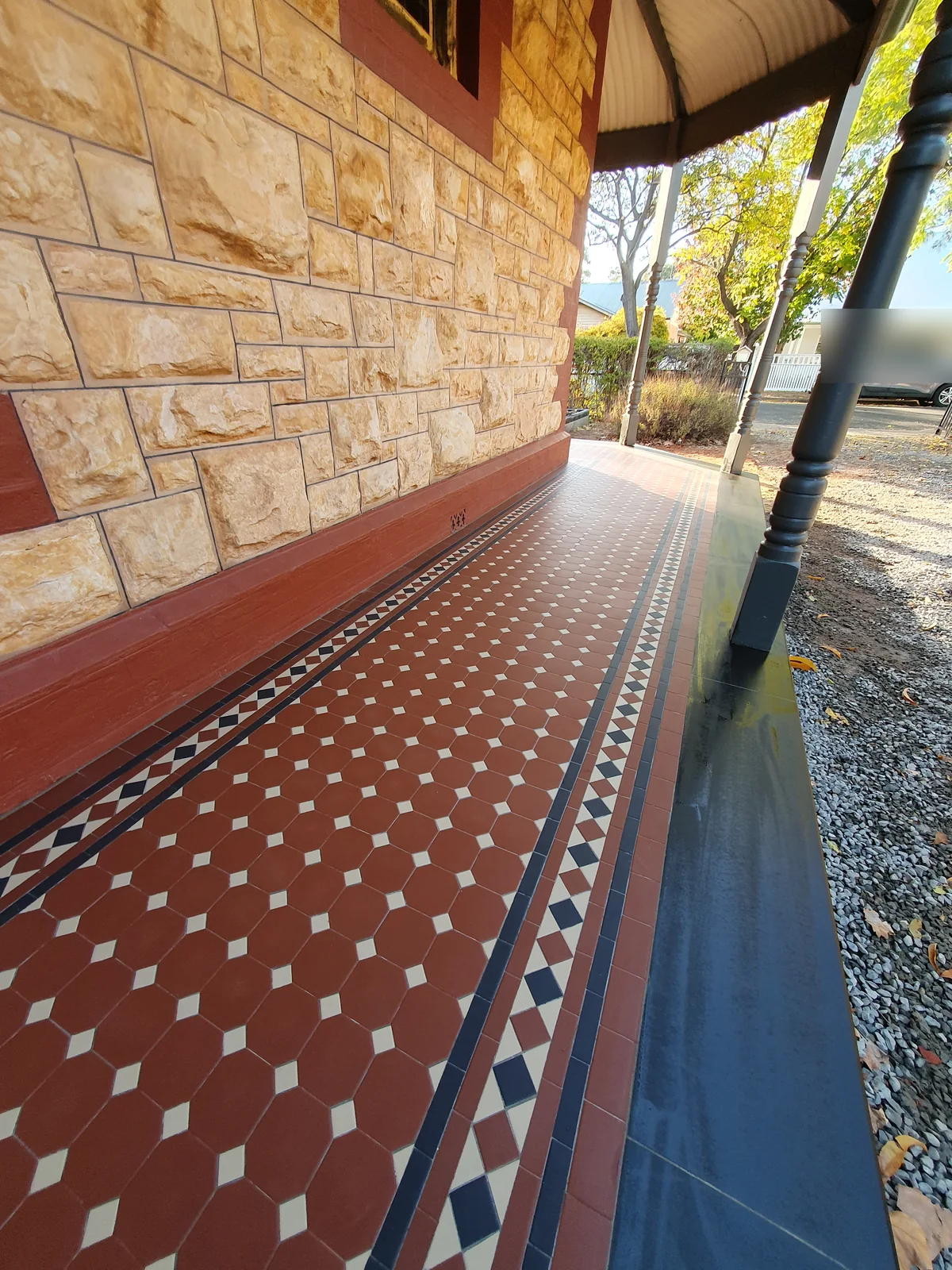
A foothills-to-river setting for considered tile design
Athelstone extends from the River Torrens towards Black Hill Conservation Park. Council character material describes sloping ground, small watercourses, treed slopes, reserves and a long transition from early farming and market gardening to established residential development. For a verandah, entry path or interior floor, that setting makes proportion, thresholds and site access useful early design questions rather than afterthoughts.
The surrounding context is not a single house style. A new layout may need to sit comfortably beside established garden planting, a raised or sloping approach, or a later home with a different scale. A measured site review can help determine where a border, step, landing or transition should begin and how the pattern will read from the approach.
Athelstone's historic places are specific sites, not evidence that every home is heritage-listed. If a property is near a listed place or has its own heritage controls, property-specific planning and conservation advice should be checked before work begins.
Learning from Athelstone's surviving material context
The State Heritage description of Athelstone Flour Mill records random rubble bluestone, river red gum roof framing, stone terrace walling and a river setting. Those details belong to the listed mill, but they show why material relationships can matter in the area: a tile scheme may be considered alongside existing stone, brick, rendered surfaces, timber and landscape rather than selected in isolation.
For an older entry or verandah, restoration usually starts with what remains. Existing tiles can be assessed for soundness, movement, losses, staining and previous repairs before decisions are made about careful retention, matching or selective replacement. For new work, the pattern, scale, edge treatment and junctions with steps or paving can be developed to suit the property without implying that a new installation is historic fabric.
Planning a tessellated tile project in Athelstone
A useful first conversation can cover the intended use, existing surfaces, levels, drainage exposure, access and the visual relationship between the tile field and surrounding masonry or garden. Design consultation can then guide pattern and border choices, while supply and installation are coordinated around the measured conditions of the site.
Where original or older tiles survive, restoration can be approached as an assessment of the existing fabric rather than a standard replacement exercise. Where the project is new, installation planning can address transitions, edges and the way the finished surface meets steps, walls and other paving. Stone bullnose or edging coordination can be included when the design requires a durable, visually resolved boundary.
Your Heritage Tiling Questions
Is every older home in Athelstone a heritage property?
No. Athelstone has documented historic places and early settlement history, but those facts do not make every home heritage-listed. Heritage status and any approval requirements are property-specific, so the relevant register and planning controls should be checked for the individual site.
Can tessellated tiles work on a sloping Athelstone site?
They can be considered, but the approach should be site-led. Levels, steps, drainage, access and the transition between the tiled area and adjoining surfaces need to be assessed before a layout and installation sequence are settled.
Can existing tessellated tiles be restored instead of replaced?
Sometimes. The practical choice depends on the condition and extent of the surviving tiles, movement, losses, staining and previous repairs. An assessment can separate sound original fabric from areas that need careful repair or replacement.
What should be considered for an Athelstone verandah or pathway?
Consider how the pattern meets steps, garden edges, walls and other paving, as well as the site's levels, exposure and access. A measured design can set the field, borders and edging so the finished path or verandah feels connected to the property rather than added as an isolated surface.
Does the Athelstone Flour Mill set a required tile style for local homes?
No. The flour mill is a specific State Heritage Place with its own significant fabric, including bluestone and stone terrace elements. It can inform an appreciation of local material context, but it does not prescribe a tile pattern or material for other properties.
Discuss Your Heritage Tiling Project
Share your location, project details and photographs using our enquiry form, or call 0433 932 711.