
Tessellated tiles in Thebarton
Thebarton’s built context brings together early residential development, later stone and brick houses, and a long industrial story close to Adelaide. For a new tessellated floor or a repair to surviving tilework, the useful starting point is the property itself: its proportions, existing fabric, exposure and the character you want the finished work to support.
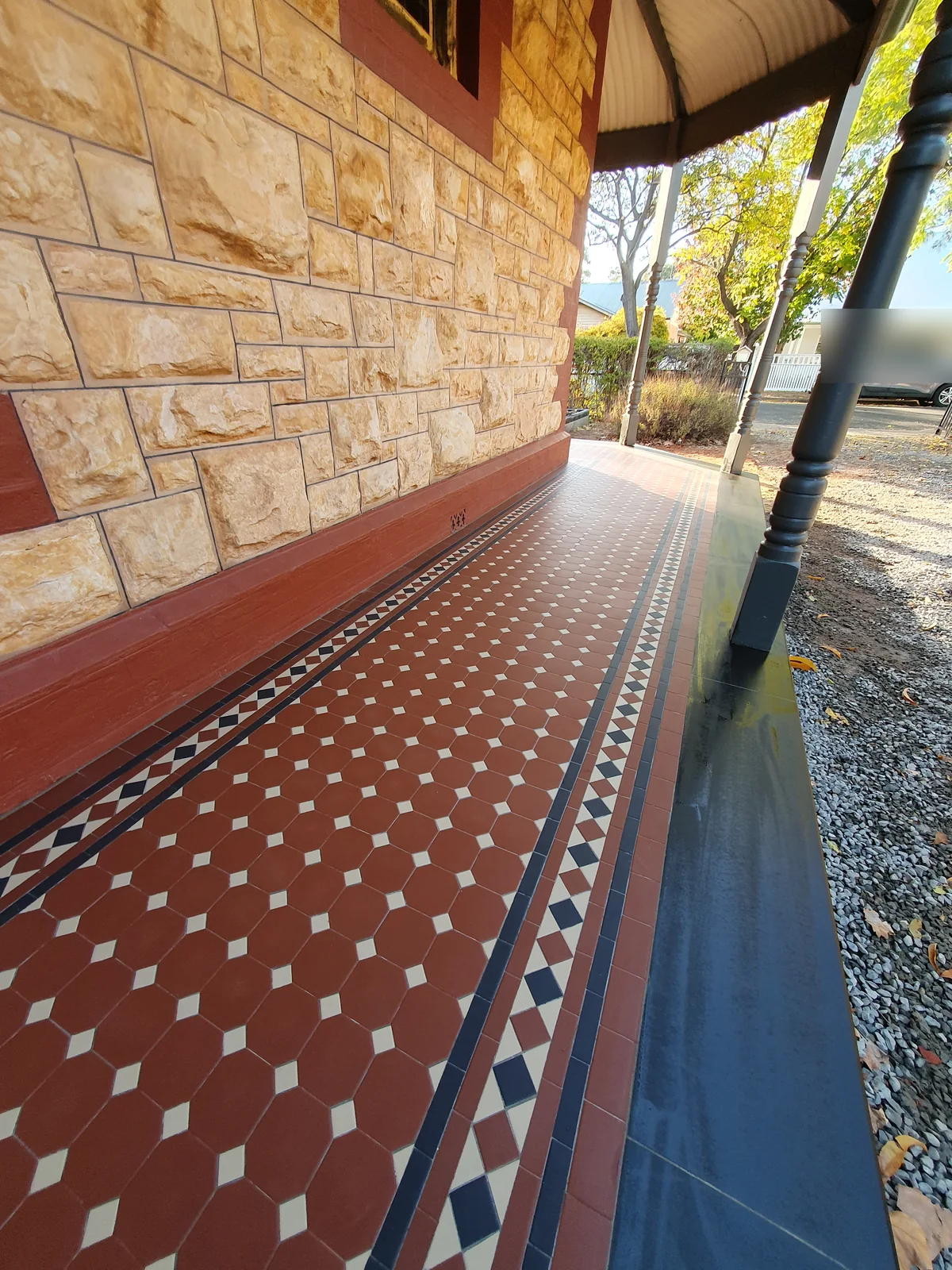
A mixed residential and industrial setting
The City of West Torrens describes Thebarton as developing as both a residential and industrial centre. The local heritage review adds a more detailed picture of the village: narrow allotments followed the subdivision of Colonel Light’s section, and early cottages were later joined by stone and brick houses. Industrial zoning, factory development and amalgamated allotments changed parts of that residential pattern over time.
That layered history is relevant to tile design without making a single style appropriate everywhere. A compact cottage frontage may suit a restrained border and carefully scaled field, while a larger altered property may need a layout that acknowledges later additions rather than imitating an earlier building wholesale. Existing thresholds, steps, verandahs and adjoining surfaces should be considered together.
Design, supply and restoration for the property
For a new tessellated floor, design consultation can test field size, border proportion, colour balance and transitions against the room or outdoor approach. Verandahs and pathways need particular attention to edge conditions, levels, weather exposure and how the pattern meets existing masonry or other finishes. Supply and installation can then be coordinated around the approved layout rather than treating the pattern as an afterthought.
Where older tiles remain, restoration begins with observing what is still in place. Loose or damaged areas, previous repairs, uneven edges and later alterations can affect whether selective repair, careful matching or a more limited new section is appropriate. Stone bullnose or edging coordination may also be useful at steps and exposed boundaries, subject to the site and the intended finish.
Check the property context before changing older fabric
Not every older-looking property is listed, and a suburb-wide history does not determine the controls for an individual address. West Torrens explains that protection may relate to a state or local heritage place, a representative building or a historic precinct identified through the Planning and Design Code. Its guidance covers matters such as demolition, design, height, setback, parking and landscaping.
Before removing surviving tilework or changing a frontage, confirm the property’s current planning and heritage context with the relevant authority. A tile consultation can help document the existing pattern and develop a sympathetic option, but it is not a heritage approval or a substitute for property-specific planning advice.
Your Heritage Tiling Questions
Can tessellated tiles suit a Thebarton cottage or older brick house?
They can, but the layout should respond to the building rather than assume one period pattern. Thebarton’s documented context includes narrow allotments, early cottages and later stone and brick houses, so scale, border proportion, thresholds and existing fabric are useful design starting points.
Can you help with a Thebarton verandah or pathway?
Yes. A design review can consider the path or verandah’s proportions, edges, steps, transitions, exposure and relationship to the building before supply and installation are coordinated. The final approach depends on the measured site and the surfaces that need to meet.
Does every older Thebarton property need heritage approval for tiling work?
No automatic conclusion should be made from age or suburb alone. West Torrens says heritage requirements can depend on a listed place, representative building or historic-area overlay, so check the individual property and seek current planning advice before altering significant fabric.
What if original tessellated tiles are damaged or incomplete?
Start by recording the surviving pattern, colours, edges and areas of loss. A restoration assessment can then consider selective repair, matching and how any new work should meet the existing floor without treating an altered or incomplete surface as uniform.
Discuss Your Heritage Tiling Project
Share your location, project details and photographs using our enquiry form, or call 0433 932 711.