
Tessellated Tiles Clifton Hill
Clifton Hill's inner-Melbourne streets can bring together terrace and row-house proportions, compact outdoor spaces and later additions. For a tessellated tile project, the most useful starting point is the property itself: examine the surviving floor or path, understand how the new work meets thresholds and walls, and choose a pattern and edge treatment that sit comfortably with the building. AHTC can assist with design consultation, tessellated tile supply, installation, restoration and stone bullnose or edging coordination.
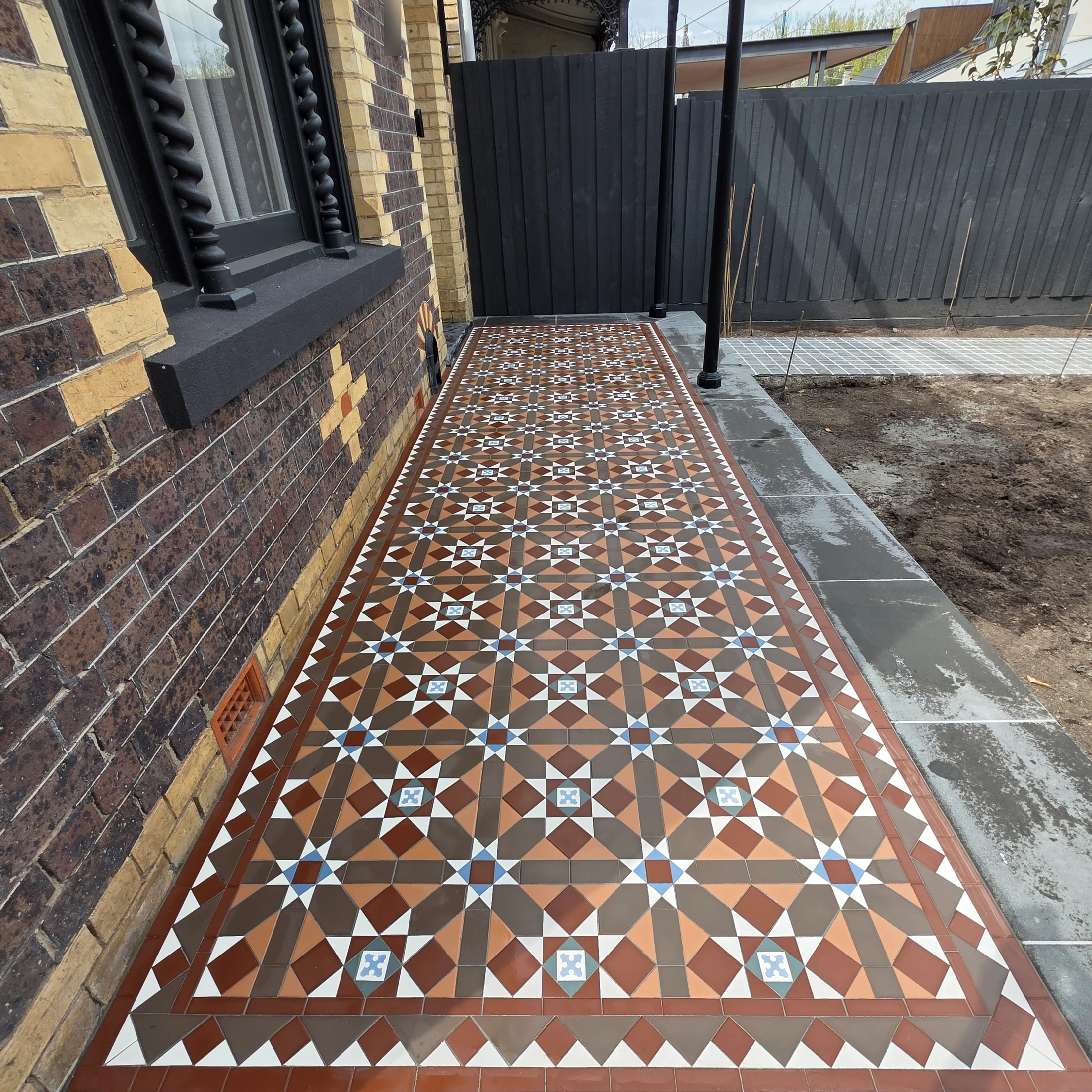
Tiling for Clifton Hill's compact inner-urban homes
Yarra's planning context describes a mix of low- and mid-rise built form, terrace and row housing, small heritage shopfronts and highly intact heritage streetscapes in activity centres. In Clifton Hill, that makes proportion and transition important: a front path, porch or verandah often needs to read as part of a narrow street frontage rather than as an isolated decorative surface.
A considered design consultation can test border width, repeat scale, orientation and thresholds against the existing façade and available space. Where a new pathway meets paving, garden edges or a step, the layout should be resolved with the site's levels, drainage and access in mind rather than copied from a generic pattern.
A careful approach where heritage context matters
The Yarra Heritage Overlay schedule records several Clifton Hill heritage places, and the wider planning scheme identifies heritage streetscapes and places as an important part of the municipality's identity. That context supports a careful, evidence-led approach to existing tilework: document what remains, look for consistent details, and distinguish repair from replacement before selecting new material.
A heritage reference does not by itself mean that every home is listed or that approval is automatically required. Owners should check the relevant planning controls for their property and obtain any advice or approval required for the proposed work. AHTC's role is to help with the tiling design and practical scope, not to provide heritage authority endorsement.
Plan the detail before tiles are ordered
For a Clifton Hill verandah, porch or pathway, confirm the footprint, falls, thresholds, access route and intended relationship to adjoining finishes before finalising the pattern. This is particularly useful where a compact frontage has been altered over time or where a newer addition meets an older street-facing element.
For restoration, photographs and measurements of the existing arrangement can help guide discussions about retained fabric, replacement areas and compatible edging. For new work, the same review helps coordinate tile supply, installation sequencing and any stone bullnose or edging required at the perimeter.
Your Heritage Tiling Questions
Are all Clifton Hill homes covered by a Heritage Overlay?
No. The Yarra planning scheme reports extensive Heritage Overlay coverage across the municipality and lists specific Clifton Hill heritage places, but that does not mean every property is covered. Check the planning controls for the individual property before work begins.
Can tessellated tiles suit a narrow Clifton Hill front path or verandah?
They can, provided the pattern scale, border, orientation and transitions are designed for the available footprint. A site review should also consider thresholds, steps, levels, drainage and how the path meets the façade and adjoining paving.
Can existing tessellated tiles be restored rather than replaced?
Often the right choice depends on the condition and extent of the surviving work. Documenting the existing layout and separating repairable areas from missing or unstable sections is a sensible first step before deciding between restoration, selective replacement or a new installation.
Does a heritage reference automatically mean a planning permit is needed?
Not automatically. Heritage controls and permit requirements are property-specific, so check the applicable planning scheme provisions and obtain advice from the relevant authority where necessary. Tiling design and installation guidance should not be treated as planning approval.
Discuss Your Heritage Tiling Project
Share your location, project details and photographs using our enquiry form, or call 0433 932 711.