
Tessellated Tiles in Watsons Bay
Watsons Bay has a strong harbour-side townscape character, and Woollahra Council provides a dedicated heritage conservation area chapter for the suburb. For a tiled verandah, entry, pathway or interior, the most useful starting point is the property itself: consider existing fabric, the relationship to the street and garden, and whether the work sits within a heritage conservation area or affects a listed item. AHTC can help with tessellated tile design consultation, supply, installation and restoration planning while keeping those local checks in view.
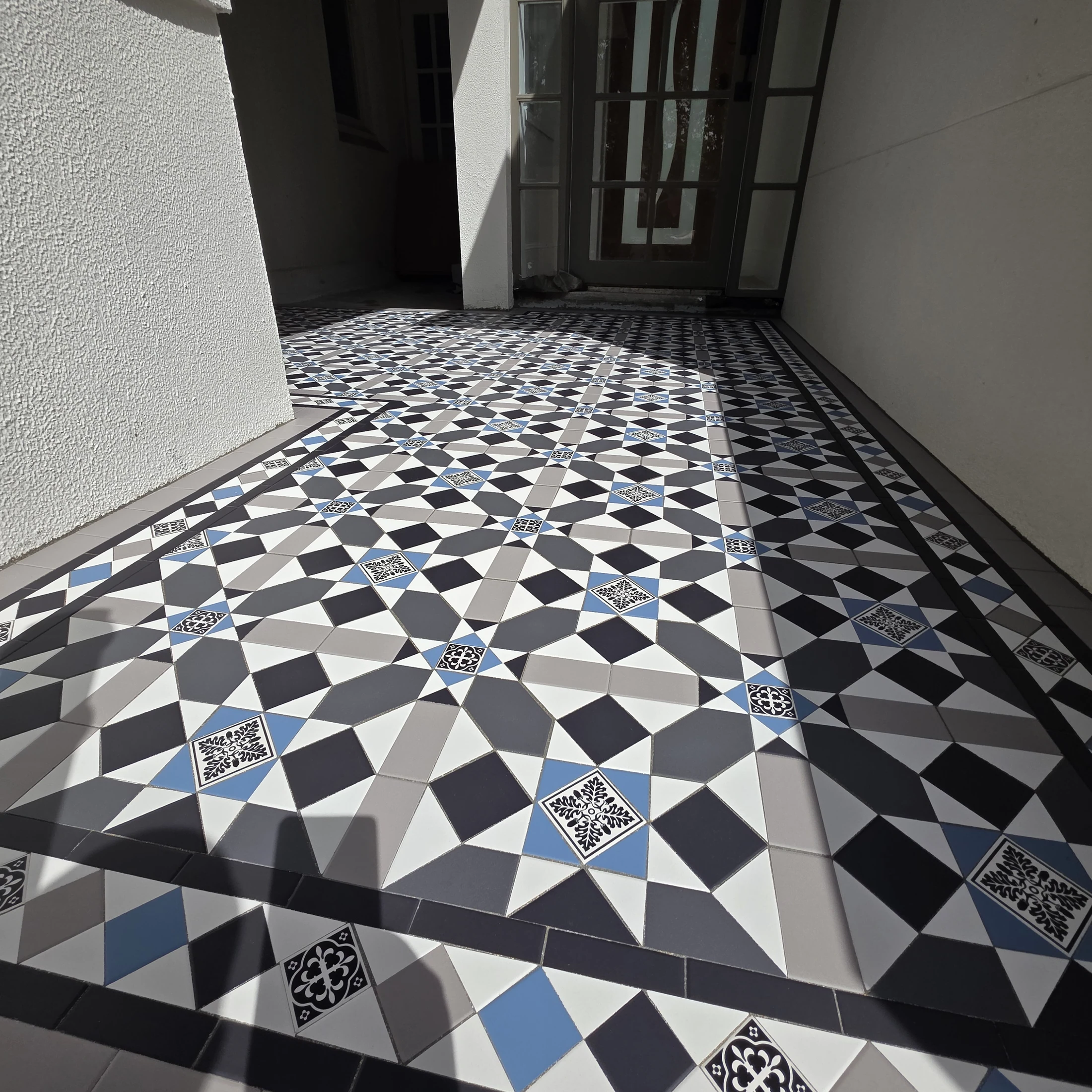
A harbour-side setting with a documented conservation context
Woollahra Council identifies Watsons Bay as one of its largest heritage conservation areas. The council's local guidance describes parts of the area as mainly one- and two-storey housing with pitched roofs, setbacks and planted front or rear space. In waterfront-facing precincts, houses sit behind a varied mix of promenade walls and fencing, with a relatively consistent ridgeline and a landscaped backdrop.
That context can inform tile decisions without turning every Watsons Bay property into a heritage-listed place. A restrained border, a proportionate pathway layout and a finish that sits comfortably with the building's scale can be more useful than importing an unrelated pattern. Existing tiles, thresholds, steps, drainage and garden edges should be documented before design is settled.
Environmental heritageChapter C3 — Watsons Bay Heritage Conservation Area | Woollahra Development Control Plan 2015
Design around the building, not a generic period label
The Watsons Bay DCP does not call for automatic reproduction of earlier architectural styles. It encourages contemporary design where it responds appropriately to the physical and historical context, and it asks that alterations to contributory items retain original character elements and features. For tile work, that means beginning with the property's surviving details, sightlines and use of the space.
For a verandah or entry, review the relationship between the tile field, steps, door thresholds and front fence. For a pathway, consider width, border rhythm, transitions and the way the path meets planting or a promenade edge. Where existing tessellated tiles survive, restoration planning should separate sound fabric from areas needing selective repair before any new work is designed.
Chapter C3 — Watsons Bay Heritage Conservation Area | Woollahra Development Control Plan 2015
Check the property's heritage status before work begins
Watsons Bay's conservation-area status does not mean every house is individually listed, and a service-group route is not a planning determination. Woollahra Council advises checking the Woollahra LEP heritage maps and property-specific planning information to establish whether a property is a heritage item, within the conservation area or affected by another control.
AHTC's design, supply, installation and restoration discussion is practical project guidance, not heritage approval or planning advice. If the proposed work changes significant fabric, affects a contributory item or involves excavation, confirm the applicable pathway with Woollahra Council and the relevant NSW heritage information before proceeding.
Environmental heritageHeritage Gap Analysis | Woollahra Municipal CouncilHeritage | NSW Government Environment and Heritage
Craftsmanship for verandahs, paths and interior floors
A Watsons Bay tile scheme benefits from careful setting-out and a clear relationship between the main field, borders, thresholds and edges. On exposed verandahs and pathways, the brief should also consider falls, transitions and the way the tiled surface meets steps, walls and landscape. For interiors, pattern scale and tonal balance can connect a period-sensitive room to the rest of the house without pretending that one pattern belongs to every property.
Where the project includes stone bullnose or edging coordination, specify the edge condition early so the tile layout and adjoining masonry or landscape work can be considered together. The final selection remains site-led and should be confirmed after reviewing the existing surface, access and intended use.
Chapter C3 — Watsons Bay Heritage Conservation Area | Woollahra Development Control Plan 2015
Your Heritage Tiling Questions
Is every Watsons Bay property heritage listed?
No. Woollahra Council distinguishes individual heritage items from heritage conservation areas and advises checking the LEP heritage maps and property-specific planning information. The suburb's conservation-area context should not be treated as proof that every home is individually listed.
Does a Watsons Bay heritage conservation area require old-style tile designs?
Not automatically. The Watsons Bay DCP says contemporary design can be appropriate when it responds to the physical and historical context. For contributory items, alterations should retain original character elements and contributory features, so the right approach depends on the property and the proposed work.
What should I check before restoring or replacing tiles in Watsons Bay?
Record the existing tiles and adjacent details, then check the property's status on the Woollahra LEP heritage maps and seek council or heritage advice where the work may affect significant fabric, a contributory item or archaeological material. Tile design and installation planning should follow those checks rather than assume a universal approval pathway.
Can tessellated tiles work with a Watsons Bay verandah or pathway?
They can be considered as part of a site-specific design brief. Review the verandah or pathway's proportions, thresholds, steps, drainage, garden edges and existing fabric first, then coordinate the field, borders and edging so the finished work sits comfortably with the building and streetscape.
Discuss Your Heritage Tiling Project
Share your location, project details and photographs using our enquiry form, or call 0433 932 711.