
Tessellated tiles in Shellharbour
Shellharbour's setting combines a coastal regional city with older harbour-town fabric in Shellharbour Village and newer layers of residential growth. For an entry, verandah, pathway or interior floor, tessellated tile choices are best considered alongside the property's proportions, existing materials, exposure and intended use. AHTC can discuss design consultation, tessellated tile supply, installation, restoration and stone bullnose or edging coordination for Shellharbour projects, subject to the individual site's condition and requirements.
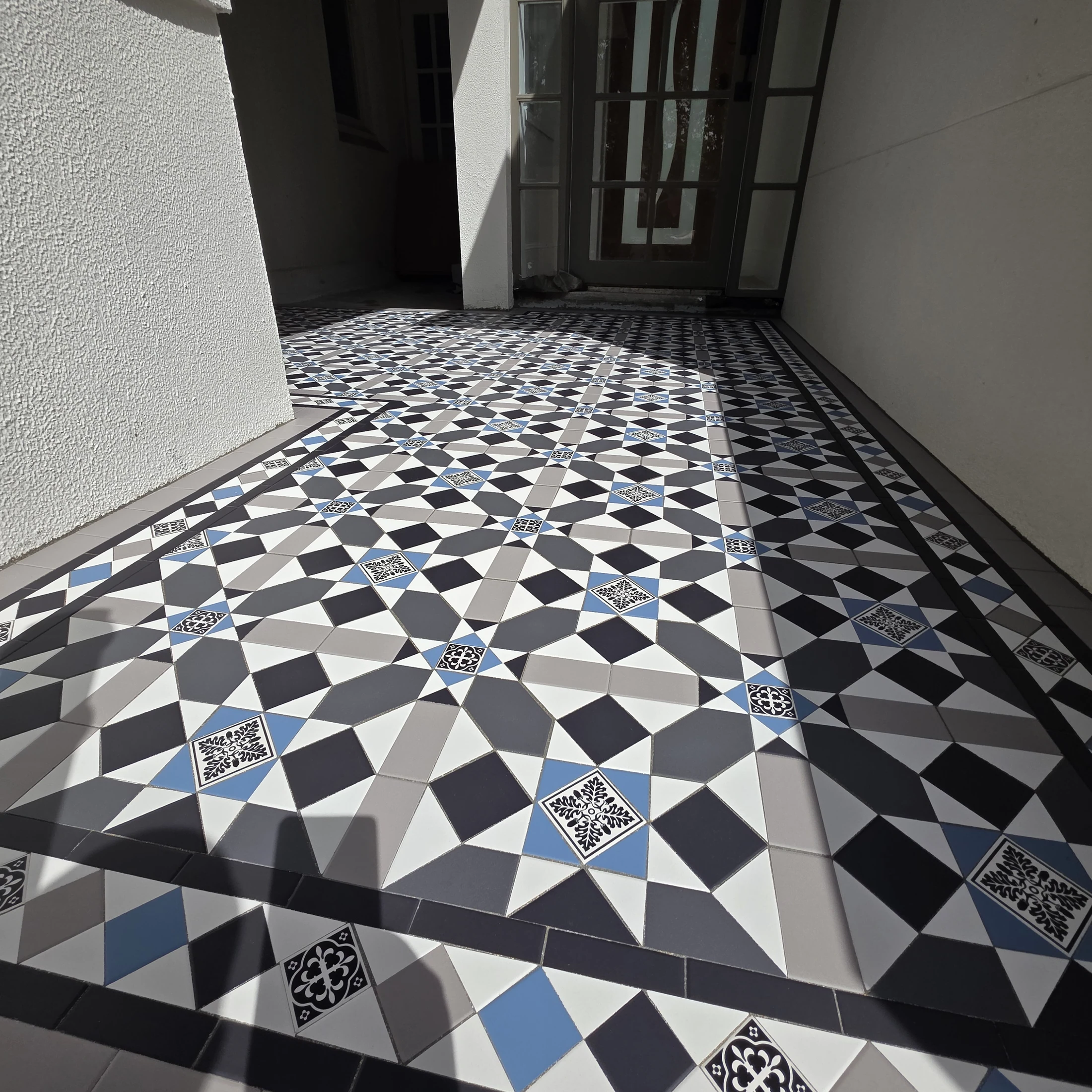
Designing for Shellharbour's coastal and historic setting
Shellharbour Village grew around a nineteenth-century port and was laid out as a town in 1851. The local heritage trail records a mix of surviving timber and basalt buildings, former civic premises and harbour-related places. That history is useful context when planning a visible tiled threshold or verandah, but it should not be treated as a template for every Shellharbour home.
A considered layout starts with the building in front of you. Field scale, border proportions, transitions and edging can be reviewed against the facade, steps, fence line, garden and adjoining brick, timber or stone. On a coastal site, the discussion should also include exposure, drainage, levels and how the tiled area will be used, rather than selecting a pattern in isolation.
Heritage context is property-specific
Shellharbour City Council identifies heritage items and conservation areas as potentially including buildings, streetscapes, views, archaeological sites and cultural landscapes. Its guidance directs owners to check the Shellharbour Local Environmental Plan heritage schedule and relevant property information before planning work. The presence of an older-looking house or a historic locality does not by itself establish statutory listing.
Where existing tiles, steps, thresholds or adjacent masonry remain, documenting their condition can help distinguish repair and retention from replacement. If the property is listed or lies within a conservation area, obtain the relevant council advice before committing to changes. Tiling consultation can then respond to the significance, fabric and practical needs of that particular property without assuming an approval outcome.
From existing fabric to a workable tile plan
For restoration, the useful first questions are what remains, what has moved or loosened, whether earlier repairs can be identified and how the tiled area meets adjoining surfaces. A measured review can guide decisions about matching, selective repair, new work or a carefully differentiated transition. Where a complete replacement is being considered, the property's proportions and established palette still matter.
For new work, design consultation can be coordinated with tessellated tile supply and installation planning. Stone bullnose or edging may also need to be considered around steps, verandahs and pathways. The appropriate detail depends on the site, substrate, drainage, access and intended finish; no single construction approach should be assumed for every Shellharbour property.
Planning a Shellharbour tiling project
A useful enquiry can include the suburb or locality, the area to be tiled, photographs of existing work, approximate dimensions and any heritage or planning information already available. That context helps separate a restoration question from a new installation and gives design discussions a clearer starting point.
Shellharbour remains connected to the broader Wollongong service directory through its existing route, while its local government and regional planning context is Shellharbour and the Illawarra Shoalhaven. The same property-led approach applies whether the work concerns a historic village building, a later coastal house or a new outdoor threshold.
Your Heritage Tiling Questions
Is every older Shellharbour property heritage listed?
No. Shellharbour City Council distinguishes statutory heritage items and conservation areas from the broader historic character of the city. Check the relevant Shellharbour Local Environmental Plan heritage schedule and property information before treating a property as listed.
What should I check before changing tiles on a heritage property in Shellharbour?
First identify whether the property is a heritage item or within a conservation area, then review the applicable council guidance and approval pathway. Record existing tiles, thresholds, steps and adjoining materials before deciding whether repair, matching or replacement is appropriate.
Can tessellated tiles suit a newer Shellharbour home?
They can be considered where the pattern, scale, border and finish work with the building's architecture and the way the space is used. A design consultation should respond to the particular facade, landscape, levels and adjoining materials rather than assume a historic pattern is required.
Can an existing tessellated floor be restored instead of replaced?
That depends on what survives and the condition of the tiles, joints, substrate and surrounding construction. A condition-led review can help identify whether selective repair, matching, a transition or more extensive replacement is the sensible path.
Does Shellharbour's Wollongong route mean it is part of Wollongong City Council?
No. The route is a service-directory path. Shellharbour is identified in official local and regional planning sources as part of Shellharbour City Council and the Illawarra region, while the broader service grouping does not determine legal council boundaries.
Discuss Your Heritage Tiling Project
Share your location, project details and photographs using our enquiry form, or call 0433 932 711.