
Tessellated tiles in Nunawading
Nunawading combines established residential streets with the evolving MegaMile activity-centre setting. Tessellated tiles can help define a verandah, entry, path or interior floor, but the right response depends on the property's existing fabric, proportions, exposure and the way new work meets adjoining surfaces. AHTC can help coordinate design consultation, tessellated tile supply, installation, restoration and stone bullnose or edging details for projects in Nunawading.
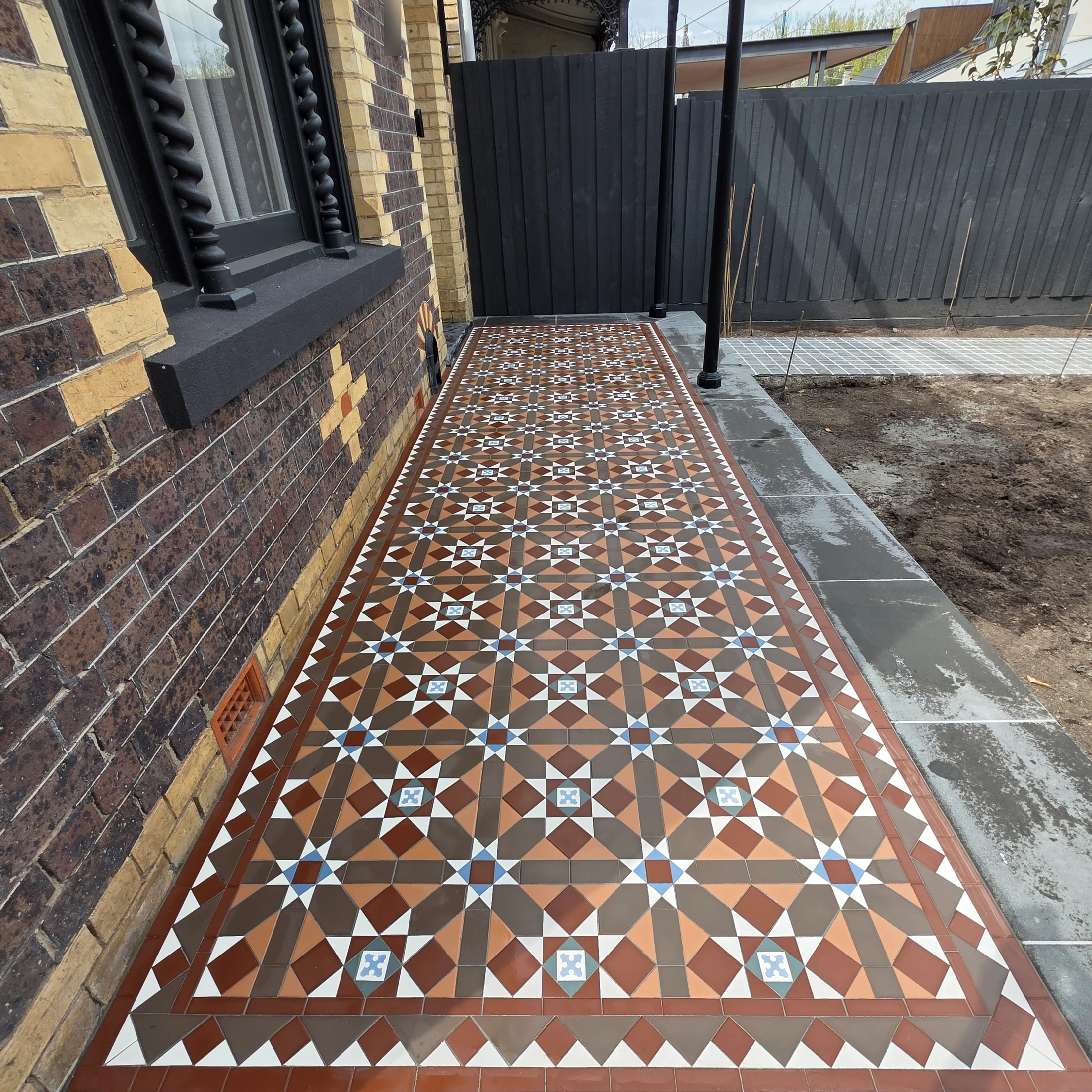
A local setting with more than one architectural condition
Nunawading is a Melbourne-eastern locality in Whitehorse. Its planning context includes the MegaMile Major Activity Centre, where the planning scheme calls for a strong streetscape, careful transitions to adjoining residential areas and design that responds to existing character and heritage buildings where relevant. That makes scale, thresholds and street-facing details useful early design questions for tiling work, whether the project is a traditional verandah, a renewed entry path or a contemporary alteration.
The former City of Nunawading survey identified heritage places across the former municipality, but that history does not make every current home heritage-listed. Before changing an older floor, verandah or path, check the individual property and any relevant precinct controls. Where original tiles remain, documenting their pattern, dimensions, border and condition can help guide a more sympathetic repair or replacement decision.
Plan the pattern around the property
For a Nunawading verandah or pathway, start with the relationship between the tile field, border and adjacent steps or paving. A measured layout can keep borders aligned with door openings and avoid awkward cuts at corners. On an existing floor, the surviving pattern and any areas of movement or loss are important design information before a restoration or selective replacement is specified.
External areas also need a practical review of falls, drainage, exposure and transitions. These conditions vary from site to site, so a single universal substrate or installation recipe is not appropriate. A design consultation can instead clarify the intended finish, the existing surface and the sequence needed to coordinate supply, installation and edging.
If a property is affected by a Heritage Overlay or sits within a heritage precinct, confirm the relevant controls with Whitehorse before work begins. Heritage-sensitive tiling is about responding carefully to the particular place; it is not a promise of council approval or a substitute for property-specific planning advice.
Tessellated tile services for Nunawading properties
AHTC's service can cover design consultation, tessellated tile supply, installation and restoration, with stone bullnose or edging coordination where the project calls for it. The useful starting point is a clear description of the area, the intended use and any existing tile or paving that needs to remain. Photos and dimensions can help frame the conversation, followed by a site- and fabric-led review where appropriate.
For older floors and verandahs, the aim is to make decisions that respect what is already there while meeting the practical requirements of the renewed space. For new work, pattern, scale, edge treatment and junctions with steps or walls can be resolved before installation.
Your Heritage Tiling Questions
Does every older Nunawading home need heritage approval for tiling work?
No. Heritage controls are property- or precinct-specific. Whitehorse advises checking its mapping and the relevant citation to see whether a place is affected by a Heritage Overlay or another applicable control before altering, extending or demolishing. A tile project should be assessed against the actual property rather than its suburb name alone.
What should I consider for a tessellated pathway in Nunawading?
Consider the path's proportions, border alignment, thresholds, falls, drainage, exposure and how the tiles meet steps, garden edges or existing paving. These conditions are site-specific, so the layout and installation sequence should be reviewed together rather than selected from a generic pattern alone.
Can existing tessellated tiles be restored rather than replaced?
Often the first step is to assess what survives, including the pattern, tile dimensions, loose or missing areas and the surrounding substrate. That review can show whether selective repair, careful matching or broader replacement is the more appropriate path for the particular floor or verandah.
Can tessellated tiles work with a contemporary Nunawading renovation?
Yes, when the design makes the relationship between old and new work deliberate. Pattern scale, restrained borders, thresholds and edge details can connect a renewed entry, verandah or path to the building without pretending that a contemporary addition is original fabric. The planning context and any heritage controls should still be checked for the property.
Discuss Your Heritage Tiling Project
Share your location, project details and photographs using our enquiry form, or call 0433 932 711.