
Tea Tree Gully heritage tiling area directory
Use this Tea Tree Gully area directory to find locality-specific heritage tiling guidance. Tea Tree Gully brings together established Adelaide suburbs and a documented historic township core. For a new verandah, pathway or interior floor, tessellated tiles can be selected with the proportions, setting and existing materials of the property in mind. Where original fabric remains, begin with a careful assessment before deciding what to retain, repair or renew.
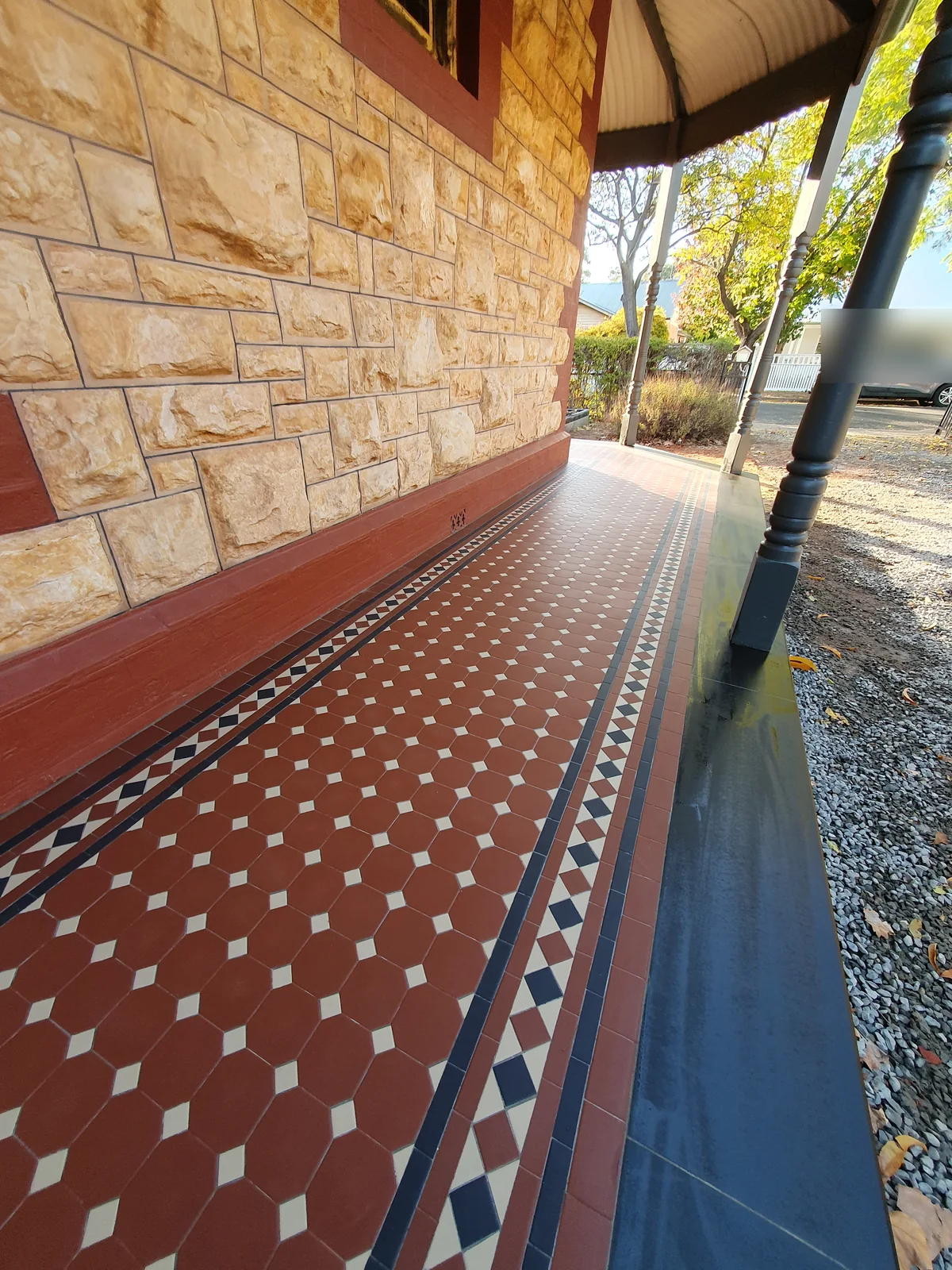
Start with the character of the property
The Tea Tree Gully Township Historic Area Statement describes a village core associated with the mid-to-late nineteenth century and early twentieth century. It notes buildings addressing North East Road, generally consistent siting and setbacks, post-supported verandas and simple symmetrical forms. These observations apply to that defined historic area, not automatically to every home in the wider council service grouping.
For a property near the historic township, a tile layout can respond to the existing frontage, entry sequence and veranda proportions rather than treating a period pattern as a universal template. On newer or substantially altered properties elsewhere in the area, the brief can instead use the home's scale, landscaping and access conditions as the starting point.
Historic Area Statements and Character Area Statements — City of Tea Tree Gully
Work with stone, brick, planting and topography
The planning statement records sandstone and bluestone, quoin work, unpainted stone or brick, low open fencing and an undulating landscape within the historic township statement. These details can inform a restrained border, threshold or pathway scheme: relate colour and scale to the property's existing masonry, and keep transitions legible where paving meets garden edges, steps or older building fabric.
Tea Tree Gully's township trail also points to a visual and historical sequence of local places. That makes the approach to a front path or veranda worth considering as part of the whole arrival experience, while keeping any heritage treatment specific to the individual property and current planning requirements.
Historic Area Statements and Character Area Statements — City of Tea Tree GullyTea Tree Gully township historic trail
Tea Tree Gully's historic township context
The council's historic trail records permanent settlement from 1839 and explains that the township was first known as Steventon. The National Trust describes the former Highercombe Hotel, opened in 1854, as a landmark that has served several community roles and now operates as the Tea Tree Gully Heritage Museum.
That layered history is useful design inspiration, but it is not a claim that every surrounding dwelling is heritage-listed. Tile choices should remain grounded in the actual house, its surviving materials, the intended use of the space and any current advice that applies to the property.
Tea Tree Gully area directory
Your Heritage Tiling Questions
Does every Tea Tree Gully property have heritage protection?
No. The documented historic character relates to a defined Tea Tree Gully Township Historic Area and to individually identified heritage places or other planning controls. Check the current South Australian planning information and council advice for the specific property before changing older fabric.
How can tessellated tiles suit a Tea Tree Gully veranda or pathway?
Begin with the existing frontage, veranda proportions, entry route and adjoining masonry. In the historic township, the planning statement notes post-supported verandas, simple forms, stonework and low open fencing; these can guide scale, borders and transitions without copying a period pattern indiscriminately.
Should an existing tiled floor be removed before restoration is considered?
Not automatically. An assessment can first consider what original or repairable fabric remains, how the floor is performing and whether selective repair or a carefully coordinated renewal is more appropriate for the property.
Where can I find local heritage context before planning tile work?
The City of Tea Tree Gully's township historic trail provides a local history starting point, while the South Australian planning material explains the historic-area and heritage framework. Use those sources alongside a property-specific planning check.
Discuss Your Heritage Tiling Project
Share your location, project details and photographs using our enquiry form, or call 0433 932 711.