
Tessellated tiles in Engadine
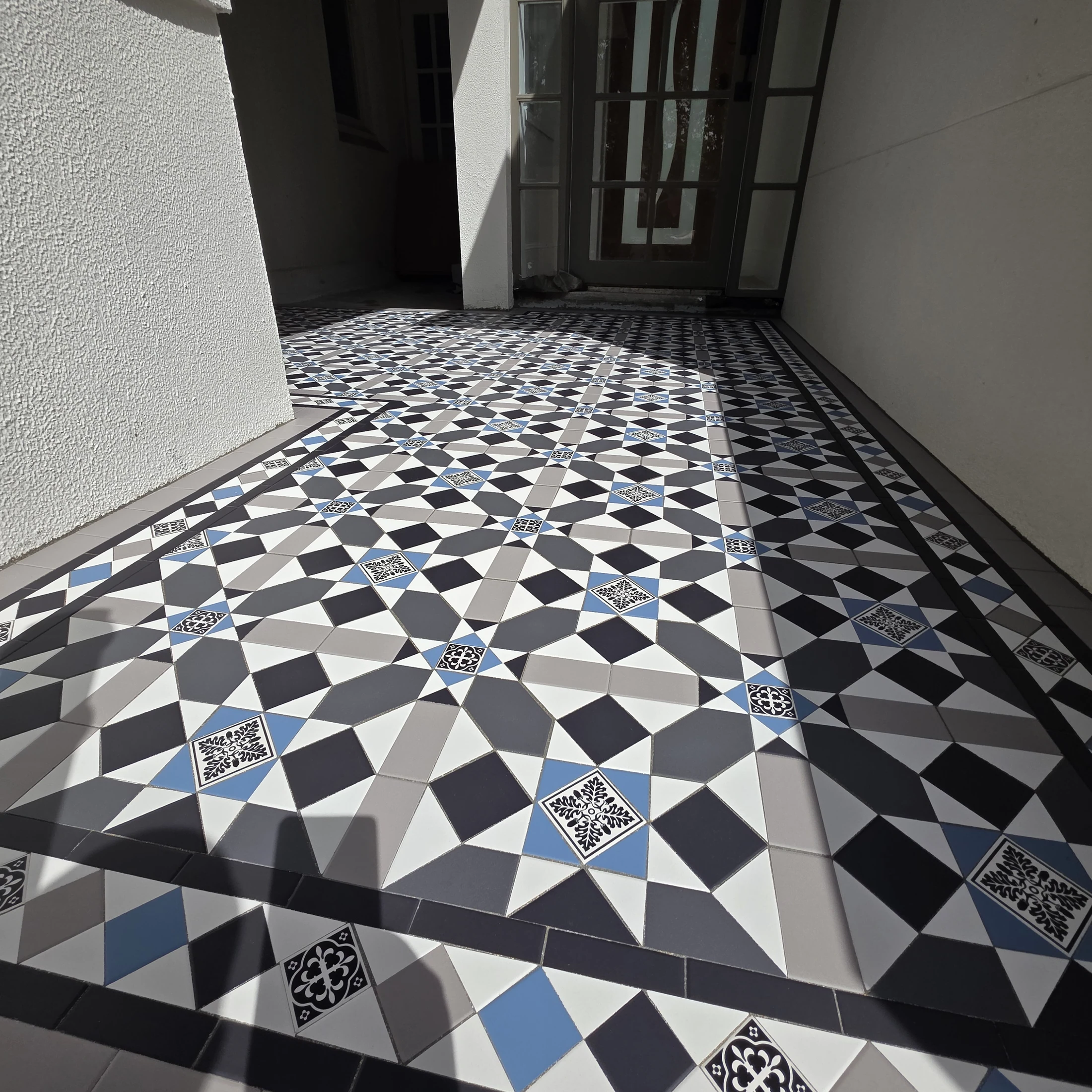
Engadine's local story runs from early cottages and small holdings to a railway-linked village and established town centre. For a home in the area, that context can inform a considered approach to tessellated floors, verandahs and paths without assuming that every property has the same age, style or heritage status. AHTC can help with design consultation, tessellated tile supply, installation, restoration and stone bullnose or edging coordination.
A railway-linked village with layers of residential history
Sutherland Shire Libraries places Engadine along the Old Princes Highway and Illawarra Railway line. Its account describes early cottages and rural uses, a 1920 railway platform, further subdivision and the village's proclamation in 1933. Those layers are useful context when choosing a floor or threshold treatment: a restrained geometric layout may suit an older cottage setting, while a new extension may call for a clear transition between retained and new work.
The same history also records a shopping area around the former Princes Highway and later change after the highway diversion. That mix of established streets, civic places and newer alterations is a reason to begin with the actual building rather than a period label. Existing tile, masonry, levels, drainage and adjoining finishes should be reviewed before a pattern or border is selected.
Design decisions for Engadine verandahs, entries and paths
For an Engadine entry or verandah, proportion and the relationship to the front elevation usually matter more than adding decoration for its own sake. A consultation can consider the width of the path, the position of borders, door clearances, step transitions and how a tessellated pattern meets brick, concrete or stone. Outdoor areas also need site-led attention to exposure, falls and water movement rather than a universal installation recipe.
Where an existing floor survives, matching should be treated as an investigation. Tile dimensions, colours, laying direction and edge details can vary within one property. Restoration may involve retaining sound areas and making a carefully considered repair, while a new installation may use a related design that is legible as new work. Property-specific heritage or planning requirements should be checked with the relevant authority before work begins; AHTC does not provide heritage authority approval.
Working with the property's own setting
Engadine town centre is identified by the NSW Planning Portal as being in Sutherland Shire, and the NSW War Memorials Register records a civic memorial in a public-square setting. These references help distinguish the broader town-centre context from the character of any individual house. For residential work, the useful question is how the proposed tiles will sit with the property's frontage, access, landscape and existing materials, not whether a suburb-wide style can be assumed.
AHTC's local service route can support the next step: discuss whether the project is design-led, supply-and-installation, a repair to surviving tessellation or restoration of a larger heritage-sensitive area. Stone bullnose or edging coordination can be considered where a tiled surface meets steps, garden edges or other adjoining materials.
Your Heritage Tiling Questions
Does living in Engadine mean my home is heritage-listed?
No. Engadine's documented history does not make every property heritage-listed. Heritage status and any approval requirements are property-specific, so check the applicable planning information before altering an older building or surviving original fabric.
Can tessellated tiles suit a newer Engadine renovation?
Yes, when the pattern, scale and edge treatment are designed for the building rather than copied without context. A new verandah, entry or pathway can use tessellation as a deliberate contemporary layer while keeping transitions to existing brick, concrete, stone or older tile clear.
What should be checked before tiling an outdoor path or verandah in Engadine?
Review the existing surface, levels, falls, drainage, access, step geometry and exposure before choosing the layout. The width of the path and the way borders meet doors, walls and garden edges can affect both appearance and performance.
Can existing tessellated tiles be repaired instead of replaced?
Often the first step is an assessment of what remains: tile size, colour, pattern, adhesion, cracking and edge details. Sound areas may be retained and repairs planned around the existing fabric, subject to the property's condition and the availability of a suitable match.
Discuss Your Heritage Tiling Project
Share your location, project details and photographs using our enquiry form, or call 0433 932 711.