
Tessellated Tiles in Fitzroy, SA
Fitzroy sits within the City of Prospect's inner-northern Adelaide setting, where the local housing character includes documented late-Victorian villas and larger mansions. For a period home, a tessellated floor, verandah or path should be considered alongside the proportions, materials and surviving details of the building. AHTC can help with design consultation, tessellated tile supply, installation, restoration and stone bullnose or edging coordination for a project in Fitzroy.
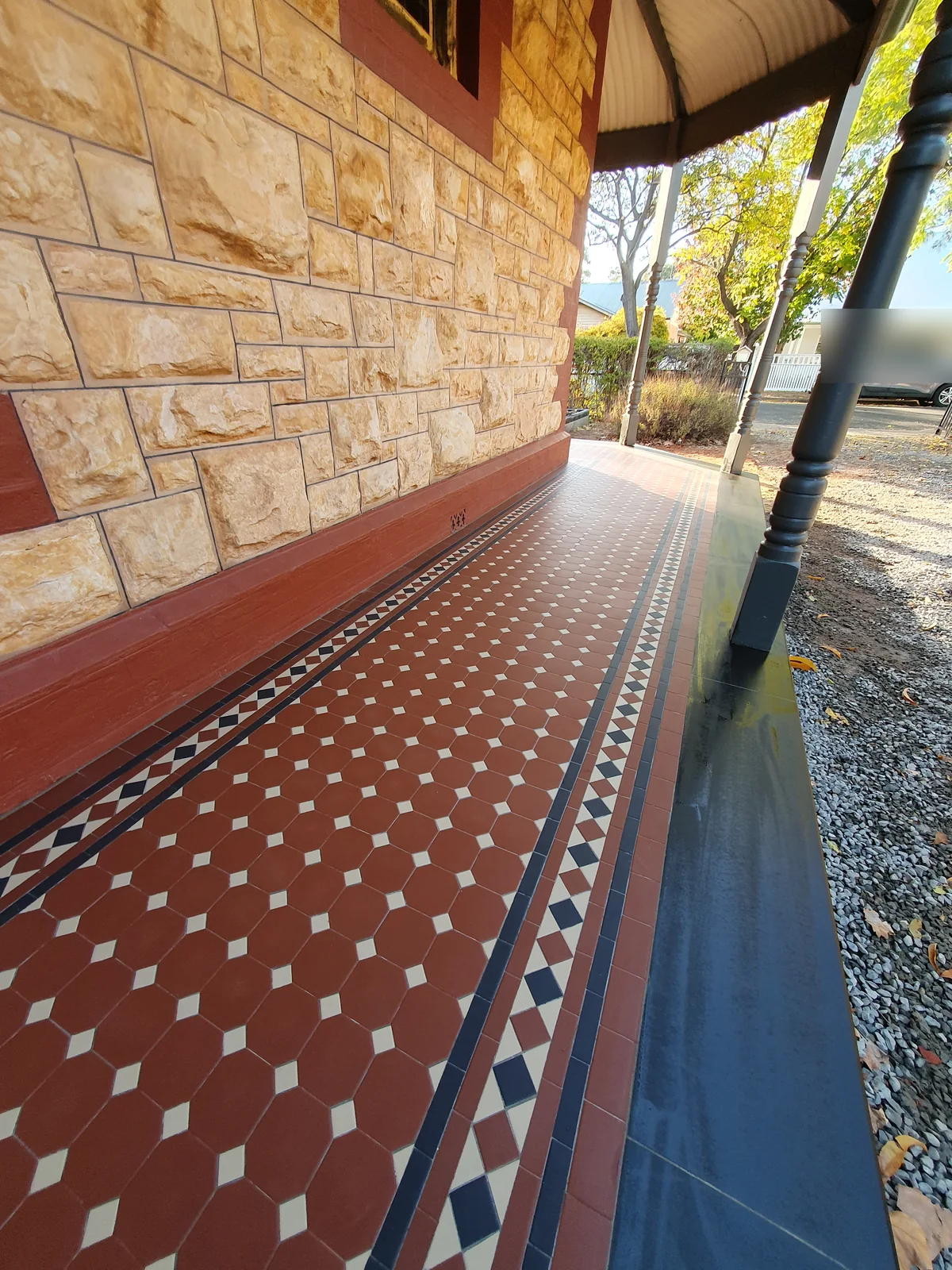
A Fitzroy context of villas, mansions and original detail
City of Prospect identifies Fitzroy's mansions as part of a broader local mix of housing styles. Its heritage guideline also records a late-Victorian villa example in Whinham Street, Fitzroy, built in 1910 with bluestone walls, rendered and blocked quoins, and moulded surrounds. Those details are useful context when considering a new tessellated layout or assessing an older tiled surface, but they do not mean every Fitzroy property is heritage-listed or controlled in the same way.
The most useful starting point is the building itself: look at the entry sequence, verandah width, stair or threshold details, wall finish and the relationship between the front path and the façade. Tile colours, border scale and pattern can then be selected to sit comfortably with the property rather than treating a period reference as a one-size-fits-all template.
Planning a sympathetic verandah, entry or pathway surface
The City of Prospect guideline advises retaining original elements and giving particular attention to streetscape presentation, verandahs, roof forms, compatible materials and visible additions in the Historic Conservation Zone. For tiling, that means documenting what remains before removal, checking levels and drainage, and considering how a border, step or bullnose edge will meet existing stone, brick or rendered surfaces.
A new pathway does not need to imitate every historic detail. It should, however, be proportioned for the site and coordinated with the front door, gate and verandah. Where an older tessellated floor survives, careful assessment can help separate tiles worth retaining from areas that need selective repair or a new, compatible section.
Tessellated tile services for Fitzroy properties
AHTC's Fitzroy service page can be used to start a conversation about pattern development, tile selection and supply, installation sequencing, restoration assessment, or stone bullnose and edging coordination. The appropriate approach depends on the existing substrate, exposure, access, intended use and the fabric that should remain visible.
If the property is in a heritage area or includes a listed place, confirm the relevant planning and heritage requirements with the appropriate authority before work begins. A tiling consultation can inform the design and construction decisions, but it does not replace property-specific statutory advice or approval.
Your Heritage Tiling Questions
Are all Fitzroy homes heritage-listed?
No. Fitzroy has documented period housing character, including villas and mansions, but heritage listing or area controls are property-specific. Check the relevant South Australian planning and council records before assuming a particular home is listed or located in a controlled area.
Can a tessellated path suit a late-Victorian Fitzroy villa?
It can, when the layout responds to the villa's entry, verandah, façade proportions and surviving materials. The starting point should be a site assessment and a pattern and border scale that support the building rather than compete with it.
What should be checked before restoring an older tiled verandah in Fitzroy?
Record the existing pattern and condition, inspect transitions and levels, and consider drainage, access and which original elements can be retained. If the property is in a Historic Conservation Zone or is a heritage place, obtain property-specific guidance from the relevant authority before altering visible fabric.
Can AHTC help with edging around a Fitzroy pathway or verandah?
Yes. Stone bullnose and edging coordination can be considered alongside the tile pattern, step details, thresholds and adjoining masonry. The suitable edge depends on the site's dimensions, existing materials and intended finish.
Discuss Your Heritage Tiling Project
Share your location, project details and photographs using our enquiry form, or call 0433 932 711.