
Tessellated Tiles St Kilda East
St Kilda East projects benefit from a property-led approach. Whether the work is a new verandah or pathway, a patterned entrance or the careful repair of surviving tiles, the layout, adjoining materials, condition and intended use should guide the brief. Design consultation, tessellated tile supply, installation, restoration and stone bullnose or edging coordination are available for projects in St Kilda East.
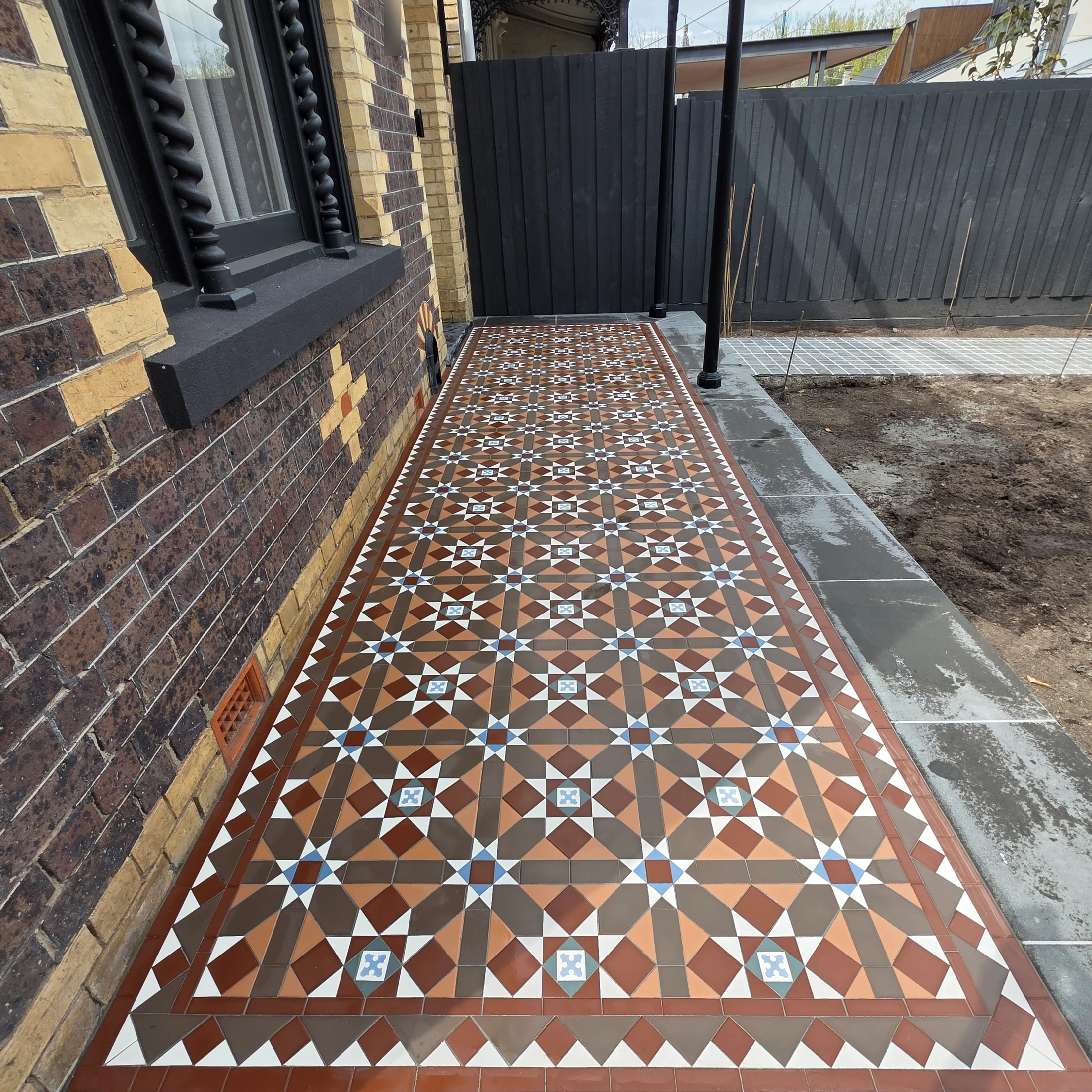
Tessellated tile work in St Kilda East
St Kilda East is a City of Port Phillip locality south of Melbourne's central business district. Port Phillip's official heritage material includes a review of Heritage Overlay 6 – St Kilda East, while the municipality's broader Heritage Review records precincts and individual place citations. That context makes it sensible to begin with the particular property rather than assume one treatment suits every street or building.
For a new design, the brief can consider how a tessellated pattern will sit with the home's proportions, entry sequence, verandah, path and surrounding finishes. For existing tilework, photographs and an inspection of the pattern, edges, movement, wear and likely source of deterioration can help distinguish cleaning, repair, selective replacement or a new installation.
Heritage Program | City of Port PhillipPort Phillip Heritage Review
Check the property before changing visible fabric
Port Phillip's Heritage Review and heritage policy maps distinguish significant, contributory, non-contributory and unmapped properties. The council advises owners to check the planning-scheme maps for the individual address, so a St Kilda East location should not be treated as automatically heritage-listed or automatically exempt from planning requirements.
Where an overlay or other control applies, document the existing pattern, border, thresholds and adjoining elements before work begins. The Victorian planning policy for Port Phillip emphasises the statement of significance, urban context and physical evidence, and gives priority to maintenance and repair of contributory fabric over replacement. This can inform a practical discussion about retention, matching and the visibility of proposed work, but it is not a planning approval or heritage authority endorsement.
Heritage advice | City of Port PhillipPort Phillip Heritage Review
Plan the right tile application
Verandahs, front paths and entrances often need a more detailed layout conversation than a simple floor area suggests. Pattern scale, border proportions, transitions at doors, levels, drainage exposure and the relationship to steps or stone edging can all affect the finished result. For a courtyard or internal area, the intended use and surrounding materials may point to a different balance of colour, geometry and maintenance considerations.
A project can be scoped around design consultation and supply, supply with installation, or restoration and selective replacement. The appropriate sequence depends on the property and the condition of the existing surface; no single substrate or installation method should be assumed before assessment.
What to include in an enquiry
Useful starting information includes the suburb and property type, the location of the tiled area, approximate dimensions, photographs in good light, whether tiles are original or a later installation if known, visible damage or movement, and the outcome you want. If the address may sit within a heritage overlay, include any relevant planning or heritage information available to you so the design and restoration conversation can stay property-specific.
From there, the brief can cover tessellated pattern selection, tile supply, installation planning, restoration or selective replacement, and stone bullnose or edging coordination.
Your Heritage Tiling Questions
Is every St Kilda East property covered by a heritage overlay?
No. Port Phillip's maps and Heritage Review distinguish different property categories, including significant, contributory, non-contributory and unmapped places. Check the planning-scheme maps for the individual address before assuming a control applies.
Can existing tessellated tiles in St Kilda East be repaired rather than replaced?
Often that is the first question to investigate, but the answer depends on the pattern, tile condition, movement, moisture or drainage issues and the availability of a suitable match. A property assessment can help separate cleaning, repair, selective replacement and full renewal options.
What areas can be considered for tessellated tiles in St Kilda East?
Common briefs include verandahs, pathways, entrances, courtyards and selected internal areas. The intended use, transitions, exposure and surrounding finishes should guide the design and installation discussion.
Should I check planning information before restoring a tiled verandah?
Yes. Port Phillip recommends checking the planning-scheme maps for the individual property, particularly where heritage controls may apply. Record existing visible fabric and seek the relevant council or planning advice before making assumptions about permits or acceptable changes.
What should I send when asking about a St Kilda East tile project?
Share the tiled area's location, approximate dimensions, clear photographs, the property's intended use, any visible damage and what you would like to change or retain. If you know of a heritage overlay or relevant property information, include that as well.
Discuss Your Heritage Tiling Project
Share your location, project details and photographs using our enquiry form, or call 0433 932 711.