
Tessellated Tiles in St Kilda
St Kilda properties sit within a varied architectural setting shaped by established residential streets, the foreshore and well-known local retail strips. For a new tessellated floor, verandah or pathway, the right design response depends on the building, the surrounding streetscape and the intended use of the space. AHTC can help coordinate design consultation, tessellated tile supply, installation and restoration, including stone bullnose or edging where it suits the project.
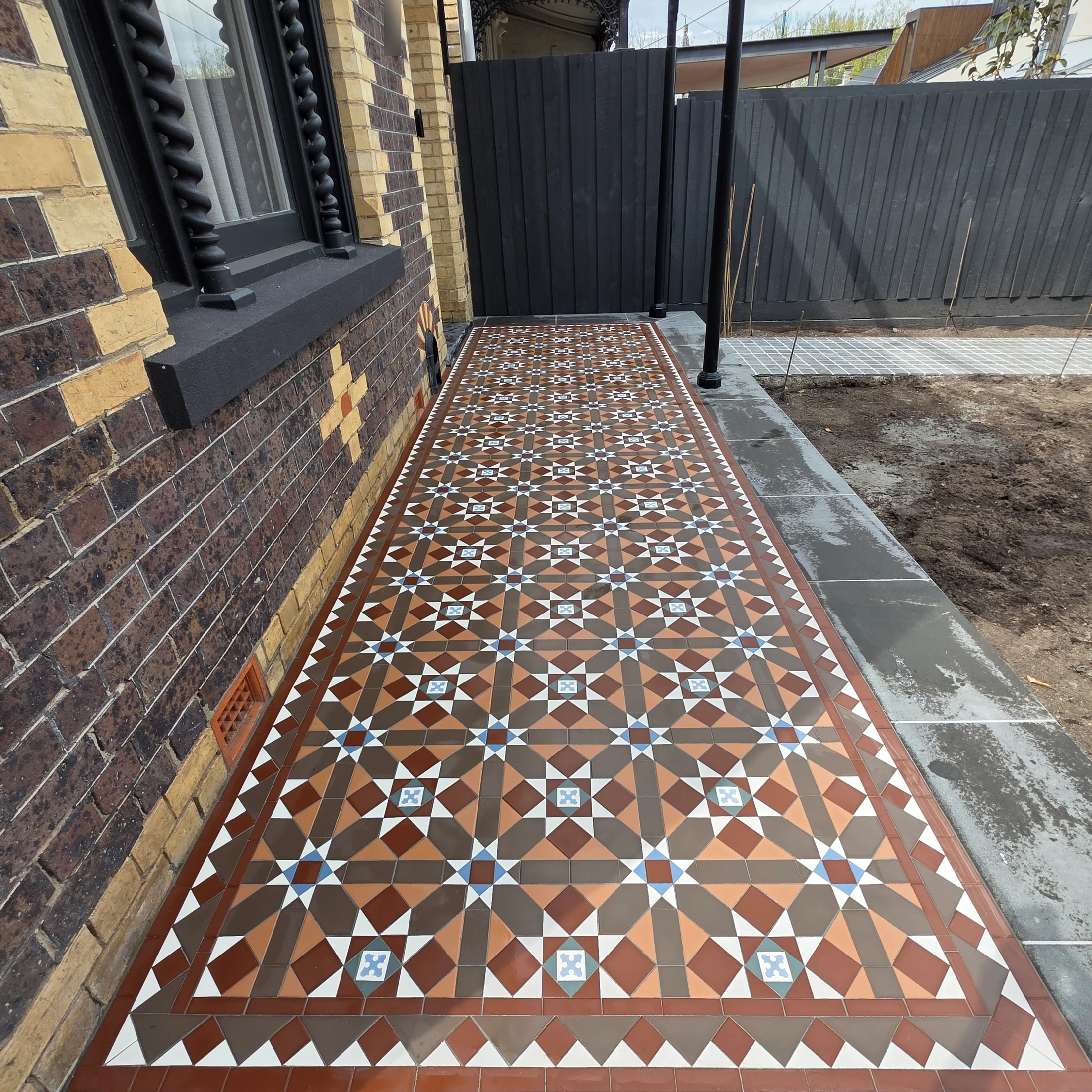
Tiling choices for St Kilda's varied architectural context
The City of Port Phillip describes St Kilda as an eclectic mix of architectural styles, eras and building types. That variety makes proportion, colour balance and the relationship between old and new surfaces more useful starting points than applying one pattern across every property.
For a front path or verandah, the layout can be considered alongside the entry sequence, boundary treatment and existing thresholds. Indoors, a tessellated floor may need to sit comfortably with retained joinery, stone, timber or other established finishes. Design consultation can test the pattern, border and transition before supply or installation is finalised.
Heritage-aware planning without assuming every property is protected
St Kilda includes broad heritage precinct overlays as well as individually listed places. A heritage overlay or citation is property- and place-specific, so the relevant planning controls should be checked before external alterations, demolition, or work that may affect significant fabric.
Where an existing floor or threshold is worth retaining, restoration can begin with an assessment of condition, surviving pattern and compatible repair options. Where the work is new, a carefully proportioned design can respect the setting without suggesting that every St Kilda home has the same heritage status or requires the same treatment.
Heritage Program | City of Port PhillipPort Phillip Heritage Review
Verandahs, pathways and practical transitions
Outdoor tessellated work needs to be considered with the site's exposure, falls, drainage and connection to paving or garden edges. A border, step or stone bullnose detail can help resolve the edge, but the suitable approach depends on the existing construction and the finished levels.
For restoration or replacement, the assessment should distinguish the original pattern or surviving tiles from later additions. For new work, the layout can be developed around the proportions of the verandah or path rather than treating a catalogue pattern as a fixed answer.
A measured approach to a St Kilda tiling project
Begin with photographs, dimensions and a description of what is existing. The next step is to clarify whether the brief is new design and installation, supply coordination, or restoration of an existing surface. That distinction helps keep decisions proportionate to the property and the work being considered.
For properties affected by a heritage overlay, seek the relevant council or planning advice for the specific site. AHTC's role is to assist with the tile design and project coordination; it does not replace property-specific planning or heritage advice.
Heritage Program | City of Port PhillipPort Phillip Heritage Review
Your Heritage Tiling Questions
Does every St Kilda property require heritage approval for tessellated tiling?
No. St Kilda contains both heritage precincts and individual heritage places, but controls are property-specific. Check the relevant planning information for the site before external changes or work that may affect significant fabric.
Can an existing St Kilda tessellated floor be restored rather than replaced?
Often the first step is an assessment of the surviving tiles, pattern, substrate and areas of damage. That helps determine whether selective restoration, careful replacement or a new complementary surface is the more suitable direction.
Discuss Your Heritage Tiling Project
Share your location, project details and photographs using our enquiry form, or call 0433 932 711.