
Tessellated Tiles South Melbourne
South Melbourne's inner-urban setting combines a long local history with ongoing change. For a tiled verandah, entry, path or interior floor, the most useful starting point is the property itself: its proportions, surviving fabric, exposure and the character of the surrounding streetscape. AHTC can help with tessellated tile design, supply, installation and restoration planning for South Melbourne properties, with the final approach shaped by the site rather than a generic period template.
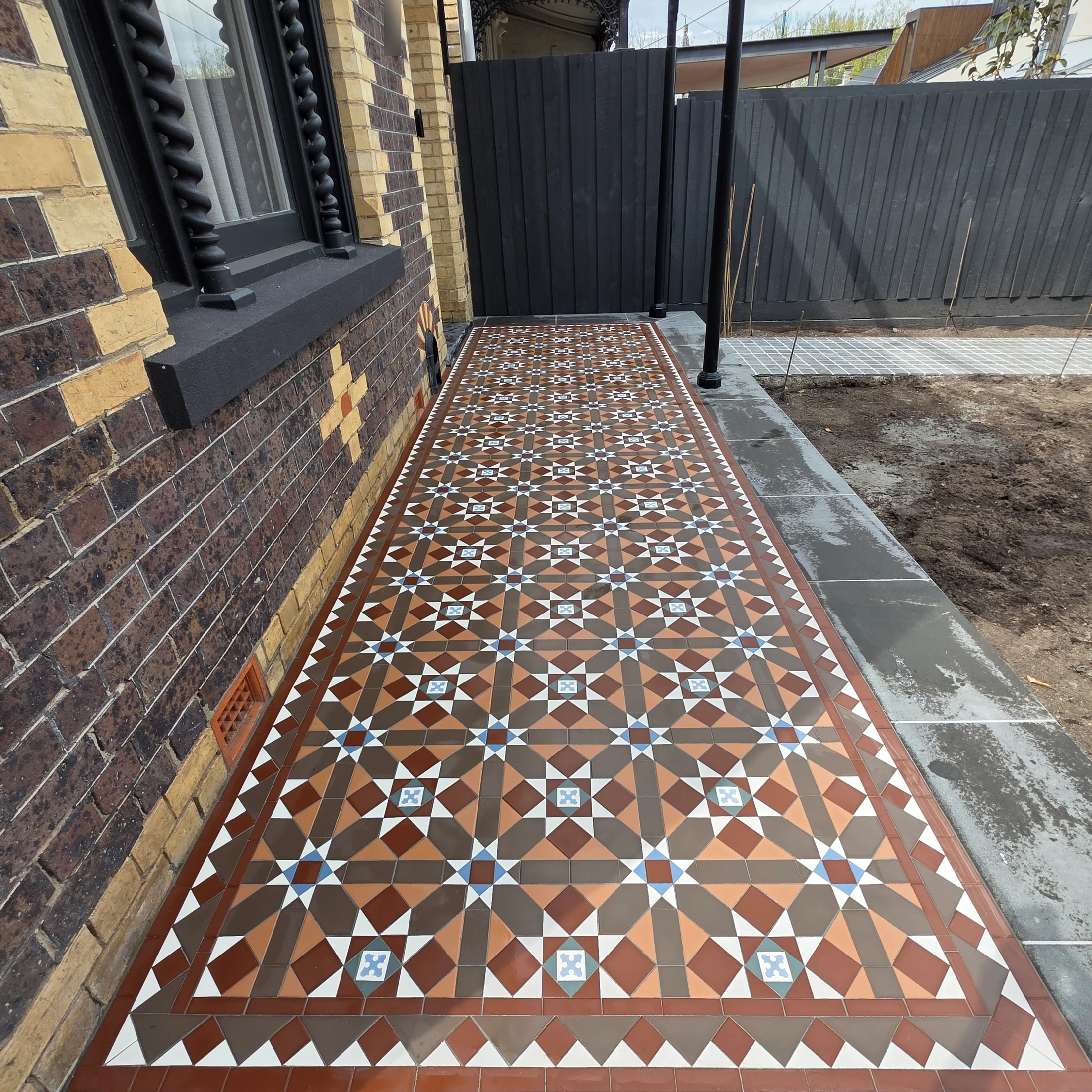
A South Melbourne context for tile decisions
South Melbourne is a City of Port Phillip locality in metropolitan Melbourne. The area was formerly known as Emerald Hill and became a municipality in 1855, giving its older streets and buildings a local history that is distinct from simply describing the suburb as an inner-city location.
The City of Port Phillip's planning material includes a South Melbourne Central Structure Plan and Urban Design Framework. That documented urban-design setting makes proportion, thresholds and the relationship between a tiled surface and the building frontage useful design questions when planning a new or renewed tiled area.
A historic-looking pattern is not automatically the right choice for every property. A site assessment can consider the existing floor or verandah, levels and drainage, the visual weight of borders and fields, and how new work should meet retained fabric.
Heritage-sensitive planning without assumptions
The Port Phillip Heritage Review is the council's incorporated heritage reference. It identifies heritage overlays, individual place citations and neighbourhood-character information, so a property-specific check is more reliable than assuming that every South Melbourne house has the same controls or architectural history.
Where existing tiles or edging survive, documenting what is present before lifting or replacing anything can help separate repair, careful matching and new work. For a property affected by a heritage overlay or another planning control, confirm the current requirements with the relevant authority before work begins. Heritage-sensitive design guidance is not the same as heritage approval or an endorsement of a particular installation.
AHTC's role can include design consultation, tessellated tile supply, installation, restoration and coordination of stone bullnose or edging details. The practical recommendation depends on the condition and intended use of the individual area.
Design considerations for verandahs, paths and floors
For a South Melbourne verandah or front path, the layout should be considered at the same time as the entry width, turning points, thresholds and transitions to adjoining surfaces. A restrained border can clarify an edge, while a more detailed field may need enough visual space to remain legible rather than becoming crowded.
Interior floors call for a different assessment of movement, furniture, lighting and the relationship between the tile design and adjoining rooms. When existing material remains, a matching exercise should be based on observed size, colour, pattern and condition rather than a broad label such as Victorian or heritage.
Restoration and new installation are separate decisions. Retaining sound original material may be preferable in one area, while a carefully designed new surface may be more appropriate where the fabric is missing or the space has been substantially altered.
A measured next step for a South Melbourne property
Begin with clear photographs and dimensions of the area, including thresholds, edges and any sections that appear loose, cracked or previously repaired. Note whether the aim is to retain existing tiles, extend a pattern, replace a surface or create a new layout.
Those details help frame a consultation around the property's actual needs. If heritage or planning controls may apply, use the City of Port Phillip's heritage information and seek property-specific advice before committing to changes.
Your Heritage Tiling Questions
Does every South Melbourne property have heritage controls?
No. The City of Port Phillip Heritage Review identifies particular overlays, place citations and neighbourhood-character information, but controls are property-specific. Check the current planning information for the property rather than assuming that the suburb-wide history applies in the same way everywhere.
Can existing tessellated tiles in South Melbourne be restored instead of replaced?
Often the first step is to document the condition and extent of surviving material. A consultation can then consider whether selective restoration, matching, extension or new work best fits the fabric and intended use. The suitable option depends on the individual surface.
What should I consider for a South Melbourne tiled verandah or pathway?
Consider the entry proportions, thresholds, edges, transitions, exposure and how the pattern will read from the street. Existing building details and any applicable planning controls should be assessed before finalising a layout.
Where can I research the history of a South Melbourne property?
The Port Phillip Heritage Centre, housed within Emerald Hill Library in South Melbourne, provides local-history resources and assistance for researching houses and local records. It is a useful historical reference, while planning or heritage controls should be checked through the relevant current council and planning information.
Discuss Your Heritage Tiling Project
Share your location, project details and photographs using our enquiry form, or call 0433 932 711.