
Tessellated Tiles in Semaphore
Semaphore combines a seaside setting with a strong historic streetscape along Semaphore Road. South Australia's Historic Area Statement describes 1870s–1920s development, including single-storey shops with verandahs and parapets alongside villas, cottages and larger houses. For a new tiled surface or an existing floor that needs care, the right approach starts with the property's proportions, exposure and surviving details rather than a one-size-fits-all pattern.
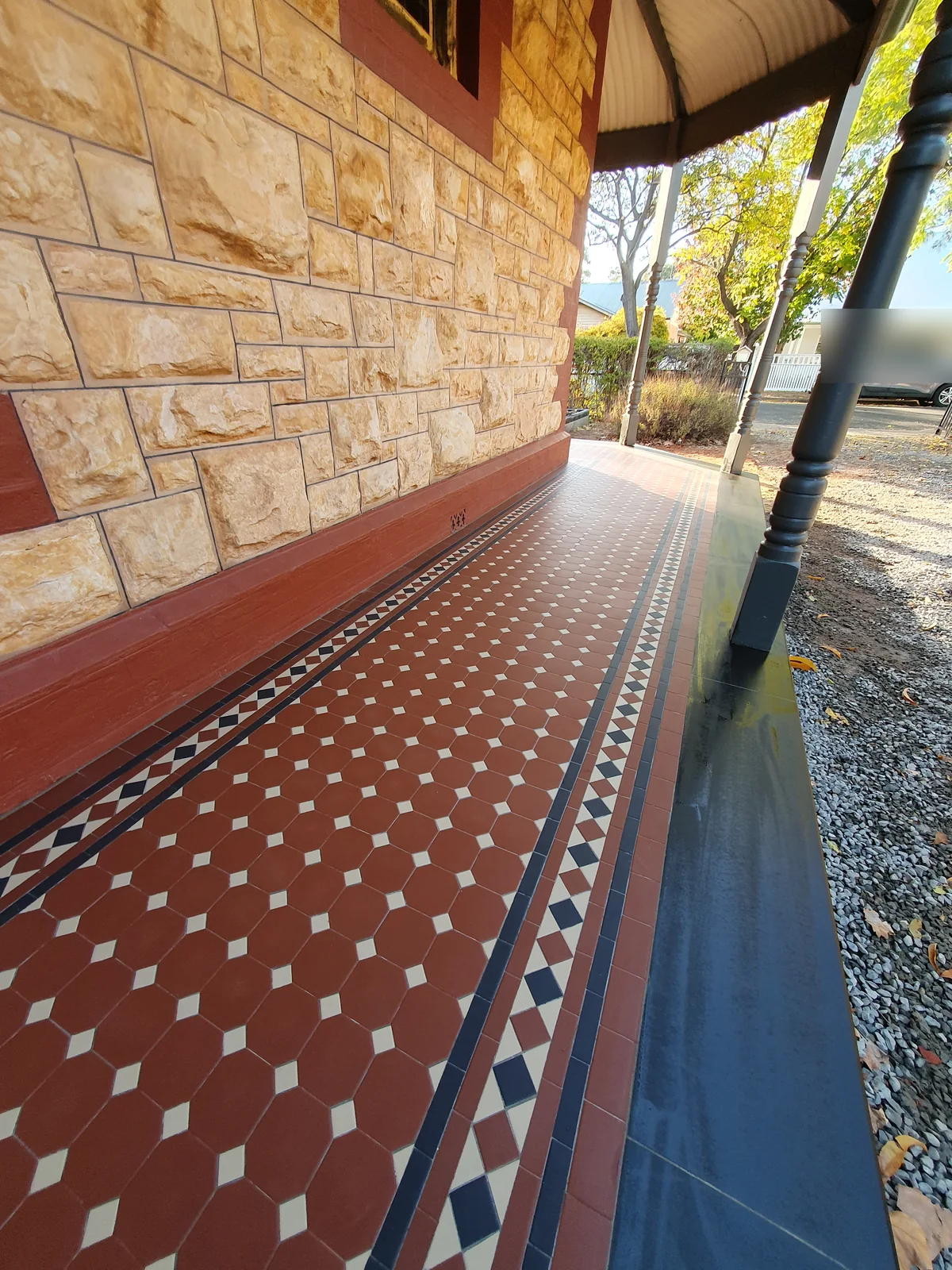
Designing for Semaphore's streetscape
Semaphore Road is documented as a wide east–west route between Causeway Road and the Esplanade, with buildings addressing the street frontage. Its recorded character includes predominantly single- and two-storey buildings, simple shopfronts with verandahs and parapets, and pockets of villas, cottages and mansions. A tessellated layout for a front path, porch or verandah can respond to that scale with considered borders, thresholds and transitions rather than overwhelming the existing façade.
The coastal setting also makes practical detailing important. Planning for a tiled path or verandah should consider how water moves across the site, how the surface meets steps and garden edges, and how the selected finish will read in changing light. Design consultation can help resolve proportions and edge details before supply and installation are coordinated.
Historic Area Statements and Character Area Statements: City of Port Adelaide Enfield | PlanSA
New layouts and existing tilework
For a new installation, the design process can cover pattern selection, set-out, colour relationships, transitions and stone bullnose or edging coordination. The intended use and the surrounding architecture should guide the scale of the pattern, especially where a narrow path or compact verandah meets an established street frontage.
Where older tiles remain, an assessment can separate sound original fabric from areas that are damaged, loose or incomplete. Restoration may involve careful matching and selective work rather than replacing every tile. The aim is to make a clear, well-considered decision about what can be retained and what new work is appropriate.
Historic Area Statements and Character Area Statements: City of Port Adelaide Enfield | PlanSAHeritage and historic conservation | City of Port Adelaide Enfield
Check the property before heritage-sensitive work
A historic-looking street does not automatically mean that every home or shop is heritage listed. The City of Port Adelaide Enfield directs owners to the South Australian Heritage Places Database for property checks and provides heritage advice for relevant building, conservation and maintenance work. Confirm the property's actual listing or overlay position before relying on heritage assumptions or planning a substantial change.
AHTC can help coordinate design consultation, tessellated tile supply, installation, restoration and stone bullnose or edging details. The appropriate scope depends on the condition of the existing surface, the proposed use and the property's own planning context.
Heritage and historic conservation | City of Port Adelaide EnfieldProtecting Heritage and Character Policies in the Planning and Design Code
Your Heritage Tiling Questions
Are all Semaphore homes heritage listed?
No. Semaphore Road has a documented historic-area character, but listing and planning controls are property-specific. Check the individual property in the South Australian Heritage Places Database and confirm any applicable planning requirements before work begins.
Can tessellated tiles suit a Semaphore verandah or front path?
They can, when the layout responds to the building and site. Semaphore's documented streetscape includes verandahs, parapets, villas and cottages, so border proportions, thresholds, steps and the relationship with the façade should be resolved as part of the design rather than treated as an afterthought.
Can older tessellated tiles be restored instead of replaced?
Often the first step is an assessment of what remains. Sound tiles may be retained while damaged or missing areas are addressed selectively, subject to condition, access and the availability of a suitable match. A site-specific recommendation is needed before deciding between restoration and replacement.
What should be considered for a coastal Semaphore installation?
Discuss drainage, thresholds, steps, edge conditions and how the surface will be used and maintained. The coastal setting and surrounding public-realm design make water management and durable detailing relevant to the planning conversation, but the correct construction approach depends on the individual site.
Discuss Your Heritage Tiling Project
Share your location, project details and photographs using our enquiry form, or call 0433 932 711.