
Tessellated tiles in Prospect East
For a Prospect East home, tessellated tiles can connect a verandah, entry, path or other threshold with the proportions and materials of the property. We can help with design consultation, tessellated tile supply, installation, restoration and stone bullnose or edging coordination. Where a property sits within a character or heritage control, the right approach starts with identifying the existing fabric and checking the applicable planning requirements for that address.
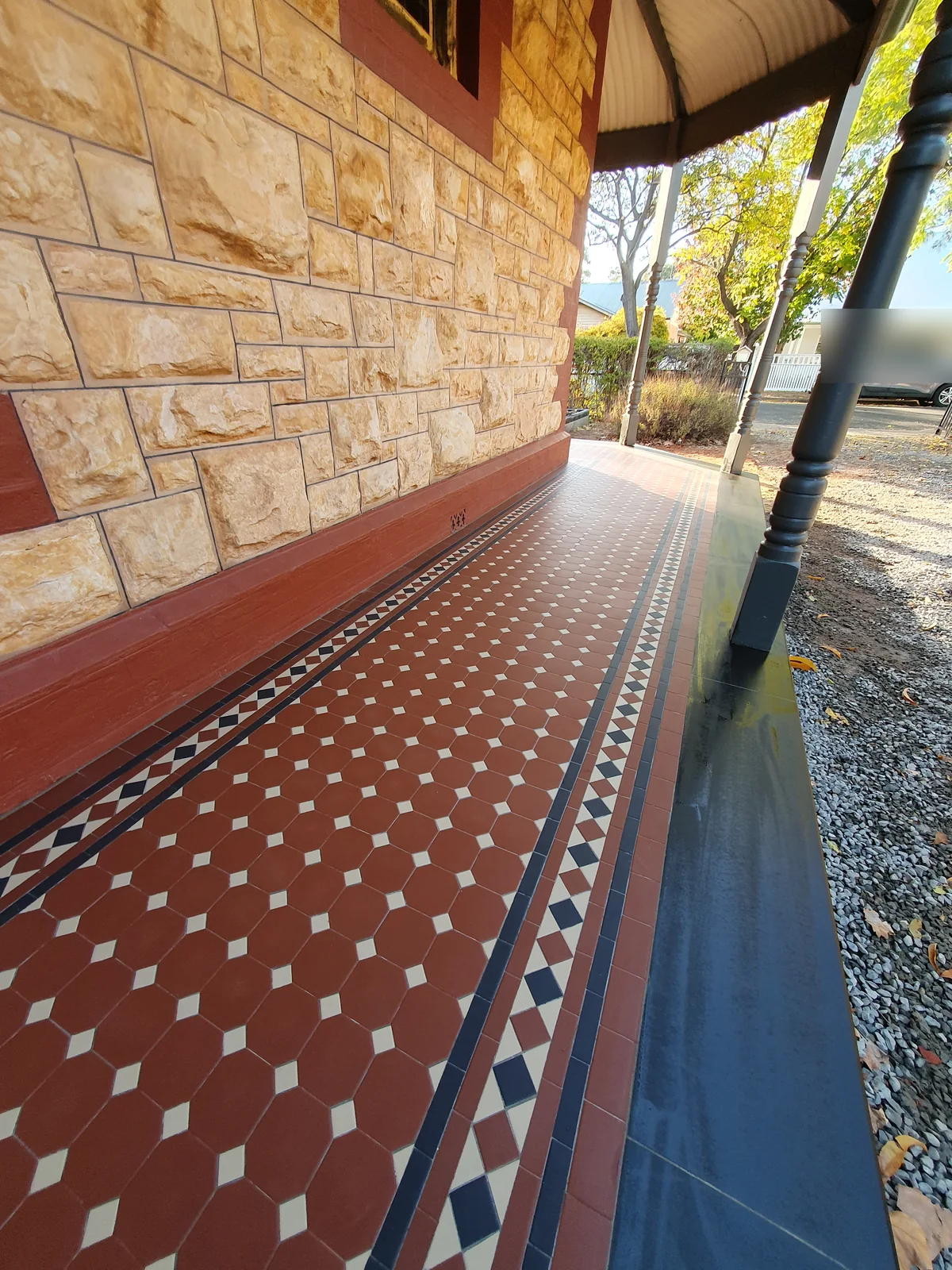
Designing with Prospect East's established inner-north context
Prospect East is listed by Australia Post within the SA 5082 delivery area, in Adelaide's established inner-north context. The City of Prospect describes its area immediately north of the City of Adelaide as an inner urban community with a varied built history. That setting makes proportion, threshold detail and the relationship between a front path and the house particularly useful starting points for a tiling brief.
City of Prospect guidance records a broad mix of housing forms across its district, including cottages, Victorian and Federation examples and later bungalows. That is context rather than a claim about every Prospect East property. A restrained border, a measured field pattern or a carefully coordinated edge may suit one home, while another may call for a contemporary layout that respects the existing scale without imitating it.
Plan the tile work around the property
Begin by recording what is already there: surviving tiles, step geometry, verandah posts, door thresholds, damp exposure, levels and the direction of movement from the street. Existing tiles may be worth retaining or matching, but a new installation should not copy a pattern blindly if the proportions or levels do not suit the building.
For a front path or verandah, consider how the field, border, transition and stone bullnose or other edging will read from the street and from the front door. City of Prospect's design guidance notes the importance of siting, scale, roof and opening proportions for work in conservation areas, and describes paths with brick, stone or edging-tile relationships. Those principles can inform a design conversation, but the exact planning controls remain property-specific.
Restoration, replacement or a new tessellated layout
A restoration brief should distinguish sound original material from later repairs, movement, loose sections, staining and failed edges before deciding what to replace. If only part of a pattern survives, the design process can focus on documenting the evidence and making any new work legible, compatible and practical for the setting.
The South Australian heritage database shows why a listing check matters: heritage places can have a defined class and listed extent, and the database advises confirming implications with the relevant authority. A postcode, streetscape impression or council service grouping is not enough to establish that a particular home is listed or within an overlay.
A practical brief for a Prospect East enquiry
Useful information includes photographs of the existing area, approximate dimensions, the age or period you understand the home to be, access from the street, and whether the work is a repair, a replacement or a new path or verandah. This helps separate pattern selection from substrate, falls, transitions and edge coordination.
The same careful process applies whether the project is a small entry repair or a larger supply-and-installation brief. We can discuss tessellated tile options, restoration priorities and stone bullnose or edging coordination without assuming that every property has the same heritage status or approval pathway.
Your Heritage Tiling Questions
Are all Prospect East homes heritage listed?
No conclusion about an individual home should be drawn from the locality name or its architectural appearance. Listing and overlay status are property-specific, so check the applicable South Australian planning information and the relevant authority before altering existing fabric.
Can tessellated tiles suit a Prospect East verandah or front path?
They can, when the layout responds to the home's proportions, threshold levels, access and drainage conditions. A measured field and border, a restrained transition and coordinated stone or tile edging can be considered alongside the existing verandah and path geometry.
Should existing tessellated tiles be removed before restoration is planned?
Not necessarily. First document the pattern and assess soundness, movement, moisture exposure, previous repairs and edge conditions. Retention, selective repair or replacement can then be considered against the evidence and the practical requirements of the area.
What should I send for a Prospect East tile consultation?
Photographs, approximate dimensions, the location of the work, access details and any information about the home's period or existing tiles are useful. If you know of a planning, character or heritage control, include that information so the design discussion can remain specific to the property.
Discuss Your Heritage Tiling Project
Share your location, project details and photographs using our enquiry form, or call 0433 932 711.