
Tessellated tiles in Pennington
Pennington sits in Adelaide's western metropolitan area and includes a mix of established residential streets, newer alterations and places recorded in South Australia's heritage database. If you are planning a tiled verandah, path, entry or interior floor, the right layout depends on the existing building, the way the space is used and the condition of the substrate. AHTC can discuss tessellated tile design, supply, installation and restoration, together with stone bullnose or edging coordination where it suits the project.
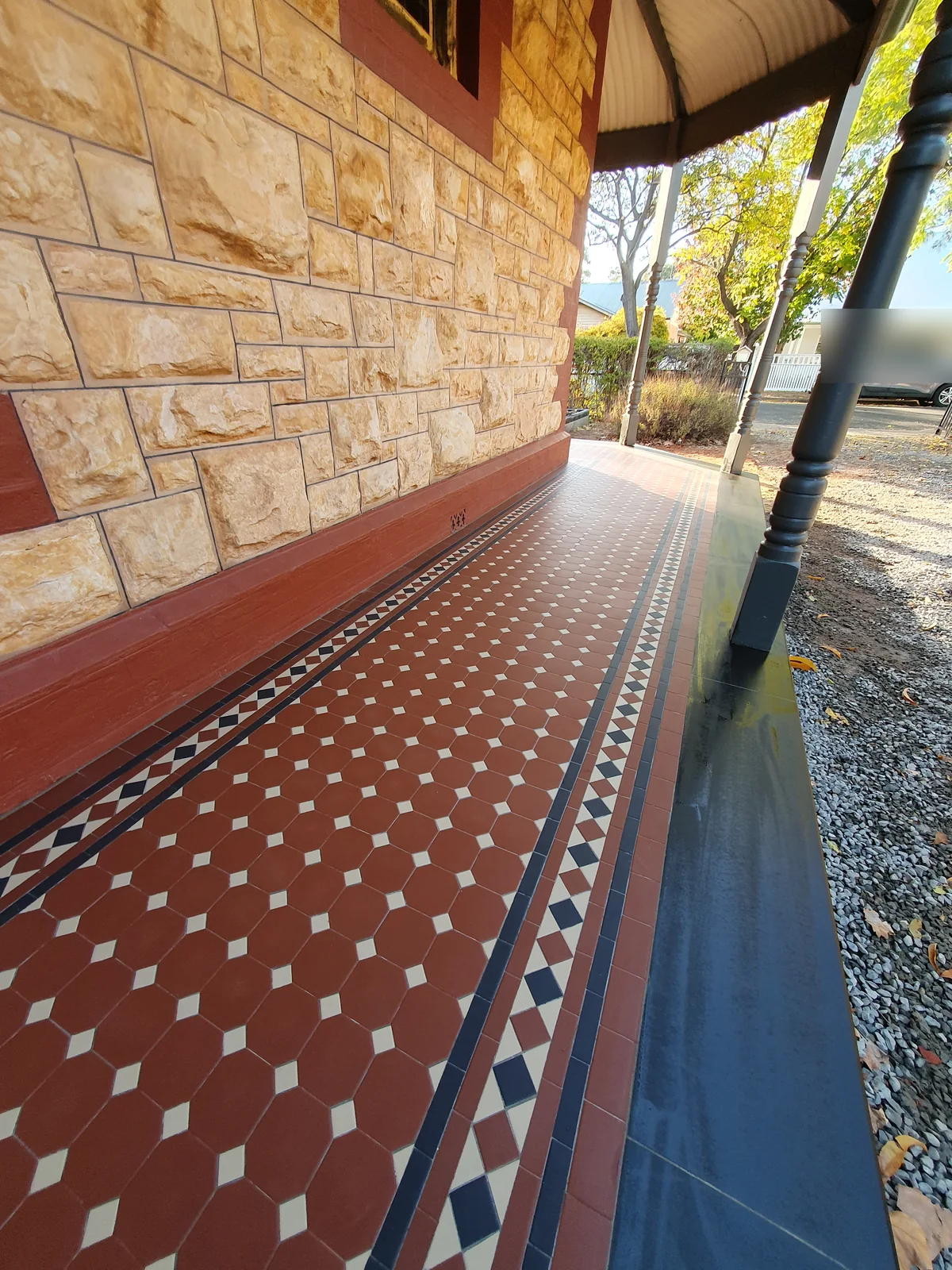
Designing with Pennington's local context in mind
Pennington's heritage context is property-specific rather than a blanket description of every home. The South Australian Heritage Places Database records local heritage places and a confirmed State Heritage Place in the suburb. It also describes a significant post-war church as an influential example of post-war architecture, showing that local design history is not limited to one period or one visual style.
Planning material for the Torrens Road catchment identifies a Pre-World War One Policy Area in Pennington north of Torrens Road and discusses development that complements existing character. Before changing an established frontage, confirm the current Planning and Design Code position for the property. A tile pattern can then be developed around the building's scale, entry sequence, existing borders and any fabric worth retaining.
Verandah, entry and pathway tile planning
For a Pennington verandah or front path, start with the proportions of the space and the relationship between the edge, threshold and main field. A restrained border can help a narrow approach read clearly, while a more formal repeat may suit a broad entry or a carefully framed porch. Existing steps, drainage falls, door clearances and transitions to adjoining paving should be reviewed before a final layout is selected.
For an older property, matching is not only a colour exercise. Retain sound original tiles where practical, record the existing arrangement before lifting anything and distinguish repair from new work. Where a property is listed or affected by a heritage control, obtain the relevant property-specific advice before work begins.
Heritage and historic conservation | City of Port Adelaide Enfield
Restoration choices for established properties
Restoration may involve cleaning and stabilising surviving tiles, replacing isolated losses, rebuilding a damaged section or designing a compatible new area. The appropriate option depends on what remains, whether the floor is level and sound, and how the tiled surface meets thresholds and external paving. A site discussion can separate a repairable surface from one where a carefully planned replacement is more practical.
No heritage listing should be assumed from the suburb name alone. The state database and the current planning information for the individual property are the sensible starting points, especially where work could affect a listed place or its setting.
Heritage and historic conservation | City of Port Adelaide Enfield
Your Heritage Tiling Questions
Can you help plan tessellated tiles for a Pennington verandah or front path?
Yes. The layout can be considered around the verandah or path proportions, border treatment, thresholds, steps, drainage and the character of the existing building. Supply, installation and stone bullnose or edging coordination can be discussed as part of the same project review.
Does every Pennington property have heritage restrictions?
No. Heritage status and planning controls are property-specific. South Australia's heritage database records particular local and State Heritage Places in Pennington, so check the individual property and its current Planning and Design Code position rather than assuming a suburb-wide rule.
Can existing tessellated tiles be restored instead of replaced?
Often that is worth assessing first. The condition of the surviving tiles, the substrate, movement, missing sections and transitions to adjoining surfaces all affect whether selective repair, careful lifting and relaying, or a new compatible layout is the better approach.
What should I check before changing tiles at a heritage-listed property?
Confirm the listing or overlay for the individual property and seek the relevant heritage or planning advice before work starts. The South Australian heritage record notes that development affecting a listed place and its setting can require more than looking at the mapped footprint alone.
Discuss Your Heritage Tiling Project
Share your location, project details and photographs using our enquiry form, or call 0433 932 711.