
Tessellated tiles in Castlereagh
Castlereagh sits within Penrith's western Sydney setting, with a distinctive mix of river-edge landscape, open properties and a documented historic cultural landscape. For a verandah, entry, pathway or interior floor, tessellated tiles can be planned around the proportions and character of the property rather than applied as a generic pattern. AHTC can help with design consultation, tessellated tile supply, installation and restoration, including coordination of stone bullnose or edging where the project calls for it.
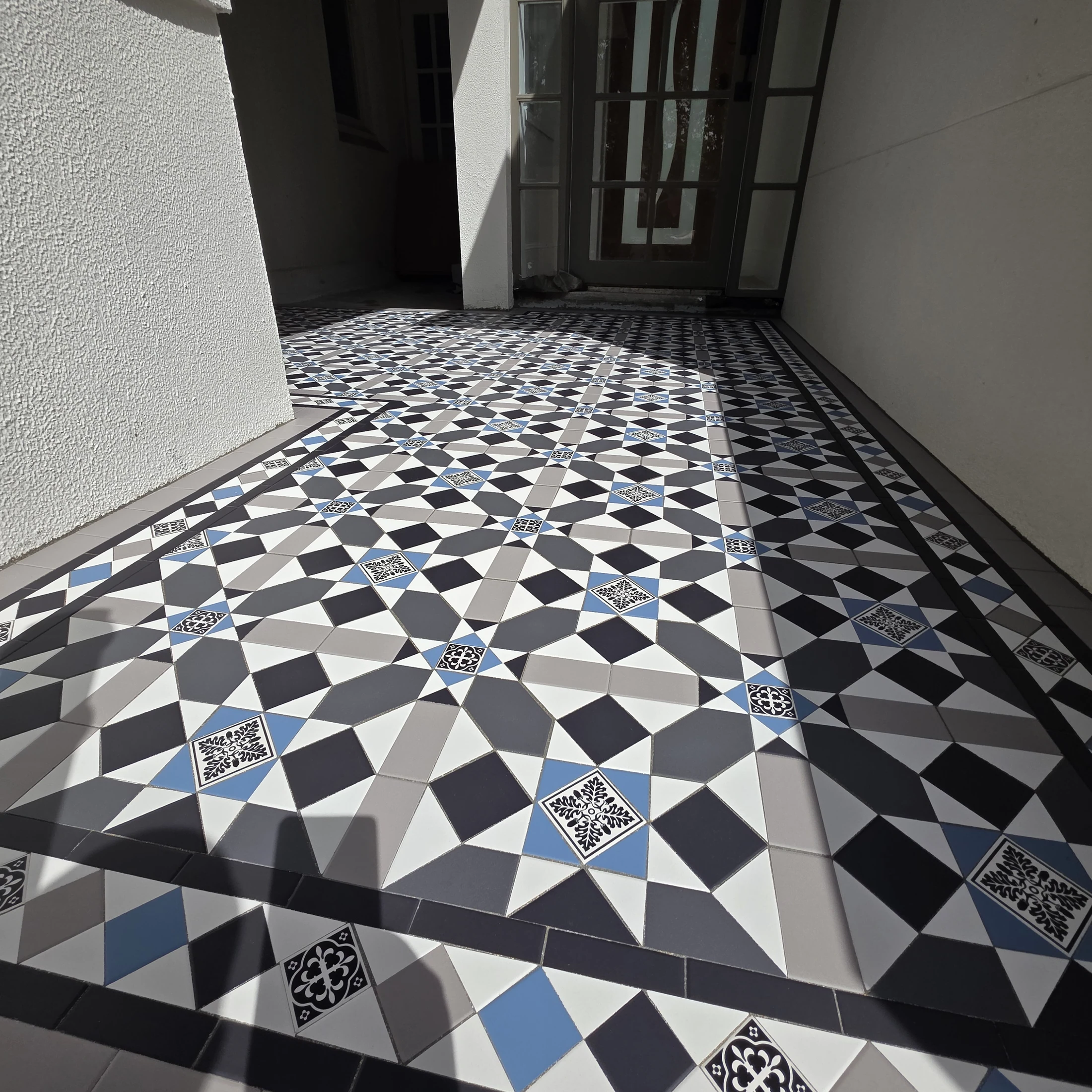
A property-led approach for Castlereagh homes
Official planning research describes the historic Castlereagh district as a wider cultural landscape with a long record of European occupation, agriculture and quarrying. That context is useful when thinking about how a new tiled surface should sit beside an older building, garden edge, outbuilding or established path. It does not mean every Castlereagh property has the same architectural period or heritage status.
The most useful starting points are the building's existing lines, the approach from the street, the scale of the verandah or entry and the way outdoor surfaces meet steps, thresholds and garden levels. A restrained border, a clear field pattern or a carefully matched restoration can each be appropriate, depending on the property and the condition of the surface.
Check the property before changing an older tiled surface
Penrith City Council distinguishes individual heritage items and heritage conservation areas through its planning controls. Before removing an established tiled floor, changing a significant entry or altering a place that may be listed, check the relevant heritage inventory and the applicable planning controls for the property. Council also provides heritage advice on conservation materials, colours, drainage and damp correction.
A heritage-sensitive tile project is not automatically a heritage-approved project. The appropriate design, documentation and approvals depend on the property's listing, its setting and the proposed work. Where original or early tiles remain, a condition review can help separate repairable fabric from later additions before a replacement pattern is selected.
Plan the pattern, edges and transitions together
For Castlereagh verandahs and pathways, pattern scale matters as much as colour. The layout should be drawn around the actual width, corners, steps and door thresholds so borders finish cleanly and the field does not look compressed at an entry. External exposure, falls and drainage also need to be considered during site planning.
AHTC's service scope covers design consultation, tile supply, installation and restoration. Stone bullnose or edging coordination can be considered where a step, raised garden edge or transition needs a durable and visually resolved finish. The installation sequence should be set by the property's existing conditions rather than by a universal substrate recipe.
Your Heritage Tiling Questions
Are all Castlereagh properties heritage-listed?
No. Heritage status is property-specific. Penrith City Council identifies individual heritage items and conservation areas through its planning controls, so check the relevant inventory and controls for the property before altering an older tiled surface.
Can tessellated tiles suit a semi-rural Castlereagh property?
They can, when the pattern, scale and edge details are designed for the building and its setting. Verandahs, entries and paths should be assessed with their existing thresholds, steps, garden edges, drainage and sightlines in mind rather than treated as isolated flat areas.
Can an existing tiled floor in Castlereagh be restored instead of replaced?
Often the first step is a condition assessment to identify sound tiles, damaged areas, later repairs and movement or moisture issues. That assessment helps determine whether selective restoration, careful matching or a new layout is the more suitable direction.
Do I need to check planning controls before changing tiles?
If the property is a listed heritage item or lies in a heritage conservation area, Penrith Council says development consent may be required for alteration or demolition. Check the property's status and seek property-specific advice before commencing work.
Discuss Your Heritage Tiling Project
Share your location, project details and photographs using our enquiry form, or call 0433 932 711.