
Tessellated Tiles in Happy Valley, South Australia
Happy Valley homes can call for a considered approach to tiled thresholds, verandahs, paths and floors. Authentic Heritage Tiling Co can help with design consultation, tessellated tile supply, installation and restoration, including coordination of stone bullnose or edging where the setting requires it. For an older or character property, the right starting point is to look at the existing fabric, the proportions of the space and the way new work will meet adjoining surfaces.
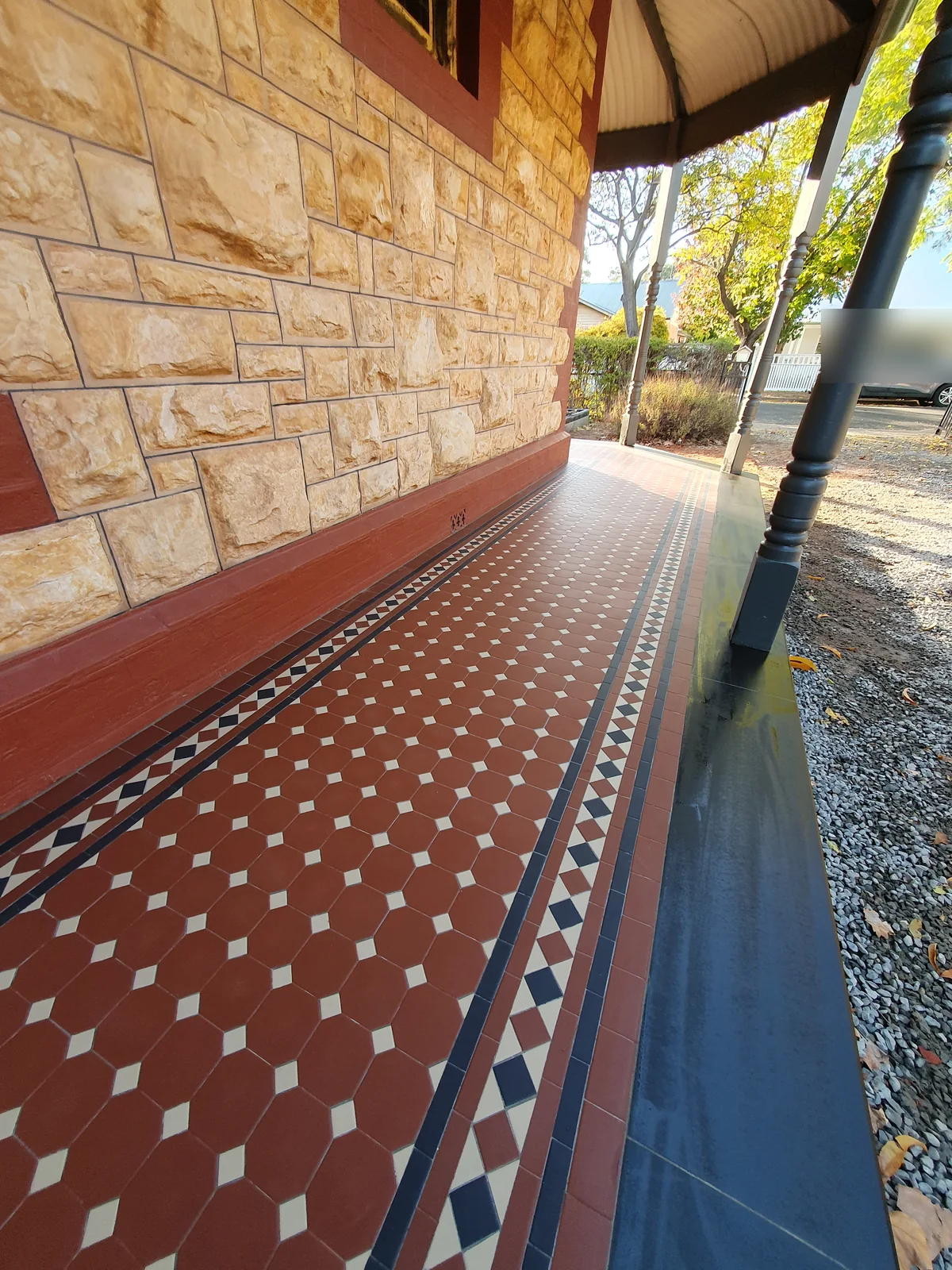
A local setting with more than one kind of heritage context
Happy Valley is part of the southern metropolitan Adelaide planning context and sits within the City of Onkaparinga. The locality is also associated with the Happy Valley Reservoir, whose dam walls and towers are recorded as a State Heritage Place. That landmark is important local context, but it does not mean every house in Happy Valley is heritage-listed or has the same design controls.
The City of Onkaparinga's built-heritage information covers state and local heritage places, representative buildings and historic areas. Before altering a property that may be listed or affected by a heritage setting, check the relevant property record and obtain advice from the council or Heritage South Australia.
Designing tiles around level changes and site conditions
Southern-suburbs planning material identifies slope and site conditions as relevant to residential design policy. For a Happy Valley verandah, entry or garden path, that makes the on-site relationship between finished levels, drainage, thresholds and adjoining paving worth resolving before a pattern is selected.
A design consultation can review the scale of the area, border proportions, transitions and the visual weight of the pattern. The aim is a layout that belongs to the house and remains practical at edges, steps and doorways rather than treating a catalogue pattern as a complete design.
Restoring existing tilework or planning new work
Where original or established tiles remain, assessment should come before removal. Matching colour, size, geometry, border treatment and the condition of the surrounding surface can guide whether selective restoration, careful replacement or a new adjoining area is the more appropriate path.
For new verandahs, pathways or interiors, supply and installation can be coordinated around the chosen layout and the site's access and transitions. Stone bullnose or edging may also need to be considered where a tiled edge meets steps, paving or a garden border.
Check the property, not just the suburb name
Heritage status and development requirements are property-specific. The South Australian Heritage Places Database notes that a registered place's setting and nearby structures can matter, and recommends discussing exact implications with Heritage South Australia. A tile consultation can sit alongside that check; it does not replace it.
When making an enquiry, useful photographs and dimensions can show the existing floor or path, the edge conditions, steps, doors and any tiles worth retaining. The current enquiry form can be used to outline the project and request design, supply, installation or restoration guidance.
Your Heritage Tiling Questions
Does living in Happy Valley mean my home is heritage-listed?
No. Happy Valley contains a State Heritage-listed reservoir structure, and the City of Onkaparinga maintains records for heritage places and representative buildings, but listing is property-specific. Check the relevant council and South Australian heritage records before assuming a control applies.
Can tessellated tiles work on a Happy Valley verandah or pathway?
They can be considered for a verandah or pathway when the layout suits the levels, drainage, thresholds, edges and existing architecture. A design review should resolve those site relationships before finalising the pattern and border.
What should I do if my existing tiles are damaged?
Start with an assessment of what remains. Colour, tile size, geometry, border details and the condition of the surrounding surface can help determine whether selective restoration, matching replacement or a new adjoining treatment is appropriate.
Do I need to check planning or heritage requirements before tiling?
If the property or nearby setting may be heritage-listed, or if the work changes a significant existing surface, check the applicable record and seek property-specific guidance first. The State Heritage Places Database advises that development affecting a listed place can extend beyond the registered structure itself.
Can edging or bullnose details be included in the design?
Yes. Edge conditions can be considered as part of the layout, including transitions at steps, paving and garden borders. Stone bullnose or edging coordination may be useful where a tiled surface needs a deliberate and durable finish.
Discuss Your Heritage Tiling Project
Share your location, project details and photographs using our enquiry form, or call 0433 932 711.