
Tessellated Tiles in Maylands, South Australia
For Maylands homes, a tessellated tile scheme can connect a verandah, entry path or garden edge with the proportions and materials already present at the property. The local character evidence is varied rather than uniform, so design decisions should begin with the individual building, its setting and the condition of any surviving tilework. AHTC can assist with design consultation, tessellated tile supply, installation, restoration and stone bullnose or edging coordination.
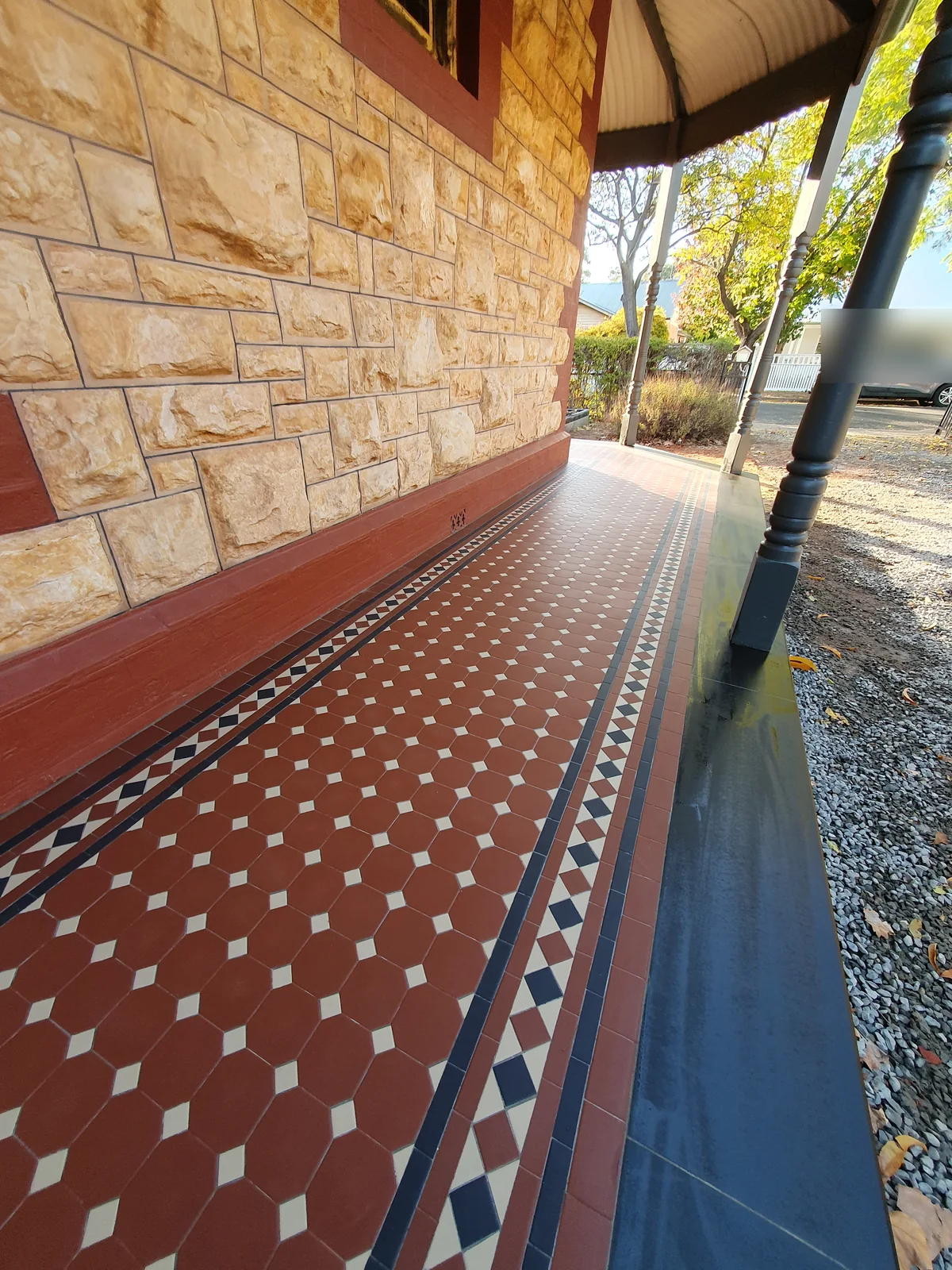
Working with Maylands' varied residential character
The City of Norwood Payneham & St Peters' Maylands Character Area study describes an early suburban pattern of wide streets and relatively generous allotments. In the defined area, modest single-storey villas and cottages from the late 1800s to early 1900s sit alongside sandstone and bluestone construction, bungalows, art deco dwellings and some single-fronted attached homes. That mix makes the building itself a better starting point than a one-size-fits-all period pattern.
For a villa or cottage, a restrained border, balanced field and carefully proportioned threshold may sit more comfortably than a busy new motif. A bungalow, art deco dwelling or later alteration may call for a different relationship between colour, geometry and the existing façade. Where a project connects to a front garden or mature street setting, the pathway width, edge treatment and transition at the front step deserve as much attention as the tile pattern.
Planning verandahs, paths and stone edges
The Maylands study notes regular setbacks, low front fencing, established gardens and mature street trees as contributors to streetscape character in the identified area. A new verandah or pathway finish should therefore be considered as part of the approach to the house, not as an isolated floor surface. Check levels, door thresholds, drainage fall, movement joints and the junction between tile, garden and existing paving before finalising a layout.
Stone bullnose or edging coordination can help define a step, border or exposed edge where that detail suits the property. The edge should be resolved with the actual site dimensions and adjacent materials. A site review is also useful where older tiles are loose, hollow-sounding, cracked or uneven, because restoration and selective replacement may be more appropriate than removing sound original fabric.
Check the property before changing established fabric
The Maylands Character Area study records one State Heritage Place and four Local Heritage Places within the defined character area. It does not mean that every home in Maylands is listed or that every project needs the same approval pathway. Before demolition, substantial alteration or work close to significant fabric, check the property's current planning and heritage status and seek project-specific advice from the relevant authority where needed.
South Australia's planning guidance distinguishes State Heritage Places, Local Heritage Places, Historic Areas and Character Areas. It also explains that Character Area Statements identify the characteristics to protect or complement. AHTC's role is to help assess the tile design and practical work scope; it is not to represent council or heritage approval.
A considered tile plan for your Maylands property
A useful consultation can cover the intended area, existing tile condition, pattern scale, colour relationship, edge and threshold details, access and sequencing. For a restoration project, photographs and measured site information help distinguish tiles that can be retained from sections that need careful repair or replacement. For new work, the aim is a durable layout that belongs to the property's architecture without pretending to reproduce an undocumented original.
Design consultation, tessellated tile supply, installation, restoration and stone bullnose or edging coordination can be discussed for Maylands projects through the existing enquiry pathway.
Your Heritage Tiling Questions
Are all Maylands homes heritage listed?
No. The local character study identifies one State Heritage Place and four Local Heritage Places within a defined Maylands Character Area, but that does not make every Maylands property heritage listed. Check the individual property and the current South Australian planning information before assuming a heritage status or approval requirement.
What should be considered when choosing tessellated tiles for a Maylands villa or cottage?
Start with the home's existing proportions, façade materials, threshold and approach. The Maylands study describes villas and cottages, including sandstone and bluestone examples, alongside other periods and styles. A measured border and field pattern that respects the building can be more suitable than applying the same design to every property.
Can existing Maylands tiles be restored instead of replaced?
Often the first step is an inspection of what remains: loose or cracked areas, sound sections, edges, thresholds and the underlying condition. That assessment can inform selective restoration, matching or replacement rather than assuming a complete removal is necessary. The appropriate approach depends on the actual floor and site.
Should a Maylands pathway or verandah use the same pattern as the house?
Not automatically. The pathway or verandah should relate to the house, garden setting, levels and entry proportions. In the identified Maylands character area, setbacks, gardens and mature street trees contribute to the wider streetscape, so the edge, scale and transition should be resolved as part of the whole approach to the property.
Discuss Your Heritage Tiling Project
Share your location, project details and photographs using our enquiry form, or call 0433 932 711.