
Tessellated Tiles in Kensington, SA
Kensington's inner-eastern Adelaide setting includes streets and properties shaped by a long residential history. The local planning record identifies historic conservation policy areas, while the broader heritage record distinguishes individual listed places from the character of surrounding streets. For a Kensington verandah, hallway, path or entry, the right tile decision starts with the property: its proportions, surviving fabric, light, drainage and the relationship between original work and a considered new addition.
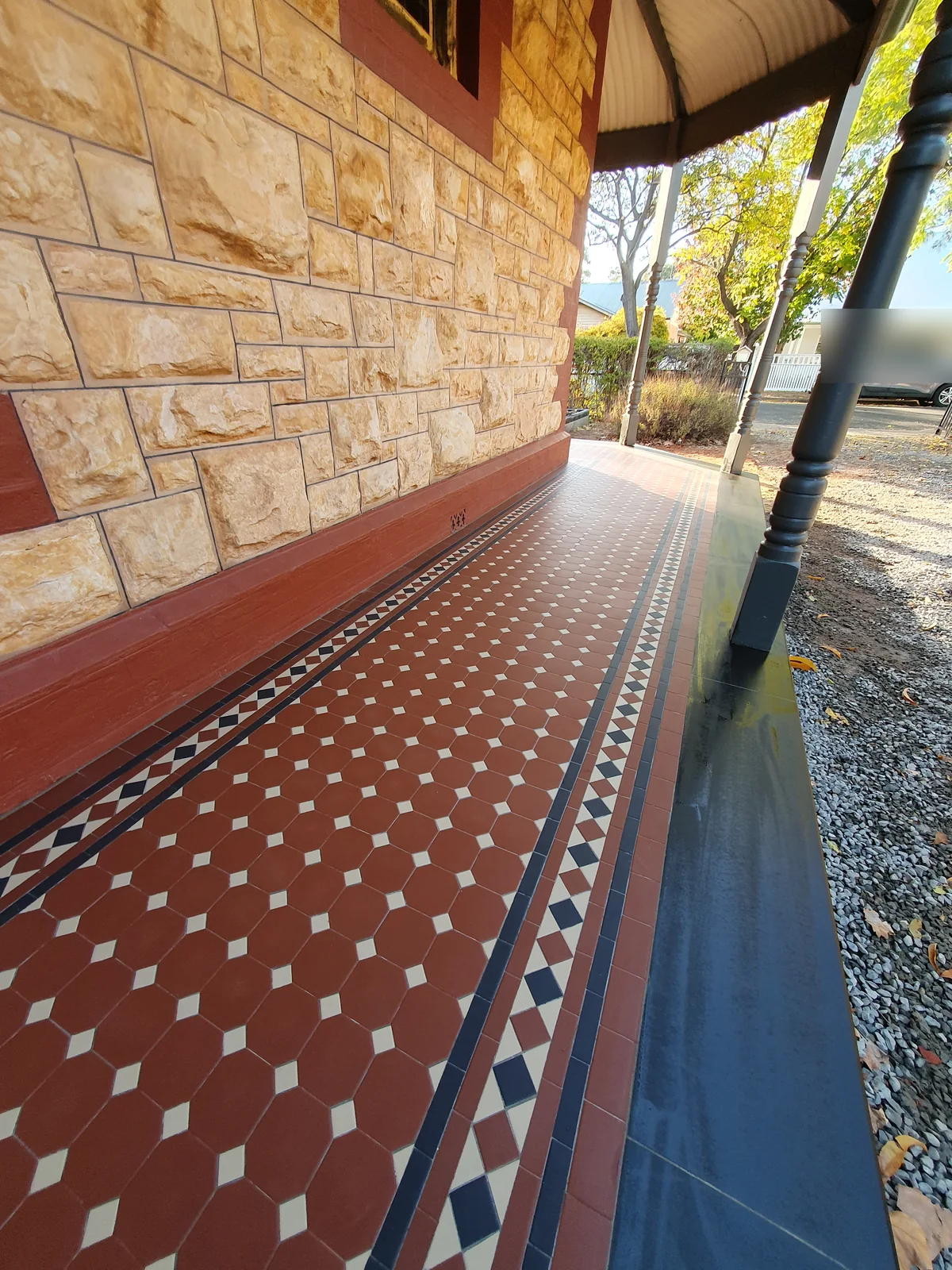
Tiling choices for Kensington's historic streetscapes
Kensington's history includes early colonial settlement, later nineteenth-century growth and twentieth-century change. The local planning material records Residential Historic (Conservation) policy areas and asks that development respond sympathetically to surrounding historic residential character. That is useful context when considering a new tiled threshold or pathway, but it is not a claim that every house is heritage listed.
A successful design can draw on the building's scale and approach without making a period claim that the evidence cannot support. Consider the width of the path, the rhythm of the verandah posts, the visual weight of borders and the transition between tiled and untiled areas. Where original tiles remain, careful assessment can help decide whether to retain, repair, match or introduce new work alongside them.
Design, supply and installation for verandahs and pathways
For a Kensington project, design consultation should begin with photographs, dimensions and an honest description of what is already there. A front path may need a different layout from a sheltered verandah, particularly where the entry has tight transitions, established garden edges or changing exposure. Border scale, field pattern and the relationship to masonry, paintwork and joinery can then be considered as one composition.
Tessellated tile supply and installation can be coordinated around the agreed layout. Where the work meets existing fabric, the practical questions include the condition of the base, levels, falls, thresholds and the cleanest way to finish an edge. Stone bullnose or edging coordination may be appropriate where a step, path or verandah needs a durable, visually resolved boundary.
Check the property before altering existing fabric
Kensington's heritage context is property-specific. Before removing old tiles, changing a front approach or altering a feature that contributes to the streetscape, check the property's current planning and heritage information with the relevant South Australian and council resources. The South Australian Heritage Register explains that its register covers State Heritage Places and Areas and links to databases for local and state heritage information.
A heritage check is not a promise that approval will be needed, and it is not a substitute for advice from the relevant authority. It is a sensible early step when the work affects a listed place, a historic area, or fabric that may contribute to the character of the setting.
Plan a Kensington tile project around the home
A useful first conversation can cover the location of the proposed work, the existing surface, the desired visual direction and whether any original tiles or edging need to be retained. From there, the scope can be shaped around design consultation, tessellated tile supply, installation or restoration rather than assuming a single treatment suits every Kensington property.
Share clear photographs and approximate dimensions when making an enquiry. That helps identify the next design questions without relying on assumptions about the home's age, listing status or construction.
Your Heritage Tiling Questions
Does every Kensington home have heritage protection?
No. Kensington has documented historic character and conservation policy areas, but heritage status is property- and area-specific. Check the relevant council and South Australian heritage information before altering existing fabric.
Can existing tessellated tiles be restored rather than replaced?
Often the first step is an assessment of the surviving tiles, their condition and the surrounding base. A restoration or selective repair approach may be considered where the original pattern and fabric are worth retaining; the suitable scope depends on what is found on site.
Are tessellated tiles suitable for a Kensington verandah or pathway?
They can be considered for verandahs, paths and entries when the layout, exposure, levels, drainage and transitions are addressed as part of the design. The pattern and edging should also relate to the proportions and material character of the property.
What should I provide when enquiring about Kensington tile work?
Photos of the area, approximate dimensions, the location within the property and any images of existing tiles are useful starting information. Mention whether you are considering new work, restoration, a matching layout or stone bullnose or edging coordination.
Discuss Your Heritage Tiling Project
Share your location, project details and photographs using our enquiry form, or call 0433 932 711.