
Tessellated Tiles in Heathpool
Heathpool's documented inter-war character makes proportion, frontage and surviving detail important considerations when planning tessellated tile work. Whether the brief is a new verandah, entry or pathway, or the care of an existing surface, the design should respond to the property rather than assume every home has the same history or protection.
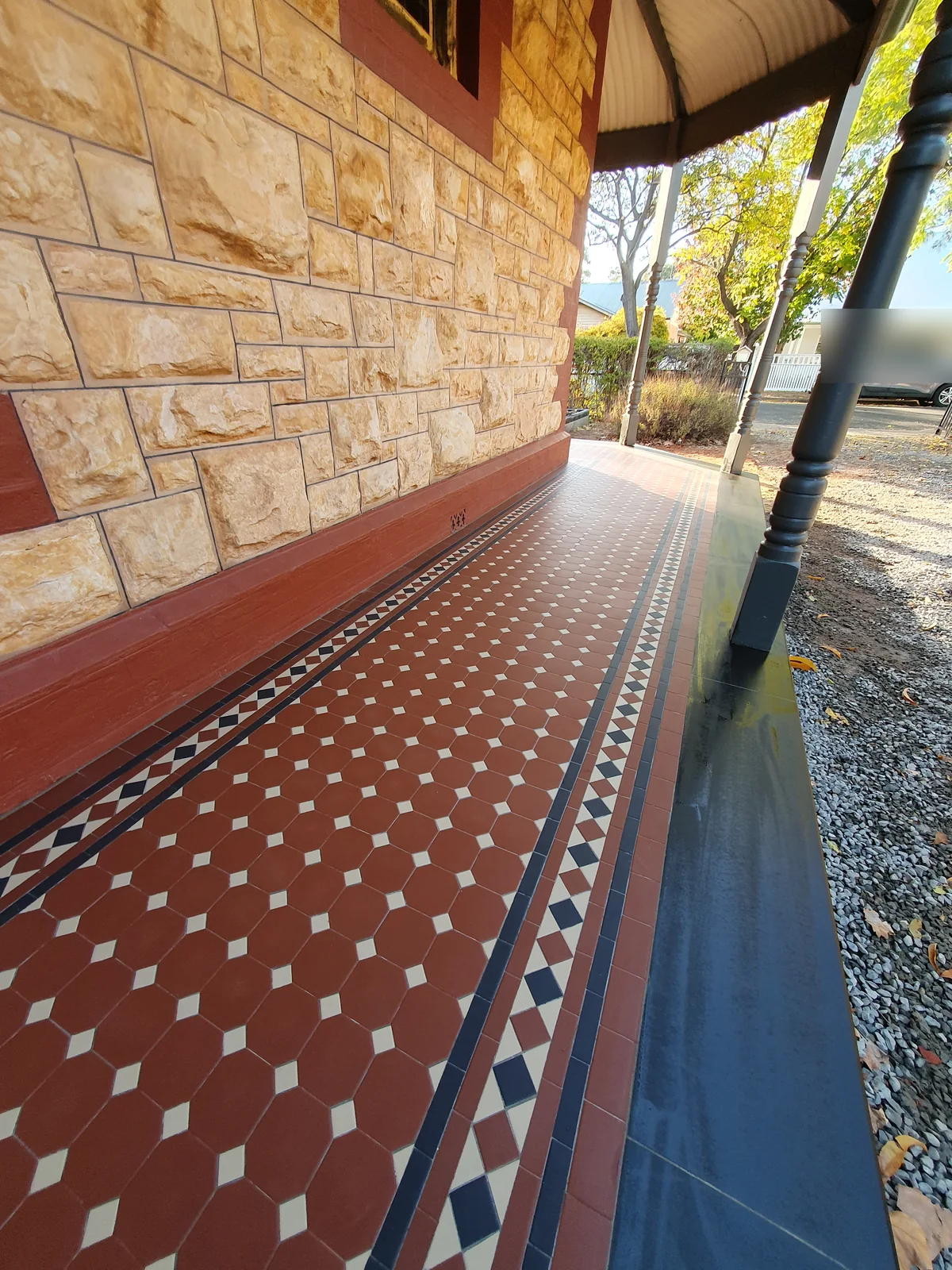
A documented pre-1940 residential character
The South Australian planning character statement for Heathpool and Marryatville identifies pre-1940 residential themes. It refers to allotment and subdivision patterns, roof forms, eaves, front verandah treatments and window proportions, with single-storey building form and mature street trees contributing to the setting.
Those observations can inform a tile brief without turning them into a claim about every property. A new path or verandah can be assessed for its scale, border, threshold and relationship to the street, while an older tiled surface should be documented before any replacement or extension is considered.
Historic Area Statements and Character Area Statements: City of Norwood Payneham & St Peters
Heritage context calls for a property-led check
The City of Norwood Payneham & St Peters reports that the adopted inter-war amendment protects 19 homes and an area in Heathpool reflecting development from the 1910s to the 1940s. The state heritage database also records a confirmed State Heritage Place in Heathpool.
These records are important context, but they do not mean every Heathpool home is listed or that tile work automatically needs a particular outcome. Before changing an older frontage, confirm the current property-specific heritage and planning position with the relevant authority.
Matching the house, threshold and surviving fabric
For a new tessellated scheme, consider the entry sequence, verandah depth, path width, adjoining masonry and the way the pattern meets fencing or garden edges. A restrained border may help define a narrow approach, while a more detailed centre can be reserved for a contained threshold where it suits the building's proportions.
For restoration, photograph the overall layout and close views of borders, corners, worn areas and missing tiles. Recording the existing arrangement first helps distinguish careful retention from a sympathetic extension or clearly new work. Design consultation, tile supply, installation, restoration and stone bullnose or edging coordination can then be considered around the actual brief.
Historic Area Statements and Character Area Statements: City of Norwood Payneham & St Peters
A practical starting point for Heathpool tile work
Useful first information includes photographs, approximate dimensions, access details and the relationship between the proposed work and existing finishes. For an older surface, include clear images of edges, transitions and areas of loss so restoration and new design questions can be considered together.
The existing Heathpool service page remains the local starting point. It can connect the property-led discussion to the broader Norwood Payneham & St Peters directory and to the relevant design, supply, installation, restoration and edging guidance.
Your Heritage Tiling Questions
Does every Heathpool home have heritage protection?
No. Council and state records identify particular protected homes and an area, but local character or an older appearance does not prove that every property is listed. Check the current planning and heritage position for the specific property before work begins.
Can tessellated tiles suit a Heathpool verandah or pathway?
They can be considered where the pattern, scale, edging, thresholds and site conditions suit the property. The Heathpool character statement makes frontage, verandah treatment, proportions and landscaping useful design considerations, rather than prescribing one pattern for every home.
What should I photograph before asking about restoration?
Photograph the full layout as well as borders, corners, worn areas, missing tiles and junctions with other surfaces. Approximate dimensions and access information also help clarify whether the brief involves selective restoration, an extension or a new surface.
Should I check planning or heritage information before changing an older tiled frontage?
Yes. Heathpool includes documented heritage protections and a confirmed State Heritage Place, but implications depend on the individual property and proposed work. Confirm the current position with the relevant planning or heritage authority before proceeding.
Discuss Your Heritage Tiling Project
Share your location, project details and photographs using our enquiry form, or call 0433 932 711.