
Tessellated tiles in Glynde
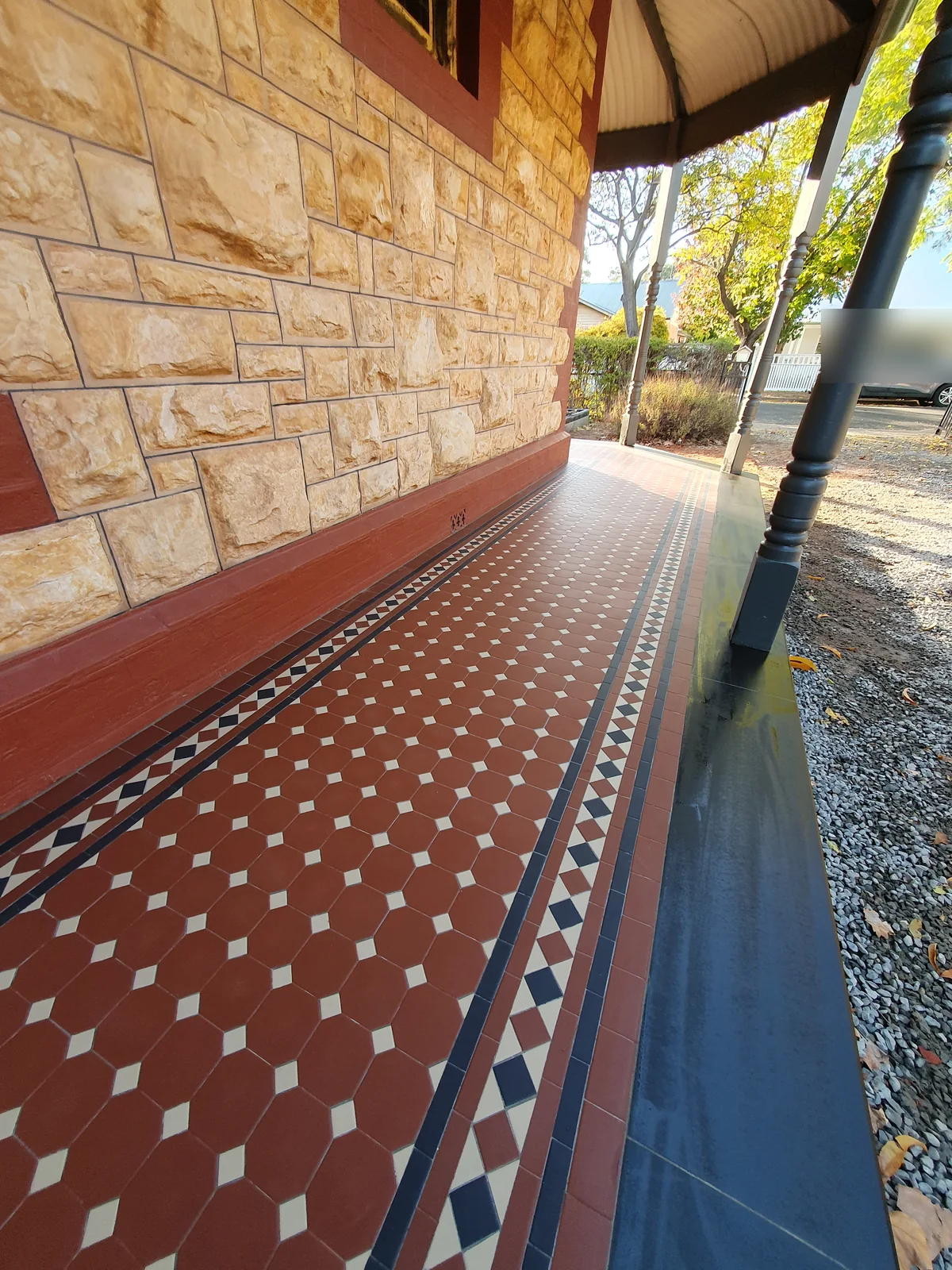
Planning tessellated tiles in Glynde calls for a response to the property, not a one-size-fits-all period label. The locality has documented links to a nineteenth-century horticultural estate and a later market-gardening and food-production history, while its present-day setting also includes light-industrial and mixed-use areas. AHTC can help you consider pattern, colour, edging and practical installation requirements for a new verandah, pathway or interior, or assess existing tiles where retention and careful repair matter.
A Glynde context shaped by gardens, work and change
Glynde's name and documented heritage story connect to Glynde House, a surviving element of a major horticultural estate established in the 1850s. Council history also describes vineyards, orchards, gardens and later market-gardening activity. That background can inform a sympathetic design conversation, but it does not mean every Glynde property is heritage-listed or belongs to one architectural era.
The locality has also developed into a mixed working and food-production precinct around Payneham and Glynburn Roads. When selecting tiles, it is useful to start with the actual building, its entry sequence, exposure, levels and adjoining materials. A restrained border or a carefully scaled geometric field may suit one property, while a more contemporary installation may be the honest choice for another.
Designing a verandah, pathway or floor in Glynde
For a new tiled area, the useful questions are practical as well as visual: how the pattern meets thresholds, how the border turns at corners, how the surface relates to existing masonry or paving, and how water and levels will be managed on the site. Tessellated tile supply and installation can be coordinated with the intended proportions rather than chosen as an afterthought.
For older homes, photographs and a site assessment can help distinguish original or early fabric from later replacement work. Matching is not always a matter of finding one colour; scale, geometry, laying direction, edge treatment and the condition of the underlying surface may all affect the result. Stone bullnose or other edging coordination can be considered where the design needs a durable transition.
When heritage context needs a closer check
The South Australian Heritage Places Database records Glynde House as a State Heritage Place and notes that development affecting a listed place can extend to its setting. If your work concerns a listed property or could affect a heritage place, confirm the relevant listing and current planning requirements with Heritage South Australia and the City of Norwood Payneham & St Peters before work begins. A heritage listing is not a blanket approval or a statement that every nearby home is protected.
AHTC's role is to help with design consultation, tile selection, installation planning, restoration and associated edging coordination. The appropriate approach depends on the property's evidence and condition; proposed work should not assume that a historic-looking pattern, substrate or approval pathway applies universally.
Your Heritage Tiling Questions
Are all homes in Glynde heritage-listed?
No. The official register identifies particular heritage places, including Glynde House, rather than declaring every Glynde property heritage-listed. Check the individual property and its setting with the relevant South Australian and council planning sources before assuming that heritage controls apply.
Can tessellated tiles suit a newer Glynde property?
Yes. The pattern, scale, border and colour can be designed around the building and the way the space is used. A consultation can compare a period-referencing scheme with a simpler contemporary layout without pretending the property has a historical character it does not have.
What should I check before restoring tiles near a heritage place in Glynde?
First establish whether the property or a place that may be affected is listed, and whether the proposed work reaches its setting. Then seek current advice from Heritage South Australia or the City of Norwood Payneham & St Peters. Tile restoration decisions can be considered alongside that property-specific planning advice.
Do you install tessellated pathways and verandah tiles in Glynde?
The existing local service page can help you plan tessellated tile supply, installation and design consultation for verandahs, pathways and other suitable areas. Site conditions, levels, transitions and the intended pattern should be reviewed before the final specification is chosen.
Discuss Your Heritage Tiling Project
Share your location, project details and photographs using our enquiry form, or call 0433 932 711.